Neal Mohan on Podcasts, News and YouTube's Future
TL;DR
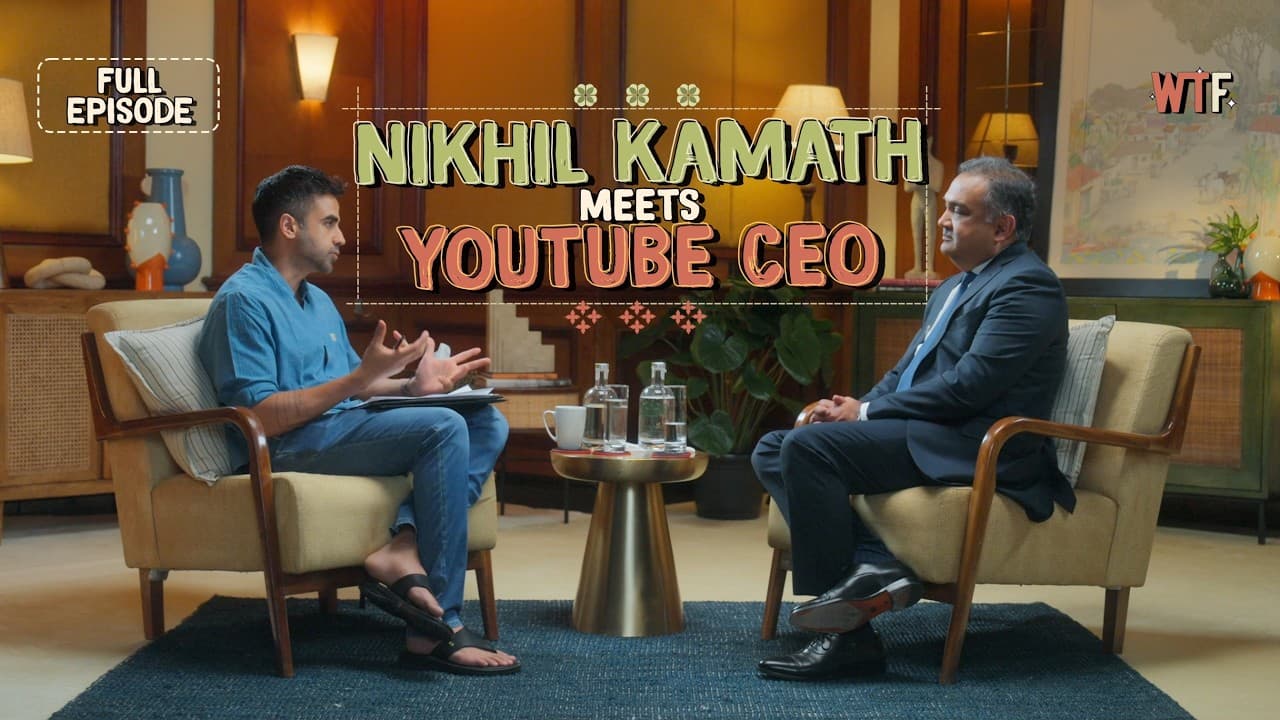
YouTube's mission is to give everyone a voice and show them the world, so what happens on the platform reflects what is happening in the world. Two billion people visit every day. Podcast success there came from three bets: that people would watch conversations rather than only listen, that discovery would surface shows beyond subscriptions, and that podcasts needed monetisation through the YouTube Partner Program.
Transcript
-Maybe we can try it out. -Yeah, we could. I remember reading this thing about Google offering you $100 million not to quit, not today, but 15 years ago, which was a lot of money. What is it-- I like that you're waiting for the question... -[both laugh] -...and not reacting. I wanna see where you're going to take this. We started or what? It's roll... Read More
Key Insights
- WAVES is, in Mohan's understanding, the first event anywhere in the world where everyone with an interest and a stake in the creative industries has met with the explicit purpose of accelerating those industries further, combining cultural, business, collaborative and private-government partnership dimensions.
- India is at the cusp of becoming a true creator nation, according to Mohan, and this recognition comes both from the government and from the Indian creative industries in general. He says he sees the shift in YouTube's own numbers and in everyone he interacts with when visiting.
- YouTube's mission statement is to give everyone a voice and show them the world, which is why Mohan frames it as an information platform first, even though most consumption is entertainment or learning. What happens on YouTube is a reflection of what is happening in the world, and vice versa.
- The connection between creativity on YouTube and politics, elections or societal conversations should not be a surprise given that framing. Mohan points to the US election, the elections held in India last year, an election in Canada the day before the interview, and others worldwide.
- YouTube's recommendations are oriented around what the platform knows to be a viewer's personal interest based on viewing habits, with a deliberate effort to also show a diversity of content. Mohan argues this leaves the user, not the platform, in the driver's seat over which narratives they encounter.
- Podcasters, news commentators and similar creators played a big role in the recent US election, in Mohan's view. Candidates who got the word out through outlets that earlier generations would have overlooked ended up successful, because those podcasters had large audiences interested in what their guests had to say.
- The success of podcasts on YouTube was an overnight success many years in the making, resting on three bets: that people would want to watch a conversation rather than only listen, that discovery would surface podcasts beyond those a viewer subscribes to, and that podcasters needed help monetising.
- Traditional news channels have succeeded on YouTube by adopting the YouTube style of content, not just clips but full live news broadcasts, replays and live streams. Fox reported one of its most successful quarters or months ever on the platform, which Mohan credits to sustained investment.
Install to Summarize YouTube Videos and Get Transcripts
Explore YouTube Video Summarizer or Get YouTube Transcript Extractor
Questions & Answers
Q: What is WAVES according to YouTube CEO Neal Mohan?
Mohan describes WAVES as, to his understanding, the first time anywhere in the world, not just in India, that everyone with an interest and a stake in the creative industries has come together with the purpose of accelerating those industries further, particularly for India, Indian culture and Indian creators. He says it mixes several dimensions at once: the cultural and creative aspect, the business aspect of what is required to be a successful creator, the collaborative aspect, and the private-government partnership aspect. He believes the effort will have a global impact as a result.
Q: Why did podcasts become successful on YouTube?
Mohan calls it an overnight success many years in the making, resting on three early bets that seemed strange at the time. The first was betting that people would want to watch a conversation rather than only listen to it, and that this viewing would happen not just on mobile phones but on television screens. COVID accelerated this as people at home wanted to see what was happening. The second was betting on discovery, surfacing podcasts a viewer might genuinely be interested in rather than only ones they already subscribe to. The third was recognising that podcasters needed to monetise, so podcasts were integrated into the YouTube Partner Program.
Q: Does YouTube control which political narratives people see?
Mohan rejects this framing entirely. He argues YouTube is a reflection of what is happening in the world and, more precisely, is meant to reflect what is interesting to the individual viewer in the moment. When someone opens the app, the feed is generally oriented around what YouTube knows to be that person's interests based on their viewing habits, though the platform also endeavours to show a diversity of content. In his view this puts the user in the driver's seat over what type of content they encounter, while creators are responsible for producing content people find interesting enough to watch.
Q: Are podcasters replacing traditional news channels?
Mohan declines to treat it as an either/or. He says traditional news channels have seen real success on YouTube by adopting the YouTube style of content, which includes not just clips but full live news broadcasts, replays of broadcasts and live streams. What a podcaster adds, when covering or talking about the news, is that they do it through the means and tools of a creator. Viewers connect with the person whose channel it is, caring about that individual in general rather than only what was said in one particular video, and podcasting on YouTube combines both of those things.
Q: What did Neal Mohan say about the role of podcasters in the US election?
Mohan says news commentators, podcasters, or whatever you want to call them, played a big role in the recent US election. He believes candidates who got the word out through engagement with outlets that in generations past or years past would have been overlooked as an outlet ended up being successful. The reason, in his account, was that those podcasters had large audiences that were genuinely interested in what their guests had to say, and this pattern played out over and over. He describes the election as a pivotal point that brought podcast success on YouTube into focus.
Q: How many people use YouTube every day?
Mohan states that two billion people come to the platform every single day. He uses this figure to make a point about diversity in news consumption: the subset of those users who consume news is large enough that there will be enormous diversity in their preferences and priorities, and in how they choose to consume news on YouTube. This is part of his argument for why the future of news on the platform will not resolve into a binary choice between traditional broadcasters and independent creators.
Q: Will people watch cable news or independent creators five years from now?
Asked for a binary answer between Fox or CNN and an independent YouTube creator, Mohan refuses to pick one. He points out that Fox reported one of its most successful quarters or months ever on YouTube, which he credits to their heavy investment in understanding the platform. Alongside that, he expects podcasters and other formats to succeed too. His prediction is more diversity five years from now, not less, and he adds that a third type of format could very well be invented and find success, because you never know what creators will experiment with next.
Q: Why are audiences moving from news channels to podcasters for information?
Nikhil Kamath puts forward the theory that people have grown disillusioned by corporations owning news channels and assume a newscaster's views will carry the corporation's bias, while a podcaster reads as a more independent character whose output is not shaped by that corporate bias. Mohan does not fully endorse the framing, responding that it is not an either/or. He points instead to two fundamentals behind podcasters succeeding on YouTube: they would only move to the platform if they felt they could build an audience there, with no barrier between them and the audience they were looking to build.
Summary & Key Takeaways
-
Neal Mohan describes WAVES as the first gathering anywhere that brings together everyone with a stake in the creative industries to accelerate the sector, particularly for India and Indian creators. He says the recognition, from both government and the wider creative industries, is that India is at the cusp of becoming a true creator nation, something he sees reflected in YouTube's numbers.
-
Asked whether YouTube sways which narratives get heard, Mohan rejects the framing. He argues the home feed is meant to reflect a viewer's own interests over time, with some deliberate diversity added, leaving the user in the driver's seat. Creators are responsible for making content people actually want, and viewers only watch to the extent they are interested.
-
On the future of news, Mohan refuses a binary between traditional broadcasters and independent creators. He notes Fox reported one of its most successful months ever on YouTube and credits legacy outlets for investing in the platform with live broadcasts, replays and live streams. He expects more format diversity in five years, including formats not yet invented.
Read in Other Languages (beta)
Share This Summary 📚
Summarize YouTube Videos and Get Video Transcripts with 1-Click
Try YouTube Summary with ChatGPT & Claude or YouTube Transcript Generator
Explore More Summaries from Nikhil Kamath 📚
Summarize YouTube Videos and Get Video Transcripts with 1-Click
Try YouTube Summary with ChatGPT & Claude or YouTube Transcript Generator