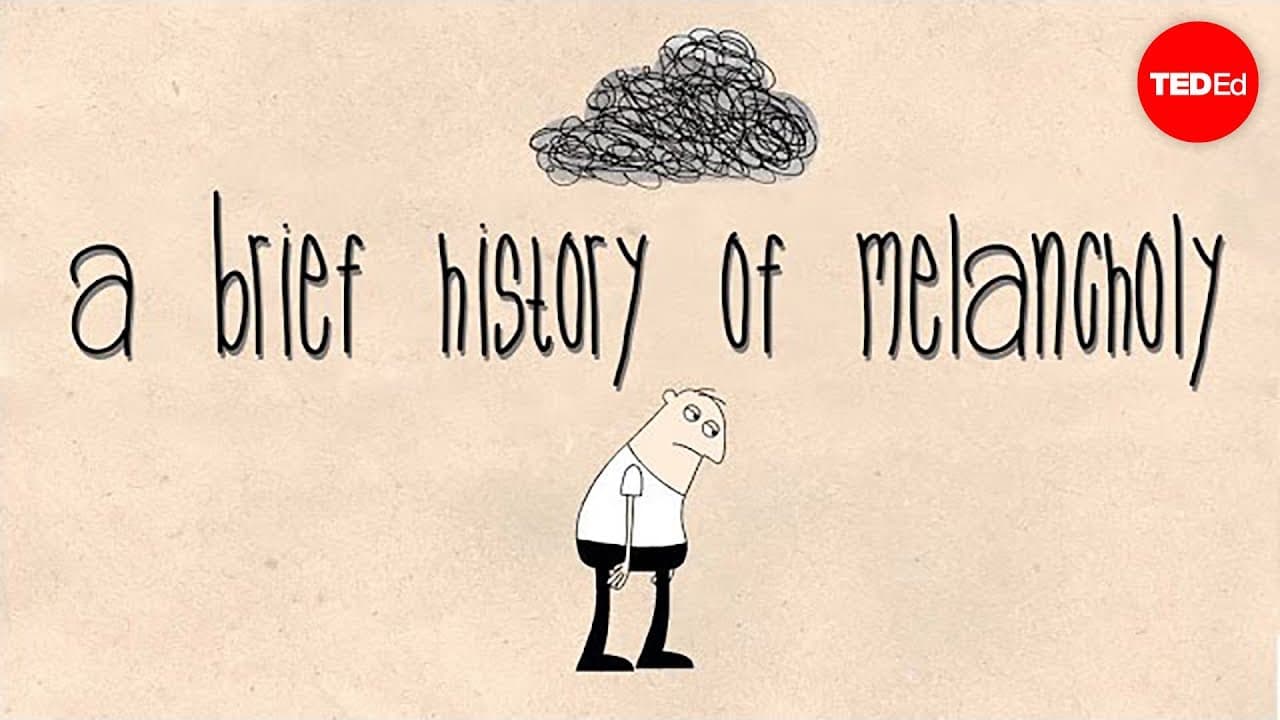
A brief history of melancholy - Courtney Stephens
TL;DR
Sadness has been understood and experienced differently throughout history, from being linked to bodily fluids in Ancient Greece to being viewed as an essential part of the human experience.
Transcript
Sadness is part of the human experience, but for centuries there has been vast disagreement over what exactly it is and what, if anything, to do about it. In its simplest terms, sadness is often thought of as the natural reaction to a difficult situation. You feel sad when a friend moves away or when a pet dies. When a friend says, "I'm sad," you... Read More
Key Insights
- 🧡 Sadness has been understood differently throughout history, with views ranging from bodily fluids to brain chemistry.
- 🙈 Sadness is seen by many as necessary for gaining wisdom and a deeper understanding of emotions.
- 😑 Expressing sadness can help secure social bonds and receive support from others.
- ❓ The subjective experience of sadness can be influenced by culture and language.
- 🤨 Some contemporary thinkers propose using technology to eliminate suffering, but this raises questions about the value and meaning of a world without sadness.
Install to Summarize YouTube Videos and Get Transcripts
Explore YouTube Video Summarizer or Get YouTube Transcript Extractor
Questions & Answers
Q: How did ancient Greek doctors view sadness?
Ancient Greek doctors believed that sadness was caused by imbalanced bodily fluids, specifically black bile. They thought that by changing one's diet and medical practices, the humors could be balanced and sadness could be diminished.
Q: Is sadness only a reaction to external circumstances?
No, modern medicine suggests that certain long-term unexplained emotional states, such as clinical depression, are at least partially related to brain chemistry. Adjusting the balance of chemicals in the brain can significantly affect our response to difficult situations.
Q: What is the value of sadness according to some thinkers?
Many thinkers argue that sadness is not only an inevitable part of life but an essential one for gaining wisdom. It allows for a deeper understanding of profound emotions such as beauty and joy.
Q: How does sadness help in securing social bonds?
Sadness, compared to anger or violence, is seen as a way to express suffering and immediately bring people closer to the suffering person. This creates unity and helps both the individual and the larger community thrive.
Summary & Key Takeaways
-
Sadness is commonly believed to be a natural reaction to difficult situations, but its understanding has changed over time.
-
Ancient Greek doctors saw sadness as a result of imbalanced bodily fluids, while modern medicine links it to brain chemistry.
-
Sadness has been seen as necessary for gaining wisdom and deeper emotional understanding, as well as a way to secure social bonds and support from others.
Read in Other Languages (beta)
Share This Summary 📚
Summarize YouTube Videos and Get Video Transcripts with 1-Click
Try YouTube Summary with ChatGPT & Claude or YouTube Transcript Generator
Explore More Summaries from TED-Ed 📚



Summarize YouTube Videos and Get Video Transcripts with 1-Click
Try YouTube Summary with ChatGPT & Claude or YouTube Transcript Generator