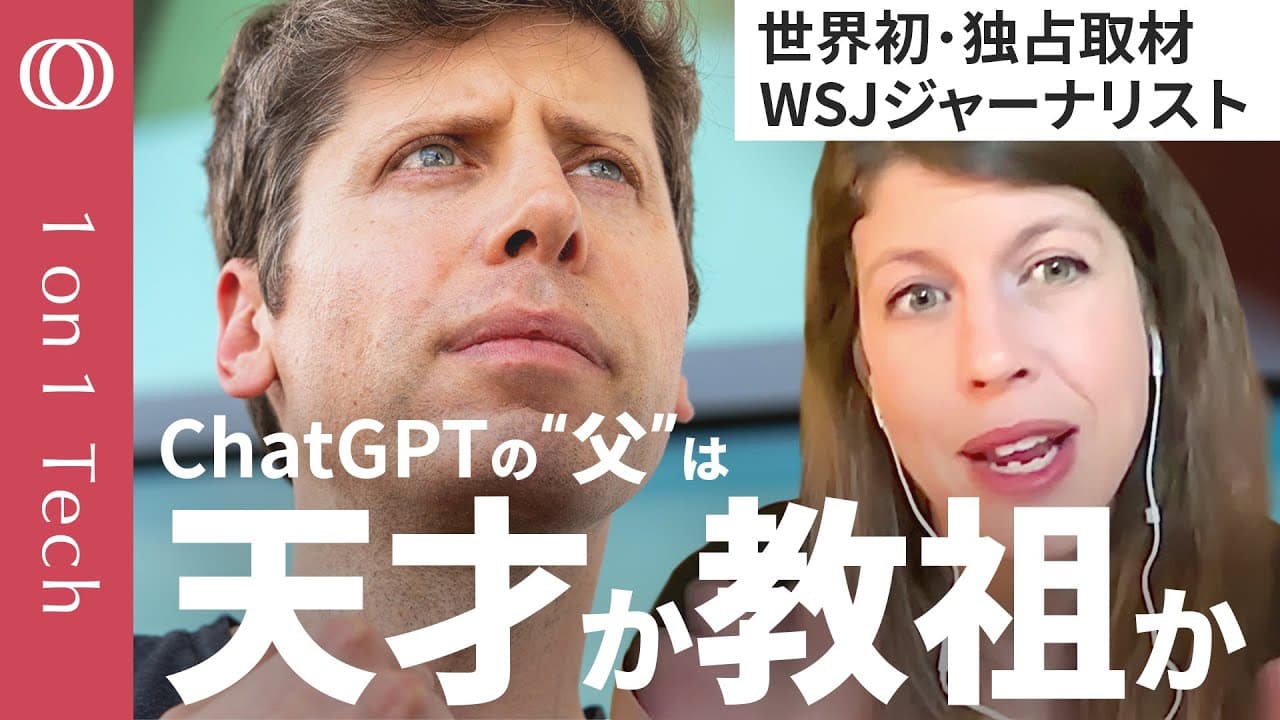
How Did Sam Altman Gain Power in Silicon Valley?
TL;DR
Sam Altman’s defining advantage is his exceptional ability to raise money, sell belief in a technological future, and turn personal relationships into practical power. His rise through Y Combinator and OpenAI shows how Silicon Valley influence can depend less on formal ownership than on networks, favors, persuasive storytelling, and confidence in ambitious projects such as AGI, longevity, and nuclear energy.
Transcript
How do you describe him in one word? Salesman. He's a once in a generation fundraising talent. An ability beyond anyone to convince a room full of people that he can see the future and that they should invest in that future. When I when I first met him, there was this moment when he was standing on the this sort of staircase in the very center of o... Read More
Key Insights
- • Sam Altman is described as a once-in-a-generation fundraising talent who can persuade investors that he sees the future. The capital produced by that conviction then helps him build the future he originally presented as a vision.
- • Altman’s power is rooted in relationships, favors, and negotiated deals rather than meaningful ownership of OpenAI. Hagey says his limited equity made his influence especially puzzling and revealed his confidence in exercising power without relying on formal control.
- • OpenAI’s mission can function like a belief system centered on artificial general intelligence. Hagey interpreted Altman’s headquarters presence and carefully designed central staircase as signs that he understands companies as partly religious phenomena and knows how to sell belief.
- • Silicon Valley power is concentrated among a small circle of people and institutions. Personal connections often accompany the stated commercial reasons for deals, making networks essential to understanding why particular founders, companies, and investments receive support.
- • Y Combinator became a new center of Silicon Valley influence during Altman’s career. His participation in its first class in 2005 and eventual presidency placed him close to what Hagey calls the ecosystem’s beating heart.
- • Altman’s dismissal and rapid reinstatement at OpenAI demonstrated his unusual capacity to mobilize relationships. Hagey frames the episode as an example of someone reversing a firing through personal influence despite lacking straightforward power on paper.
- • Altman’s ambitions extend beyond artificial intelligence to nuclear energy and longevity. His worldview rests on expansive optimism about humanity’s capacity to conquer physical limits, explore the universe, and ultimately address death itself.
- • Altman’s broad interests helped shape his persuasive style. Accounts from his family and teachers portray someone who understood systems unusually early, studied computer science, maintained scientific curiosity, and connected technology with literature and politics.
Install to Summarize YouTube Videos and Get Transcripts
Explore YouTube Video Summarizer or Get YouTube Transcript Extractor
Questions & Answers
Q: How did Sam Altman gain power in Silicon Valley?
Sam Altman gained power through relationships, favors, dealmaking, fundraising, and proximity to influential institutions rather than through substantial OpenAI ownership. He joined Y Combinator’s first class in 2005 and later became its president as the accelerator developed into a major Silicon Valley power center. His network and persuasive ability became especially visible when he rapidly returned after OpenAI’s board dismissed him.
Q: Why is Sam Altman described as a salesman?
Keach Hagey calls Sam Altman a salesman because he can convince a room that he sees the future and that others should invest in it. She considers him a once-in-a-generation fundraising talent. His pitch creates belief, attracts the money needed to pursue ambitious projects, and can make the proposed future more achievable because investors have supplied resources to build it.
Q: How does Sam Altman exercise power without owning OpenAI?
Altman exercises power through people he knows, favors he has performed, agreements he has made, and his ability to inspire confidence in a shared vision. OpenAI’s nonprofit structure means conventional equity ownership does not explain his authority. Hagey argues that his influence reflects confidence in wielding networks and relationships, a capacity demonstrated by his return after being dismissed as chief executive.
Q: Why did Keach Hagey write a biography of Sam Altman so early?
Hagey initially questioned writing about someone who was only 38 when the project arose, and Altman also believed a biography was premature because he expected to accomplish much more. She proceeded because OpenAI was already at the front of a race reshaping work and infrastructure. Understanding its leader, his ambitions, and his methods of exercising power therefore seemed immediately important.
Q: What does Sam Altman’s career reveal about Silicon Valley power?
Altman’s career suggests that Silicon Valley power operates through a small network of investors, founders, accelerators, and personal connections. Deals may have commercial explanations, but Hagey says they often have personal reasons as well. Altman’s path through Y Combinator, Sequoia-backed startup culture, and OpenAI illustrates how relationships can protect founders and move them between opportunities.
Q: What role did Y Combinator play in Sam Altman’s rise?
Y Combinator placed Altman near an emerging center of Silicon Valley power. He entered its first startup class in 2005 and eventually became its president. As the accelerator grew in influence, his early participation and leadership gave him access to founders, investors, and the personal networks that Hagey identifies as central mechanisms behind deals and authority in the technology industry.
Q: Why does Keach Hagey compare OpenAI with a religious phenomenon?
Hagey felt that OpenAI’s headquarters and its central staircase had the atmosphere of a temple when she first met Altman there. The impression suggested that he understood companies as religious phenomena capable of organizing people around belief. In OpenAI’s case, the central belief was artificial general intelligence, which Altman could present as both a technological mission and a compelling future.
Q: What ambitions does Sam Altman have beyond artificial intelligence?
Altman’s ambitions include nuclear energy and longevity in addition to artificial intelligence. Hagey describes his outlook as a sweeping form of optimism in which humans can overcome limits, expand throughout the universe, and seek to cure death. These goals also explain why Altman thought an early biography covered only the beginning of his career rather than its completed arc.
Summary & Key Takeaways
-
Keach Hagey began investigating Sam Altman after ChatGPT’s November 2022 release prompted the Wall Street Journal to seek a deeper understanding of OpenAI’s leader. Her initial profile developed into a biography after Altman’s unusual lack of meaningful OpenAI equity and his ability to exercise influence without conventional ownership raised larger questions about power.
-
The biography examines Silicon Valley as a compact network where commercial decisions are also shaped by personal relationships, favors, investors, and institutions. Altman entered Y Combinator’s first class in 2005 and later became its president, placing him near a new center of influence alongside established venture capital firms such as Sequoia Capital.
-
Hagey describes Altman primarily as a salesman and unusually gifted fundraiser who persuades people that he can see the future. His optimism includes AGI, nuclear energy, longevity, and humanity’s capacity to overcome limits. His rapid return after OpenAI’s board dismissed him demonstrated how relationships can create substantial power even without formal ownership or control.
Read in Other Languages (beta)
Share This Summary 📚
Summarize YouTube Videos and Get Video Transcripts with 1-Click
Try YouTube Summary with ChatGPT & Claude or YouTube Transcript Generator
Explore More Summaries from TBS CROSS DIG with Bloomberg 📚


Summarize YouTube Videos and Get Video Transcripts with 1-Click
Try YouTube Summary with ChatGPT & Claude or YouTube Transcript Generator