What Are Effective Parenting Strategies for Resilience?
TL;DR
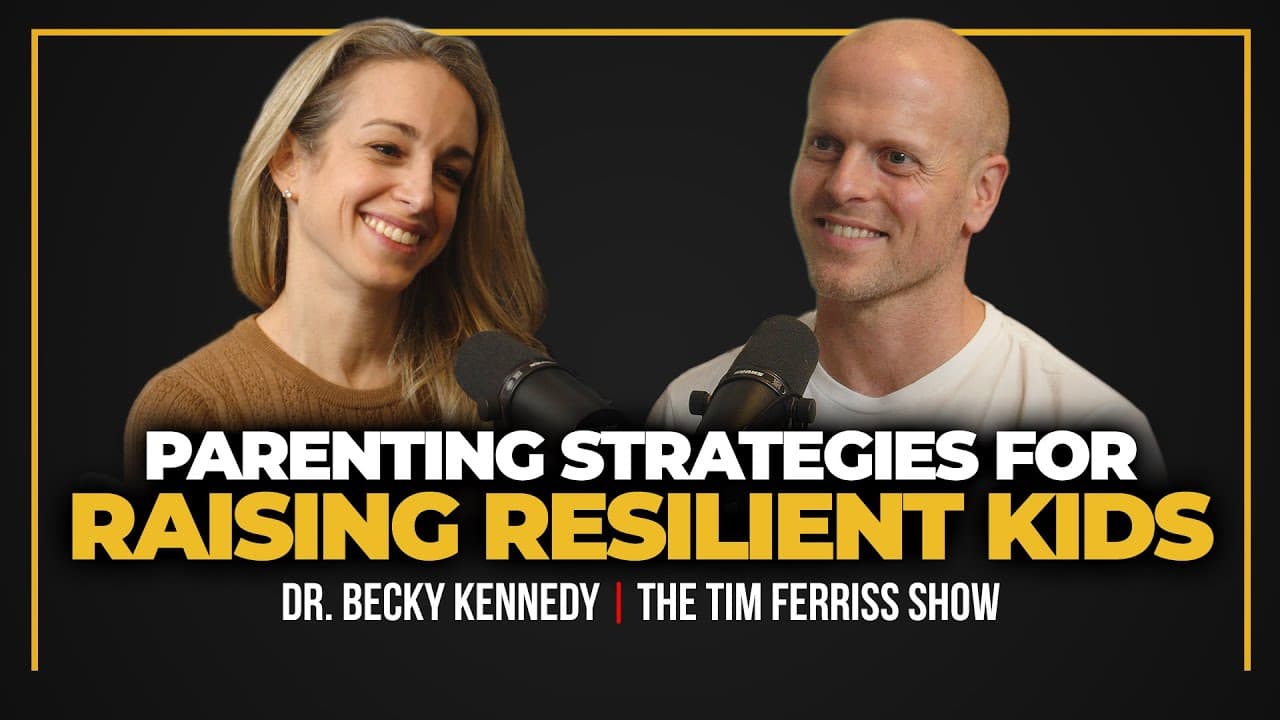
Effective parenting strategies for building resilience in children include reframing questions to focus on constructive solutions, promoting emotional honesty, and validating feelings. It's crucial to set clear boundaries while encouraging children to face manageable challenges, which fosters their ability to cope with life's stresses. Emphasizing curiosity over judgment helps create a supportive emotional environment.
Transcript
honestly almost always when I'm asked a question my answer is almost always reframing the question how do I say no without someone getting upset I mean this with love it's just a bad question it's a bad question it's an impossible question how do I say no and tolerate someone being upset is a great question love that question so I'll shift to that ... Read More
Key Insights
- 😷 Correctly framing parenting challenges is vital; asking the right questions can lead to more productive outcomes.
- 👪 Emotional regulation remains imperative in parenting; parents should aim to show calm and understanding, regardless of the child’s behavior.
- 👶 Effective communication involves stating intentions and needs clearly without assuming guilt for the child's reactions.
- 👻 Building resilience in children comes from exposure to manageable challenges and allowing them space to experience their emotions safely.
- 👪 Recognizing and addressing personal triggers can help parents respond better during stressful situations.
- 👪 Children need examples of healthy emotional interactions, which includes seeing parents acknowledge their feelings and making amends.
- ♻️ Compassionate parenting encourages curiosity over judgment, fostering a more supportive environment for emotional growth.
- 🎙️ More videos with Becky Kennedy:
Install to Summarize YouTube Videos and Get Transcripts
Explore YouTube Video Summarizer or Get YouTube Transcript Extractor
Questions & Answers
Q: How can parents effectively manage their children's meltdowns?
During meltdowns, it's essential to remain calm and validate the child's feelings. Instead of reacting with frustration, parents should acknowledge the child's emotions and offer a physical presence of support—sitting nearby or maintaining a calm demeanor can provide reassurance and containment. Pushing emotions back to their rightful owner helps children learn to cope appropriately.
Q: What are some strategies for saying "no" without feeling guilty?
To say no confidently, parents should first clarify their own reasons and intentions behind the decision, ensuring alignment with their values. It's helpful to communicate the decision clearly to the child, while acknowledging their feelings. For example, saying, "I understand you're upset about not purchasing that toy, but we have other priorities right now," helps establish boundaries without guilt.
Q: What role does repair play in parenting, according to Dr. Becky?
Repair is crucial in parenting as it fosters trust and understanding in the parent-child relationship. Acknowledging mistakes, taking responsibility for one's actions, and expressing willingness to do better communicates to children that it’s okay to be imperfect. This builds resilience and emotional intelligence in children, preparing them for future interpersonal dynamics.
Q: How can parents manage resistance when setting boundaries?
When setting boundaries, parents can use visuals like the tennis court analogy, where feelings remain on the child's side. By recognizing that their discomfort does not obligate the parent to relent, they maintain their authority. Validating the child's feelings while establishing the boundary reinforces the understanding that their emotions are genuine, yet separate from the parent's decisions.
Summary & Key Takeaways
-
Dr. Becky emphasizes the importance of reframing questions in parenting, promoting a shift from negative perspectives to constructive dialogues that foster healthier emotional responses.
-
The conversation addresses common parenting dilemmas such as managing meltdowns, setting boundaries, and the significance of repair in parent-child relationships after conflicts.
-
Dr. Becky shares her insights from personal experience and professional expertise, advocating for a compassionate and well-resourced approach to parenting that values emotional honesty and resilience.
Read in Other Languages (beta)
Share This Summary 📚
Summarize YouTube Videos and Get Video Transcripts with 1-Click
Try YouTube Summary with ChatGPT & Claude or YouTube Transcript Generator
Explore More Summaries from Tim Ferriss 📚






Summarize YouTube Videos and Get Video Transcripts with 1-Click
Try YouTube Summary with ChatGPT & Claude or YouTube Transcript Generator