How to Make Cryptographic Security Easy to Use
TL;DR
The best security is the security people actually use, so cryptographic applications should automate configuration, certificate renewal, recovery, and device management instead of burdening users with instructions. The Mathematical Mesh uses layered public key infrastructure, offline and online keys, and encrypted cloud storage to make applications such as SSH, S/MIME, and OpenPGP easier to operate without trusting the cloud.
Transcript
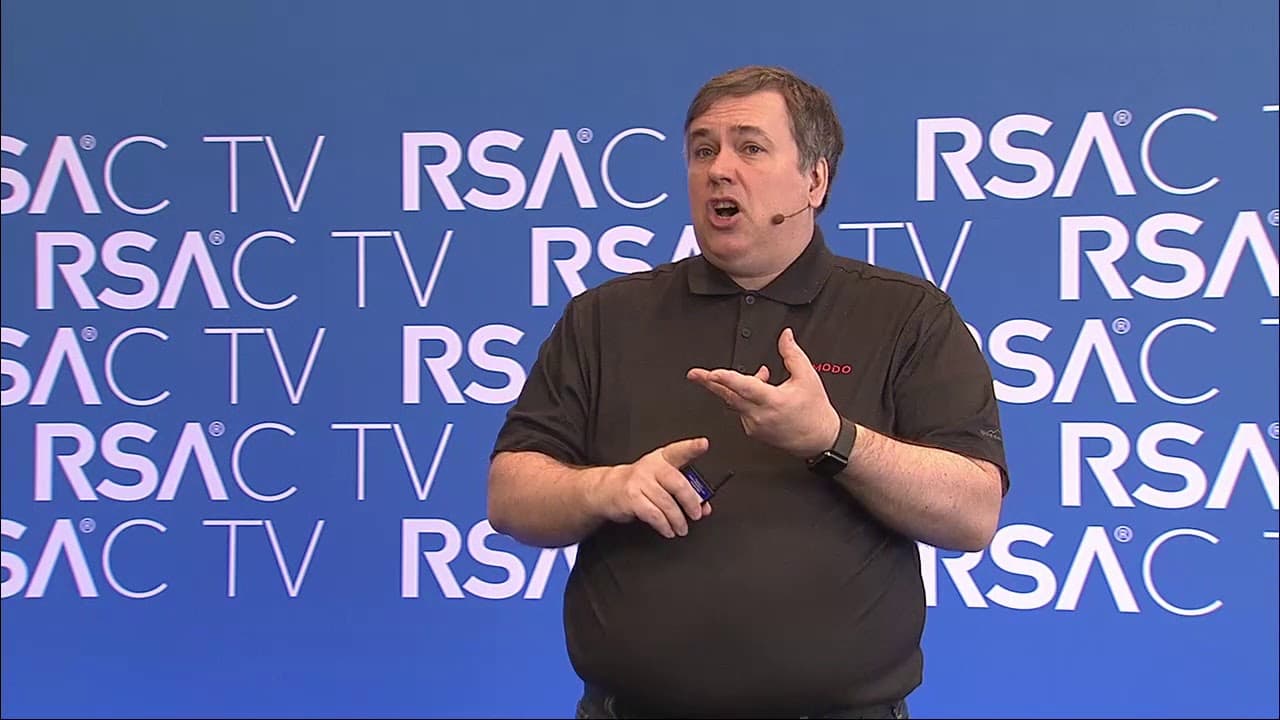
Hi, I'm Phil Han Baker with Comodo Group, and I am here to talk about security usability. And in particular, I want to ask this question about cryptography and security that's been asked-- I've been asking for years now, which is why did we make it so hard? And the genesis of this talk came in when I, um, made my track proposal to the, uh, conferen... Read More
Key Insights
- Usable security is security that people consistently employ in daily life. A secure email application provides little protection when its complexity discourages use, while repeated uneventful Internet activity can already make users complacent about the safety of their communications.
- Secure communication should require no special behavior from the user. Secure email should operate like regular email, and secure chat should resemble insecure chat, because daily usability must be evaluated across sustained use rather than only during a short laboratory session.
- Written security instructions can be converted into executable code. A seventeen-step S/MIME configuration process took an experienced cryptographer twenty minutes, illustrating why machines should handle certificate enrollment, confirmation, export, import, client configuration, and similar repeatable procedures.
- Automated certificate issuance and renewal require a personal public key infrastructure. A long-term signature key can authenticate initial certificate applications and later reapplications, removing the expectation that users will manually repeat enrollment procedures whenever their certificates need renewal.
- Key recovery is necessary for practical encrypted services. If users lose their keys, they may also lose irreplaceable encrypted cloud data, so the proposed design includes escrow capability and a master escrow key as part of its personal security infrastructure.
- Online and offline key separation limits the consequences of device compromise. Critical long-term keys can remain offline, while an intermediate current key handles active operations and can be replaced through a recovery process if an attack compromises it.
- Multi-device security requires distinct cryptographic profiles for every device. Each phone, tablet, desktop, laptop, or watch needs encryption, signature, and authentication keys so users can securely access the same communications and services from all enrolled endpoints.
- The Mathematical Mesh uses an untrusted cloud portal as an encrypted mailbox. Private keys remain available only on endpoint devices, sensitive cloud data stays encrypted, and layered public key infrastructure provides separate mechanisms for usability, recovery, device enrollment, and application security.
Install to Summarize YouTube Videos and Get Transcripts
Explore YouTube Video Summarizer or Get YouTube Transcript Extractor
Questions & Answers
Q: Why are cryptographic applications difficult to use?
Cryptographic applications become difficult when they transfer operational work to users, including certificate enrollment, confirmation, download, export, import, configuration, and renewal. One S/MIME setup described in the talk required seventeen steps and took an experienced cryptographer twenty minutes. The proposed remedy is to convert any written sequence of repeatable instructions into code so the machine performs it for the user.
Q: How can cryptographic security become easier to use?
Cryptographic security can become easier by asking nothing special of the user during ordinary operation. Secure email should behave like regular email, and secure chat should look like insecure chat. Setup, certificate renewal, key distribution, recovery, and device enrollment should be automated. The resulting system may use more cryptography internally, but its visible interaction should become simpler for the person using it.
Q: What is the Mathematical Mesh?
The Mathematical Mesh is an open research infrastructure designed to make cryptography easier to use. Its specification is open, its reference code uses the MIT license, and it uses JSON and CFRG curves. It supports cryptographic configuration for SSH, S/MIME, and OpenPGP, with planned Jabber support, while also exploring applications designed with security available from their beginning.
Q: How does the Mathematical Mesh use cloud services securely?
The Mathematical Mesh treats its cloud portal as an untrusted service rather than a trusted custodian. A user uploads an encrypted profile that functions like a mailbox for connecting devices. Private keys are available only on endpoint devices, never live and unencrypted in the cloud. Sensitive cloud data is encrypted, so compromising the cloud does not by itself expose the user's protected information.
Q: Why does automated certificate renewal require more cryptography?
Automated renewal must prove that a certificate application or reapplication is authorized without repeatedly asking the user to complete a manual process. The proposed personal public key infrastructure therefore includes a long-term signature key. That key authenticates certificate requests, allowing software to manage initial issuance and later renewal on the user's behalf while retaining a cryptographic basis for authorization.
Q: Why is key recovery necessary for encrypted services?
Key recovery is necessary because losing an encryption key can make encrypted cloud data permanently inaccessible. The talk highlights personal photographs as an example of data a service should not allow a customer to lose. The proposed architecture therefore includes key escrow and a master escrow key, giving users a recovery mechanism needed for routine, long-term use of cryptographic applications.
Q: How does the Mesh recover from compromised device keys?
The Mesh separates highly important offline keys from intermediate online keys used for current operations. The master keys that anchor the user's digital identity can remain offline and less exposed, while a current profile handles active use. If an online key is compromised through an attack such as the Heartbleed-type scenario discussed, the master-level structure provides a way to recover and rebuild the system.
Q: How does the Mathematical Mesh support multiple devices?
The Mathematical Mesh assigns a profile to every enrolled device because users may read communications on phones, tablets, desktops, laptops, and watches. Each device profile contains encryption, signature, and authentication keys. This additional cryptographic structure allows one user to access end-to-end secure messages across all authorized endpoints while keeping private keys on those endpoints rather than unencrypted in the cloud.
Summary & Key Takeaways
-
Cryptographic security becomes useful only when people can employ it during ordinary communication without extra effort. Secure email and chat should feel like their insecure counterparts. Instead of expecting users to complete complicated setup instructions, software should translate those documented procedures into code and let machines perform them automatically and consistently.
-
The Mathematical Mesh creates a personal public key infrastructure containing long-term signing and escrow keys, current profiles, application profiles, and separate profiles for each device. Additional cryptographic layers address distinct requirements, including certificate renewal, disaster recovery, compromise recovery, authentication, encryption, signatures, and simultaneous access across phones, tablets, desktops, laptops, and watches.
-
The Mesh stores sensitive information in encrypted form and keeps unencrypted private keys on endpoint devices rather than in the cloud. It currently secures SSH, S/MIME, and OpenPGP, with Jabber support planned. Its deployment strategy seeks applications that provide immediate value to an individual without requiring other people to adopt the same infrastructure.
Read in Other Languages (beta)
Share This Summary 📚
Summarize YouTube Videos and Get Video Transcripts with 1-Click
Try YouTube Summary with ChatGPT & Claude or YouTube Transcript Generator
Explore More Summaries from RSAC Cybersecurity 📚
Summarize YouTube Videos and Get Video Transcripts with 1-Click
Try YouTube Summary with ChatGPT & Claude or YouTube Transcript Generator