More Mindful, Less Muddle - Contemplation By Design Summit 2018, Stanford University
TL;DR
Learn how to effectively declutter your physical and mental spaces, reducing stress and increasing mindfulness.
Transcript
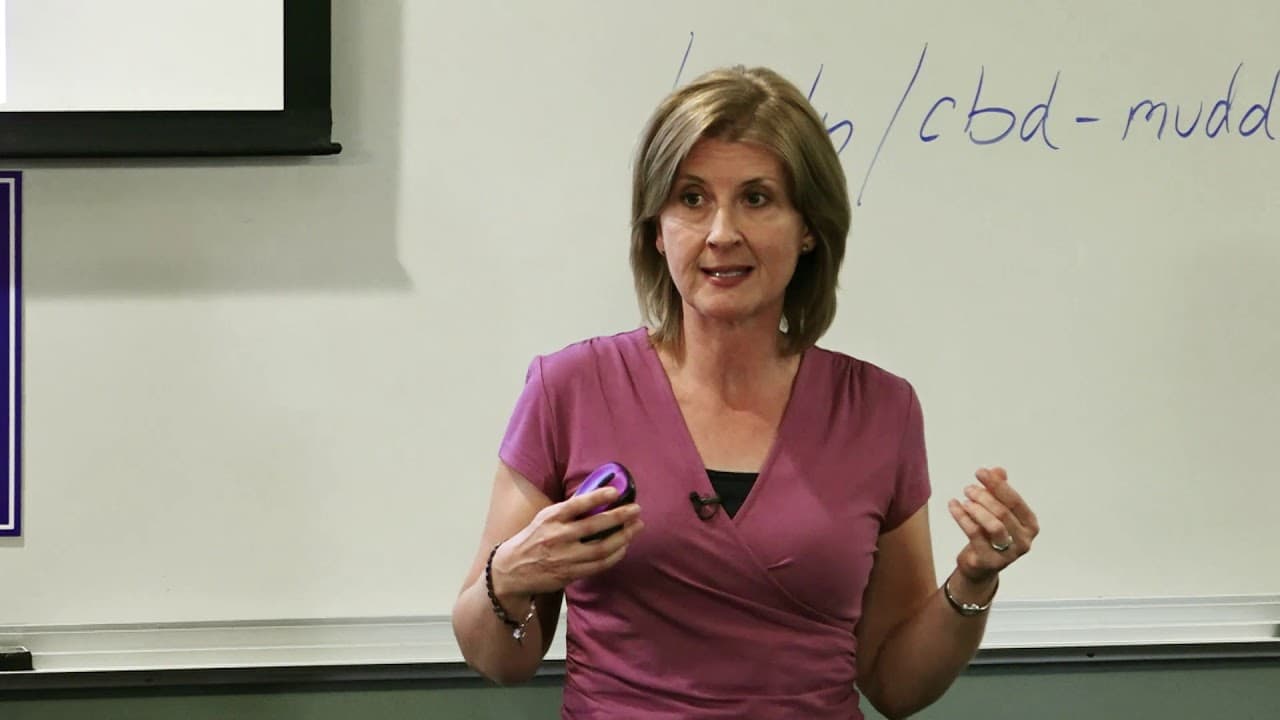
Stanford University welcome I'm Pauline wiles this is our contemplation by design session more mindful less muddled I'm really glad that you're here I want to start with a big thank you to the staff and the volunteers of the contemplation by design program they have worked incredibly hard to bring us a 10 day schedule of events which is just wonder... Read More
Key Insights
- ❓ Clutter has been a problem for centuries, affecting both modern and historical societies.
- ❓ Internal and external clutter are interconnected, and organizing one can positively impact the other.
- 😷 Doubts and emotional attachments are natural when decluttering, but asking the right questions can help overcome them.
- 💦 Decluttering is a personal journey, and there is no one-size-fits-all solution. Find strategies that work best for you.
- 🏛️ Building momentum, avoiding common mistakes, and leveraging external support can boost your chances of successful decluttering.
- 👻 Mindful decluttering involves being intentional about what you allow into your life, both physically and mentally.
Install to Summarize YouTube Videos and Get Transcripts
Explore YouTube Video Summarizer or Get YouTube Transcript Extractor
Questions & Answers
Q: How does clutter impact our mental wellbeing?
Clutter in our physical spaces can lead to mental clutter and feelings of being overwhelmed, stressed, and unorganized. When our external environment is chaotic, it can affect our internal state as well.
Q: How can we make the decision to let go of sentimental items?
Sentimental items can be challenging to let go of, as they often hold emotional value. However, it's important to remember that memories can be cherished without physical possessions. Taking photos or creating a digital record can help preserve the sentiment while reducing clutter.
Q: What are some strategies for getting started with decluttering?
Begin by choosing a specific space or category of belongings to declutter. Then, gather all items together to get a comprehensive view. Consider the function of the space or category and how it aligns with your desired functionality. Lastly, assess the decision density and emotional attachment to determine what to keep and what to let go.
Q: How can we avoid the mistake of expecting decluttering to be a quick process?
Recognize that decluttering is a journey, and it may take time to see significant results. Celebrate each small success along the way and avoid rushing the process. Remember, progress is more important than perfection.
Summary & Key Takeaways
-
Clutter can exist in both our physical and mental spaces, leading to feelings of overwhelm and disorganization.
-
Mindful decluttering involves assessing the items and thoughts in our lives, making intentional choices to let go of what no longer serves us.
-
By creating an action plan, asking key questions, and seeking support, we can successfully declutter and create a more peaceful and organized life.
Read in Other Languages (beta)
Share This Summary 📚
Summarize YouTube Videos and Get Video Transcripts with 1-Click
Try YouTube Summary with ChatGPT & Claude or YouTube Transcript Generator
Explore More Summaries from Stanford 📚



Summarize YouTube Videos and Get Video Transcripts with 1-Click
Try YouTube Summary with ChatGPT & Claude or YouTube Transcript Generator