How to Catch a Nile Monitor Lizard in the Wild?
TL;DR
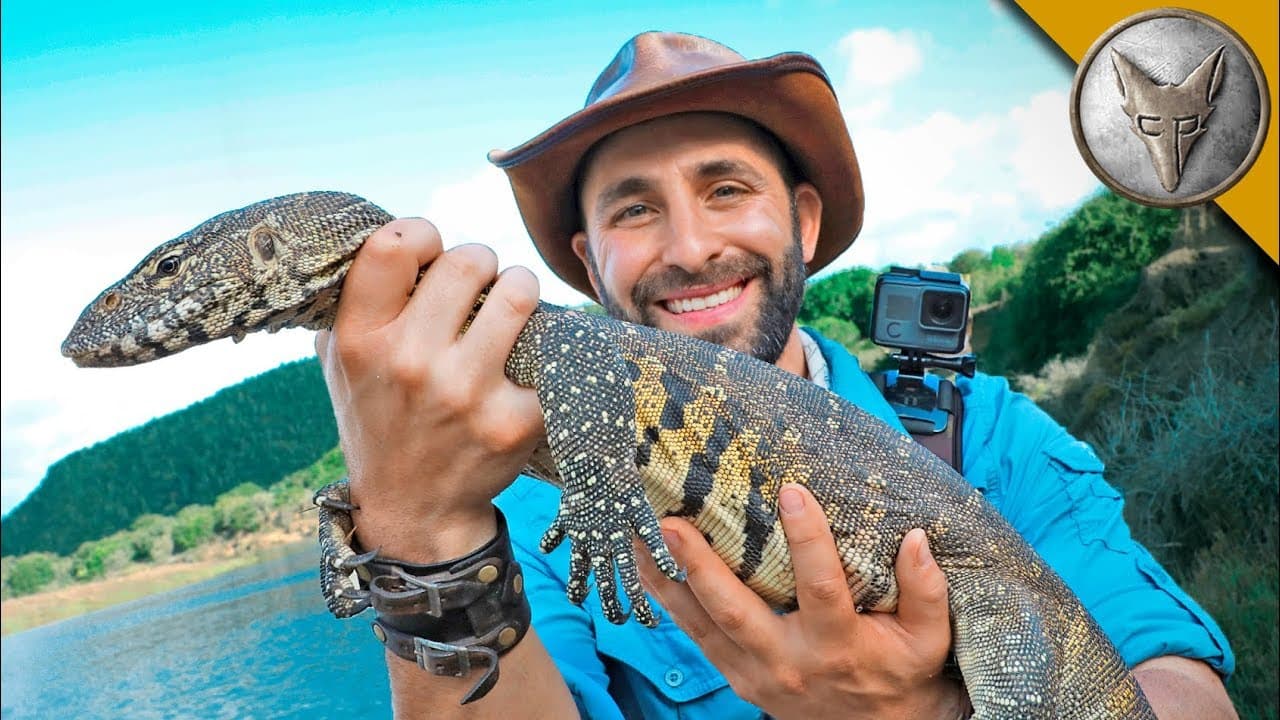
To catch a Nile monitor lizard, deftly use a snare while approaching it slowly to avoid alarming it. These reptiles are highly intelligent and agile, making them challenging to catch. The Nile monitor, adept at aquatic living, features a flat tail and high nostrils for swimming, resembling a small dinosaur.
Transcript
- Okay, we've got a monitor lizard. Let's motor in really, really slow. Got it. Hold it still, hold it still. Bring on the boat, bringing him up, bringing him up. Hold on I don't have him under control yet. Whoa, look out, look out, look out! (dramatic orchestral music) (lion roars) - The rolling grasslands of South Africa are home to a wide variet... Read More
Key Insights
- 👪 The South African grasslands are home to various animal species, including cultural icons like elephants, giraffes, and lions.
- 🌍 The Nile Monitor is considered one of the most dangerous animals in the world due to its predatory behavior.
- ❓ Catching a Nile Monitor requires careful planning, as they are intelligent, agile, and swift.
- 🦷 Releasing a captured Nile Monitor can also be challenging, as they possess sharp claws and teeth.
- 🧑🤝🧑 Monitor lizards, including the Nile Monitor, date back over 100 million years in the fossil record, resembling ancient dinosaurs.
- 💦 Their aquatic adaptations, such as a flat tail and high-positioned nostrils, help them thrive in water ecosystems.
- 🐎 The Nile Monitor is known for its speed, cunning, and problem-solving abilities.
Install to Summarize YouTube Videos and Get Transcripts
Explore YouTube Video Summarizer or Get YouTube Transcript Extractor
Questions & Answers
Q: Why is the Nile Monitor considered one of the most dangerous animals in the world?
The Nile Monitor is opportunistic and primarily carnivorous, making it a formidable predator. It also has a powerful tail, sharp claws, and can use its teeth to defend itself against potential threats.
Q: How did Coyote successfully catch the Nile Monitor?
Coyote used a snare to catch the Nile Monitor. By positioning the snare close to the lizard's head, he was able to capture it when it curiously approached the string.
Q: Why did Coyote choose to catch the Nile Monitor using a snare instead of barehanded?
Coyote wanted to catch the lizard barehanded, but the positioning and clear space on the embankment made it more suitable to use a snare. This allowed him to safely restrain the lizard without risking injury.
Q: What are some unique adaptations of the Nile Monitor for living in an aquatic environment?
The Nile Monitor has a flat tail like a propeller, which helps it propel through the water. Its nostrils are positioned high on its skull, allowing it to keep its eyes and nose above water when swimming.
Summary & Key Takeaways
-
Coyote Peterson and his team embark on a mission to catch a Nile Monitor lizard in South Africa's Bushman's River.
-
After a long search, they successfully spot and catch a Nile Monitor using a snare.
-
The Nile Monitor is known for its predatory behavior, aquatic adaptations, and resemblance to a dinosaur.
Read in Other Languages (beta)
Share This Summary 📚
Summarize YouTube Videos and Get Video Transcripts with 1-Click
Try YouTube Summary with ChatGPT & Claude or YouTube Transcript Generator
Explore More Summaries from Brave Wilderness 📚





Summarize YouTube Videos and Get Video Transcripts with 1-Click
Try YouTube Summary with ChatGPT & Claude or YouTube Transcript Generator