What Are Ionic, Polar Covalent, and Nonpolar Covalent Bonds?
TL;DR
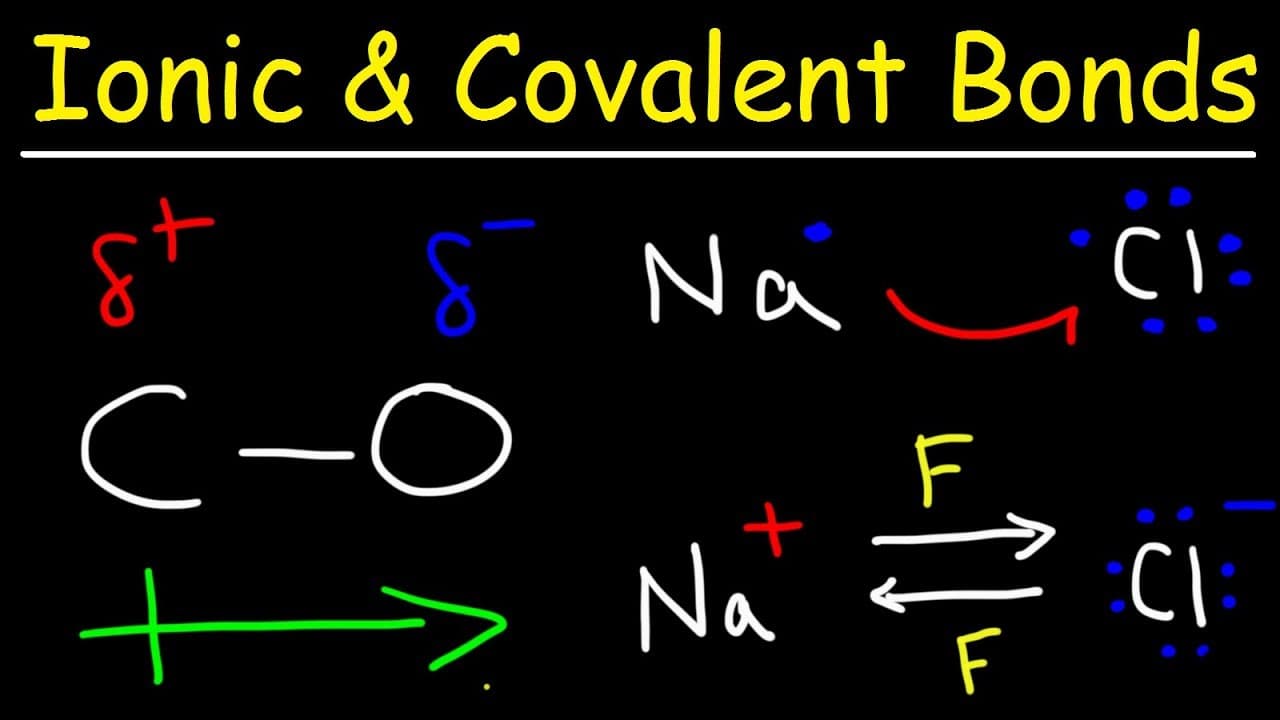
Ionic bonds occur between metals and nonmetals through electron transfer, while polar covalent bonds involve unequal sharing of electrons between nonmetals, identified by an electronegativity difference of 0.5 or more. Nonpolar covalent bonds happen when electrons are shared equally, typically between atoms of the same element or in specific combinations like carbon-hydrogen bonds.
Transcript
in this lesson we're going to talk about ionic bonds covalent bonds particularly in polar covalent bonds and nonpolar covalent bonds so let's say if we have this bond the bond between two hydrogen atoms would you describe this bond as ionic polar covalent or nonpolar covalent anytime you have a bond between two atoms of the same element it's always... Read More
Key Insights
- 🫀 Nonpolar covalent bonds form between atoms of the same element, with shared electrons.
- ❓ Electronegativity difference determines the polarity of covalent bonds.
- 🤘 Ionic bonds occur between metals and nonmetals, involving the transfer of electrons.
- 💪 Hydrogen bonds are a special type of polar covalent bond that creates strong intermolecular forces.
- ❓ Carbon-hydrogen bonds and carbon-carbon bonds are always nonpolar covalent.
- 🅰️ The difference in electronegativity values helps determine the type of bond.
- 🐻❄️ Nonpolar molecules do not dissolve easily in polar substances.
Install to Summarize YouTube Videos and Get Transcripts
Explore YouTube Video Summarizer or Get YouTube Transcript Extractor
Questions & Answers
Q: What is the difference between a polar and nonpolar covalent bond?
In a polar covalent bond, electrons are shared unequally between atoms with different electronegativity values. This leads to partial positive and negative charges on the atoms involved. In a nonpolar covalent bond, electrons are shared equally between atoms with similar electronegativity values.
Q: How do you determine if a bond is ionic or covalent?
If a bond is between a metal and a nonmetal, it is likely ionic. Otherwise, it is likely covalent. The difference in electronegativity values can further determine if it is polar or nonpolar covalent.
Q: What is the significance of hydrogen bonding?
Hydrogen bonding occurs when hydrogen is directly attached to nitrogen, oxygen, or fluorine. It is a special type of polar covalent bond and creates strong intermolecular forces. This leads to unique properties, such as high boiling points in molecules like water.
Q: Why are carbon-hydrogen bonds always nonpolar covalent?
Carbon and hydrogen have similar electronegativity values, causing the bond to be nonpolar. The electrons in these bonds are shared equally, resulting in no partial charges.
Summary & Key Takeaways
-
Certain elements, such as hydrogen, form nonpolar covalent bonds when bonded to another atom of the same element. In these bonds, electrons are shared equally due to the similar electronegativity values.
-
When bonding between two nonmetals, like carbon and oxygen, the difference in electronegativity determines if the bond is polar or nonpolar covalent. A difference of 0.5 or more indicates a polar covalent bond.
-
A bond between a metal and a nonmetal, like sodium and chlorine, is usually an ionic bond. In ionic bonds, electrons are transferred, creating positively charged cations and negatively charged anions.
-
Carbon-hydrogen bonds are always nonpolar covalent, and carbon-carbon bonds are nonpolar as well. The OH bond, with oxygen being more electronegative than hydrogen, exhibits a polar covalent bond and can form hydrogen bonding.
-
The bond between lithium and fluorine is ionic due to the significant difference in electronegativity between the metal and nonmetal.
Read in Other Languages (beta)
Share This Summary 📚
Summarize YouTube Videos and Get Video Transcripts with 1-Click
Try YouTube Summary with ChatGPT & Claude or YouTube Transcript Generator
Explore More Summaries from The Organic Chemistry Tutor 📚



Summarize YouTube Videos and Get Video Transcripts with 1-Click
Try YouTube Summary with ChatGPT & Claude or YouTube Transcript Generator