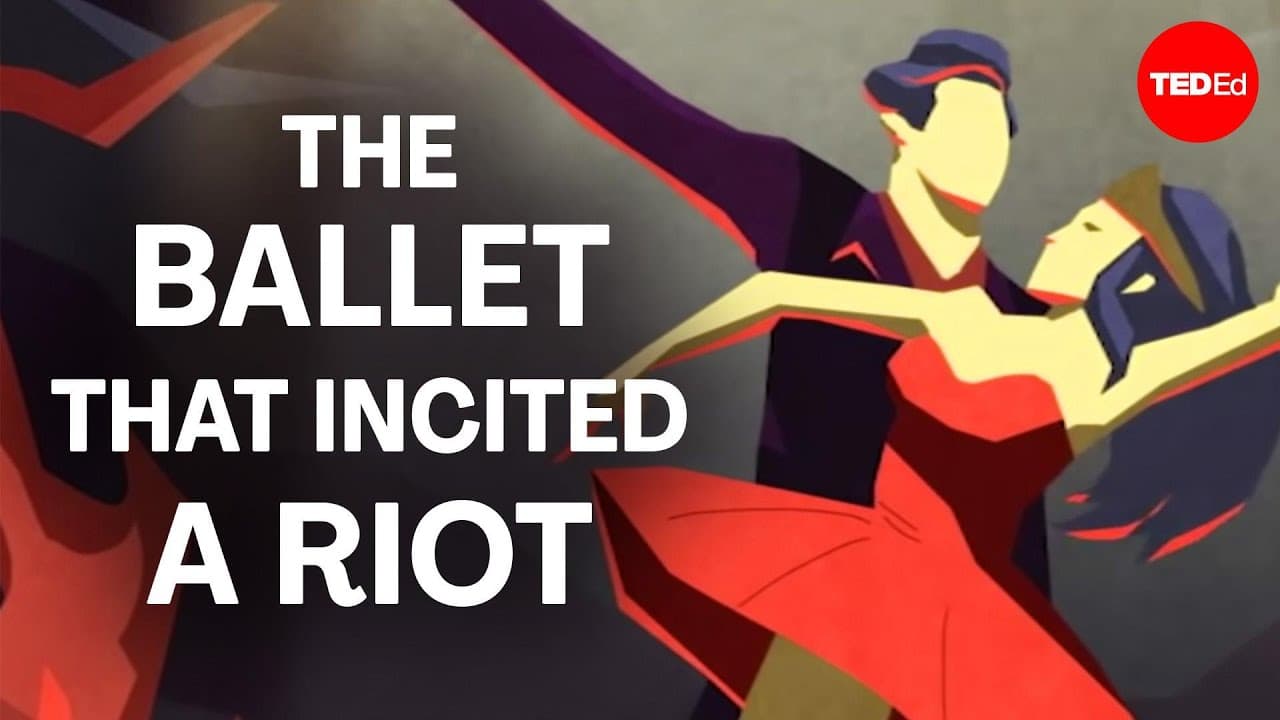
The ballet that incited a riot - Iseult Gillespie
TL;DR
The performance of Igor Stravinsky's "The Rite of Spring" in 1913 caused an uproar among the audience due to its unsettling music, unconventional choreography, and provocative themes.
Transcript
We typically think of ballet as harmonious, graceful and polished– hardly features that would trigger a riot. But at the first performance of Igor Stravinsky’s "The Rite of Spring," audience members were so outraged that they drowned out the orchestra. Accounts of the event include people hurling objects at the stage, challenging each other to ... Read More
Key Insights
- 🎼 "The Rite of Spring" caused a riot during its first performance in 1913 due to its unsettling music, unconventional choreography, and provocative themes.
- 🩰 The ballet focuses more on the violent relationship between humans, nature, and culture than on traditional character development or plot.
- 🫷 Igor Stravinsky pushed the boundaries of classical music by incorporating syncopation, atonality, and multiple time signatures in the composition.
- 😫 The collaboration between Stravinsky and Nicholas Roerich resulted in costumes and set designs that reflected the ballet's prehistoric themes and pagan rituals.
- 🫢 Vaslav Nijinsky's choreography for "The Rite of Spring" challenged traditional ballet techniques and shocked the audience with its agitated and uneven movements.
- 🎼 The influence of "The Rite of Spring" can still be seen in various genres today, including modern jazz rhythms, folky classical music, and even horror film scores.
- 💦 The original work continues to inspire and provoke audiences with its unsettling and haunting impact.
Install to Summarize YouTube Videos and Get Transcripts
Explore YouTube Video Summarizer or Get YouTube Transcript Extractor
Questions & Answers
Q: Why did the performance of "The Rite of Spring" cause a riot?
The ballet's unsettling music, jerky dancing, and uncanny staging challenged the traditional expectations of the audience, leading to outrage and disruption.
Q: What themes does "The Rite of Spring" explore?
"The Rite of Spring" delves into the violent relationship between humans, nature, and culture, highlighting the primal and pagan aspects of human existence.
Q: Who collaborated with Igor Stravinsky to bring "The Rite of Spring" to life?
Artist Nicholas Roerich worked with Stravinsky on the ballet, creating costumes inspired by Russian medieval art and designing vivid backdrops of primeval nature.
Q: How did the choreography of "The Rite of Spring" differ from traditional ballet?
Choreographer Vaslav Nijinsky's innovative dance moves in "The Rite of Spring" were agitated, uneven, and often offbeat, challenging the refinement and romance typically associated with ballet.
Summary & Key Takeaways
-
"The Rite of Spring" is a ballet that was first performed in 1913 and caused outrage among the audience.
-
The ballet explores the violent relationship between humans, nature, and culture, and focuses more on these themes than on character or plot.
-
The unsettling music, jerky dancing, and uncanny staging of the performance challenged the conventions of classical music and ballet.
Read in Other Languages (beta)
Share This Summary 📚
Summarize YouTube Videos and Get Video Transcripts with 1-Click
Try YouTube Summary with ChatGPT & Claude or YouTube Transcript Generator
Explore More Summaries from TED-Ed 📚





Summarize YouTube Videos and Get Video Transcripts with 1-Click
Try YouTube Summary with ChatGPT & Claude or YouTube Transcript Generator