How to Clone Apps for $35K Monthly Income
TL;DR
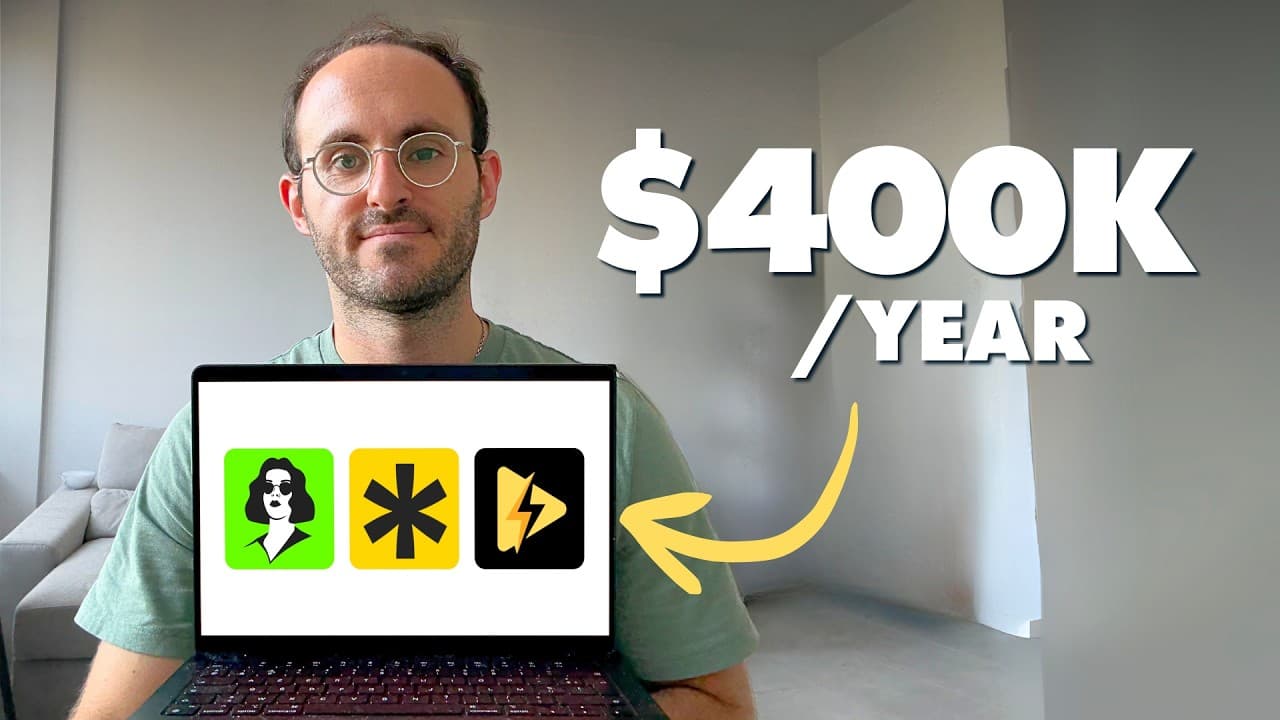
Samuel Rondot generates $35,000 monthly by cloning successful apps and improving them slightly. His approach involves identifying apps with proven demand, using AI tools for coding, and leveraging marketing strategies like ads and SEO. By focusing on simplicity and personal interest, he ensures maintainable and profitable projects.
Transcript
My name is Samuel and I run three apps making $35,000 a month. You might think you need to come up with a completely new idea. But I just met a guy who does the exact opposite. His strategy is simple. One, find an app that's working. And two, make it 1% better. If it's already successful, I know it's validating. But don't be fooled. He's not just c... Read More
Key Insights
- Samuel Rondot earns $35,000 monthly from three apps by cloning existing successful apps.
- He learned coding through a 15-hour YouTube course, applying new skills immediately to real projects.
- His strategy emphasizes not innovating but improving existing ideas by 1% to ensure demand and reduce failure risk.
- Samuel uses AI tools for coding, allowing him to build 90% of apps efficiently without traditional coding methods.
- His ideation process involves finding ideas on platforms like Twitter and ensuring they meet personal use, demand, and simplicity criteria.
- Marketing strategies include starting with ads for quick validation, followed by SEO for sustainable growth.
- He uses tools like Mobin for design inspiration, ensuring apps are user-friendly and visually appealing.
- Samuel's tech stack includes NexJS, NodeJS, and AI tools for automation, ensuring efficient development and maintenance.
Install to Summarize YouTube Videos and Get Transcripts
Explore YouTube Video Summarizer or Get YouTube Transcript Extractor
Questions & Answers
Q: How does Samuel Rondot make $35,000 a month?
Samuel Rondot earns $35,000 monthly by cloning successful apps and improving them slightly. He identifies apps with proven demand, uses AI tools for coding, and implements effective marketing strategies like ads and SEO. His focus on simplicity and personal interest ensures maintainable and profitable projects.
Q: What is Samuel's framework for learning coding?
Samuel taught himself coding by following a 15-hour YouTube course, applying each new skill immediately to a real project. He emphasizes using AI coding tools to build 90% of apps efficiently, suggesting that aspiring developers focus on practical application rather than traditional learning methods.
Q: What is Samuel's strategy for finding app ideas?
Samuel's strategy involves sourcing ideas from platforms like Twitter, focusing on communities such as solopreneurs. He ensures ideas meet criteria like personal use, proven demand, minimal marketing expenditure, and simplicity. This approach reduces failure risk and increases the likelihood of success.
Q: How does Samuel validate app ideas?
Samuel validates app ideas by checking for traction indicators like revenue screenshots shared by founders on Twitter. He analyzes traffic sources using tools like Ahrefs, ensuring the product can be built and maintained easily, and confirms personal interest in the product to ensure long-term motivation.
Q: What marketing strategies does Samuel use for his apps?
Samuel starts with ads on platforms like Google and Meta for quick market validation. Once traction is achieved, he focuses on SEO for sustainable growth. He also uses faceless YouTube channels and affiliate marketing to increase visibility and drive customer acquisition at a fixed cost.
Q: What tech stack does Samuel use for app development?
Samuel's tech stack includes NexJS and NodeJS for coding, Ahrefs for SEO analysis, and AI tools for writing articles. He uses Vercel for app deployment and Stripe for payments. This setup ensures efficient development and maintenance while leveraging automation for content creation and posting.
Q: How does Samuel manage the costs of running his apps?
Samuel manages costs by focusing on simplicity and automation. His apps cost between $4,000 and $5,000 per month to run. He uses automation tools to reduce operational complexity and leverages effective marketing strategies to ensure profitability despite operational expenses.
Q: What advice does Samuel give for starting app development?
Samuel advises using AI coding tools, launching as soon as possible with a minimal viable product, and focusing on ads for initial validation. He emphasizes the importance of SEO for long-term growth and suggests automating as much as possible to streamline operations and maximize efficiency.
Summary & Key Takeaways
-
Samuel Rondot makes $35,000 monthly by cloning and slightly improving existing successful apps. He focuses on apps with proven demand and uses AI tools for coding, allowing him to build efficiently without traditional methods. His marketing strategy starts with ads for validation, then shifts to SEO for sustainable growth.
-
By leveraging platforms like Twitter for idea sourcing, Samuel ensures his projects meet personal interest and simplicity criteria, reducing maintenance complexity. His tech stack includes NexJS, NodeJS, and AI tools, facilitating efficient development and automation.
-
Samuel's approach demonstrates that innovation isn't always necessary for success. By improving existing ideas and implementing effective marketing strategies, he achieves profitability and sustainability. His story highlights the potential of AI tools in app development and the importance of validating ideas through demand.
Read in Other Languages (beta)
Share This Summary 📚
Summarize YouTube Videos and Get Video Transcripts with 1-Click
Try YouTube Summary with ChatGPT & Claude or YouTube Transcript Generator
Explore More Summaries from Starter Story 📚



Summarize YouTube Videos and Get Video Transcripts with 1-Click
Try YouTube Summary with ChatGPT & Claude or YouTube Transcript Generator