How to Use the P-Value Method for Hypothesis Testing?
TL;DR
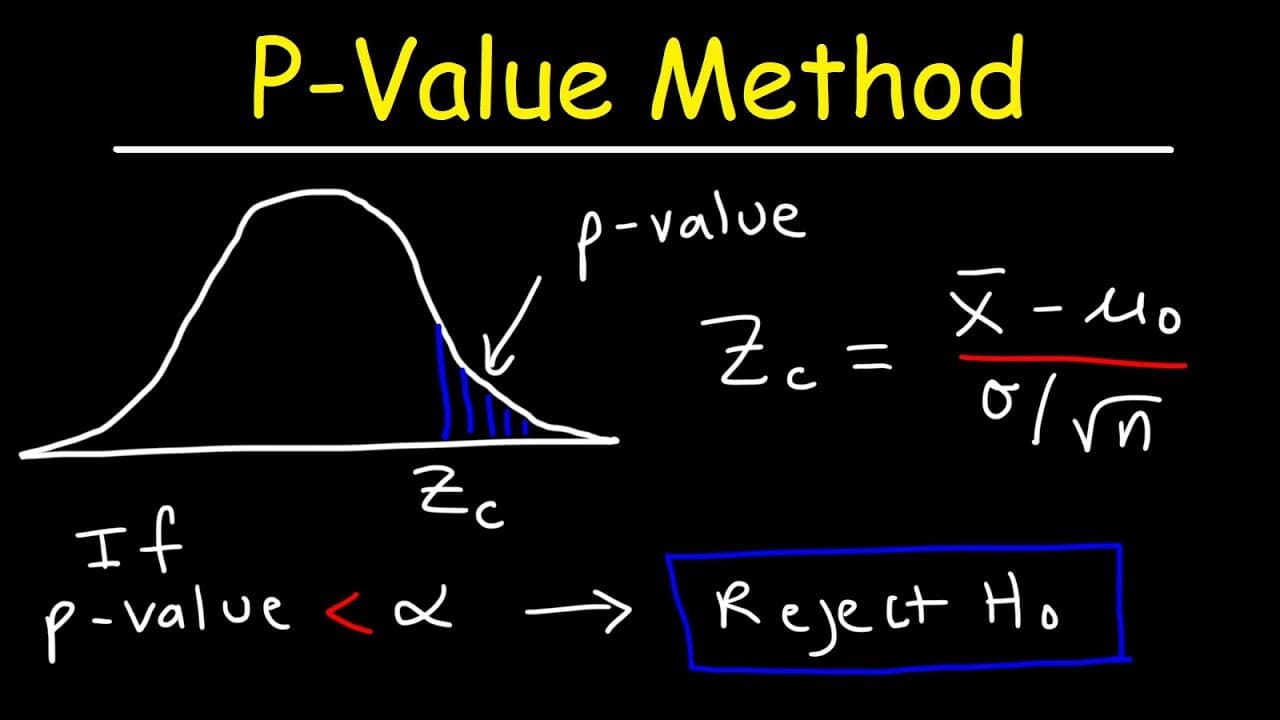
To use the P-value method for hypothesis testing, calculate the P-value by finding the area corresponding to the test statistic and compare it to the significance level (alpha). If the P-value is less than alpha, reject the null hypothesis, indicating enough evidence to support the alternative hypothesis.
Transcript
in this video we're going to talk about how to determine if we should reject or fail to reject the null hypothesis using the p-value method so let's work on this problem as an example the average weight of all residents in town xyz is 168 pounds a nutritionist believes the true mean to be different she measured the weight of 36 individuals and foun... Read More
Key Insights
- 🏆 The P-value method involves calculating the P-value, which represents the area that corresponds to the test statistic.
- 🔤 If the P-value is less than the significance level (alpha), the null hypothesis is rejected.
- 🤪 The traditional method compares the calculated test statistic (z-value) with the critical values from the z-table.
- 🏆 The appropriate test (z-test or t-test) depends on the sample size and whether the population standard deviation is known.
Install to Summarize YouTube Videos and Get Transcripts
Explore YouTube Video Summarizer or Get YouTube Transcript Extractor
Questions & Answers
Q: What is the null hypothesis in the example of the average weight of residents in town XYZ?
The null hypothesis states that the average weight of all residents in town XYZ is 168 pounds.
Q: How is the alternative hypothesis defined in the weight example?
The alternative hypothesis suggests that the mean weight is different from 168 pounds.
Q: What is the significance level used in the examples?
The significance level is 0.05, corresponding to a 95% confidence level.
Q: In the car warranty example, what is the null hypothesis?
The null hypothesis is that the mean time for engine or transmission malfunction is equal to or greater than five years.
Summary & Key Takeaways
-
The video provides an example of determining the null and alternative hypotheses for a problem involving the average weight of residents in a town.
-
It explains how to use both the traditional method and the P-value method to determine if there is enough evidence to reject the null hypothesis.
-
The video then presents another example of testing the warranty of cars to determine if it should be revised.
Read in Other Languages (beta)
Share This Summary 📚
Summarize YouTube Videos and Get Video Transcripts with 1-Click
Try YouTube Summary with ChatGPT & Claude or YouTube Transcript Generator
Explore More Summaries from The Organic Chemistry Tutor 📚





Summarize YouTube Videos and Get Video Transcripts with 1-Click
Try YouTube Summary with ChatGPT & Claude or YouTube Transcript Generator