How Could Weapons Transform Warfare in Space?
TL;DR
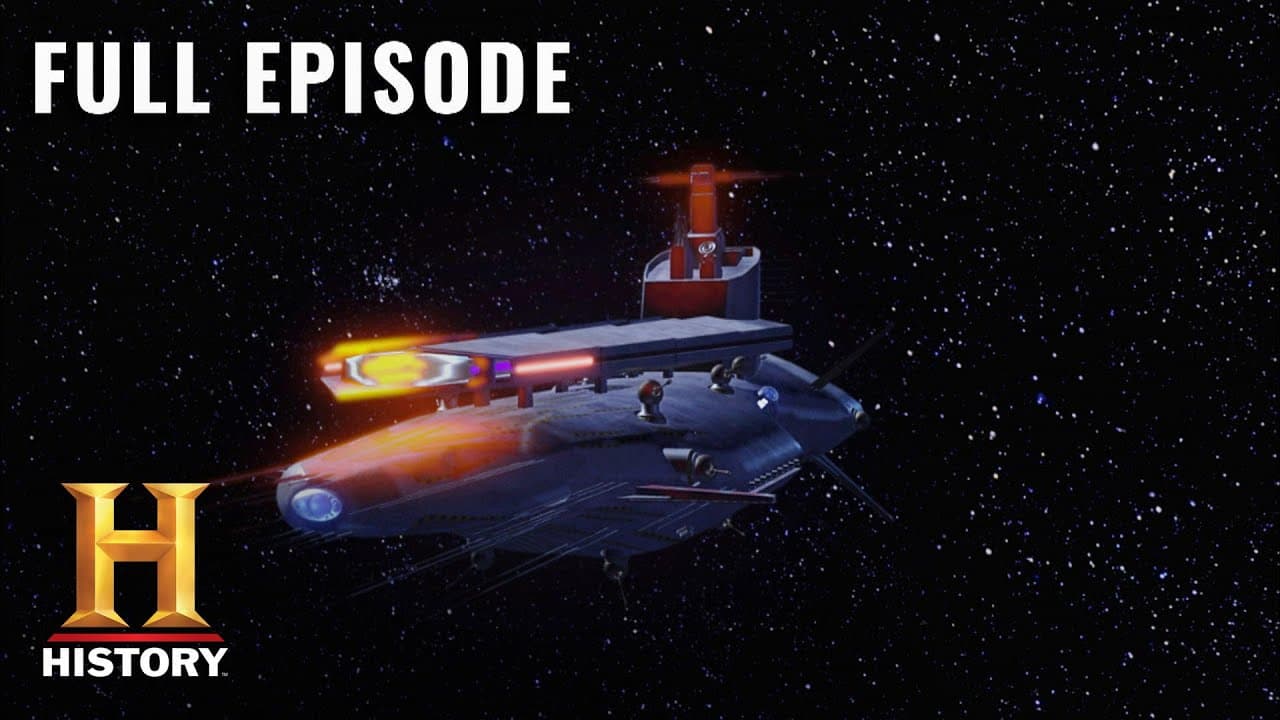
The first space conflicts would most likely target satellites because military communications, navigation, intelligence, and targeting already depend on them. Future arsenals could expand to kinetic projectiles, lasers, nuclear devices, and antimatter weapons, but many remain beyond current capabilities. Attacks on orbital infrastructure could also disrupt civilian services, including phones, ATM access, fuel payments, and financial transactions.
Transcript
NARRATOR: Telephone pole-sized rods streak down from outer space and obliterate targets on Earth. It would be the ultimate bunker buster. NARRATOR: Powerful lasers instantly blast enemies in any direction. You'll get zapped at the same time that you see the Zapper in the shape of zapping. NARRATOR: Missiles traveling near the speed of light deliver... Read More
Key Insights
- Satellite warfare is the most plausible opening stage of conflict in space because modern armed forces rely on orbital systems for communications, navigation, intelligence gathering, reconnaissance, targeting information, and accurate positioning during ground operations.
- Anti-satellite interception is possible because advanced missiles use sensors and fast computers to track their own position, follow targets moving at about 17,000 miles per hour, and make split-second course adjustments before impact.
- Kinetic energy is the destructive force produced by motion, and it increases with an object's mass and the square of its velocity. An object traveling twice as fast therefore carries four times the kinetic energy of an equal-mass object.
- Orbital kinetic projectiles could function as non-explosive bunker busters by accelerating dense, telephone pole-sized rods to more than 10,000 miles per hour. The impact could penetrate layers of rock and devastate an underground target without radioactive material.
- Laser weapons would deliver energy at the speed of light, allowing a beam fired near Earth to cross the roughly 240,000-mile distance to the moon in just over a second. However, sufficiently powerful long-distance systems remain beyond current capabilities.
- Antimatter weapons would work by allowing oppositely charged matter and antimatter particles to meet and annihilate. The process converts all their mass into energy, compared with about 1% efficiency for nuclear weapons and a tiny fraction of a percent for chemical weapons.
- Nuclear explosions in space would appear as flashes and expanding spheres of radiation rather than mushroom clouds. Without an atmosphere, they would produce no conventional shockwave, but gamma rays, neutrons, and other radiation could travel far and damage satellite electronics.
- Civilian infrastructure is vulnerable to satellite losses because ATM machines, some cell phones, fuel payments, and global financial transactions depend on space-based services or GPS timing signals. A large orbital conflict could therefore slow activity throughout the world.
Install to Summarize YouTube Videos and Get Transcripts
Explore YouTube Video Summarizer or Get YouTube Transcript Extractor
Questions & Answers
Q: Why would satellites be targeted first in a space war?
Satellites would probably become the first targets because they are already essential to warfare on Earth. Military forces use them for communications, navigation, photographic and signal intelligence, targeting information, and accurate GPS positioning. Disabling those systems could weaken an opponent without requiring crewed battles in orbit, which is why early conflict would likely involve satellites, anti-satellite missiles, and other unmanned systems.
Q: How can a missile hit a fast-moving satellite?
An anti-satellite missile relies on sensors and advanced computers to determine its own position, track the target, and make split-second adjustments during flight. The challenge is substantial because a satellite in low Earth orbit may travel at about 17,000 miles per hour. The transcript compares the interception to meeting another person's tennis serve with your own, except the missile continually corrects its path.
Q: How do kinetic weapons cause damage without explosives?
Kinetic weapons damage targets by transferring the energy of their motion during impact. The amount of energy depends on both mass and velocity, with velocity squared in the equation. Consequently, doubling an object's speed gives it four times as much kinetic energy when mass remains equal. At sufficiently high velocities, a projectile can produce enormous destruction without carrying an explosive warhead.
Q: What is a rod from God weapon?
A rod from God is a proposed dense-metal projectile launched from orbit toward a surface target. The example described is approximately the size of a telephone pole. After a brief rocket boost, gravity accelerates it to more than 10,000 miles per hour before impact. Its kinetic energy could penetrate layers of moon rock and destroy an underground command center without explosives or radioactive material.
Q: How would laser weapons operate across space?
Laser weapons would send concentrated light toward a target at 186,000 miles per second. A beam fired from near Earth could therefore travel roughly 240,000 miles to the moon in just over a second, giving an enemy little time to react. The main limitation is technological, since producing lasers powerful enough to destroy large targets across vast distances remains beyond current capabilities.
Q: How would an antimatter bomb release energy?
An antimatter bomb would keep antimatter separated from ordinary matter with an electromagnetic field during transport. Near the target, the field would be turned off, allowing the antimatter to contact matter and annihilate with it. The process converts all the interacting mass into energy. The transcript contrasts this 100% efficiency with roughly 1% for nuclear weapons and far less for chemical weapons.
Q: What happens when a nuclear weapon explodes in space?
A nuclear explosion in space lacks the atmospheric conditions that produce a mushroom cloud and a building-destroying shockwave. Instead, it appears as a flash of light followed by an expanding sphere or cloud of radiation. High-energy gamma rays, neutrons, and other particles travel outward, potentially penetrating satellites, passing through materials, or striking electronic systems and causing damage over large distances.
Q: How could satellite warfare disrupt daily life on Earth?
Destroying satellites could affect much more than military operations because global society depends on space-based infrastructure. The transcript says ATM machines could stop working, many cell phones could fail, pay-at-the-pump systems could become unavailable, and financial transactions using GPS timing could be disrupted. A widespread exchange of anti-satellite attacks could therefore slow civilian and commercial activity around the world.
Summary & Key Takeaways
-
Space warfare would probably begin with attacks on satellites rather than battles between crewed spacecraft. Satellites support communications, navigation, reconnaissance, signal intelligence, targeting, and accurate ground maneuvers. Their importance makes them valuable military targets, while society's dependence on orbital infrastructure means that attacks could also produce widespread civilian disruption.
-
Kinetic weapons destroy targets through motion instead of explosive warheads. Their destructive energy rises with mass and with the square of velocity, making speed especially important. Proposed orbital projectiles could strike underground facilities at more than 10,000 miles per hour, while anti-satellite missiles can disable lightweight spacecraft simply by ramming them.
-
More speculative weapons include long-range lasers, nuclear explosions, and antimatter bombs. Lasers would reach distant targets at light speed, while matter and antimatter annihilation would convert their mass into energy. Nuclear explosions in space would lack atmospheric mushroom clouds and conventional shockwaves, but their expanding radiation could penetrate satellites and damage electronics.
Read in Other Languages (beta)
Share This Summary 📚
Summarize YouTube Videos and Get Video Transcripts with 1-Click
Try YouTube Summary with ChatGPT & Claude or YouTube Transcript Generator
Explore More Summaries from HISTORY 📚





Summarize YouTube Videos and Get Video Transcripts with 1-Click
Try YouTube Summary with ChatGPT & Claude or YouTube Transcript Generator