Could Antarctica Hide Ancient Alien Structures?
TL;DR
The episode presents pyramid-shaped Antarctic formations, old maps, UFO reports, monoliths, megalithic sites, and Coral Castle as possible clues of lost civilizations or extraterrestrial technology. Its central argument is speculative: unusual geometry, disputed historical evidence, and unexplained construction methods are treated as reasons to question conventional accounts, while mainstream scientists identify the Antarctic shapes as natural formations.
Transcript
[camera shutters clicking] [dramatic music] - This gigantic pyramid in Antarctica would be the oldest pyramid on our planet. - It's possible that underneath the ice will be keys for us to reclaim our ancient past. - The Nazis were particularly interested in Antarctica. - Saucers were coming up out of the water and were shooting them with some sort ... Read More
Key Insights
- Antarctica is described as a largely untouched continent spanning more than five million square miles, with average daily temperatures of minus 49 degrees Fahrenheit and winds exceeding 200 miles per hour. Its extreme environment limits habitation mainly to scattered research stations.
- The Antarctic pyramid claim is based on photographs and satellite imagery showing apparently symmetrical formations emerging from melting ice. Mainstream scientists identify them as natural landforms, but satellite imagery analysts featured in the episode interpret their geometry as potential evidence of intelligent construction.
- Joseph White's proposed structure is described as a square formation south of the Shackleton mountain range. He says it aligns with north, south, east, and west, measures exactly two kilometers from corner to corner, and displays symmetry that he considers unlikely to occur naturally.
- Pyramids are presented as possible components of a worldwide energy network. Contributors theorize that strategically positioned pyramids could generate a standing wave for wireless energy transmission, potentially helping advanced ancient ships or extraterrestrial technology navigate around the planet.
- Charles Hapgood's crustal displacement theory proposes that portions of Earth's crust can shift violently and rapidly. The episode applies this disputed idea to Antarctica, suggesting that a formerly temperate region and any civilization occupying it might have been frozen following a sudden catastrophe.
- The Oronteus Finaeus map is a 1531 document presented as depicting an ice-free Antarctica with coastlines, rivers, valleys, mountains, and interior details. The episode asks whether its creator used a much older source produced when parts of the continent lacked ice.
- The episode's argument is explicitly controversial and speculative. It repeatedly converts unexplained shapes, unusual alignments, disputed maps, UFO accounts, and difficult construction achievements into questions about extraterrestrial involvement rather than presenting direct confirmation that aliens created the structures.
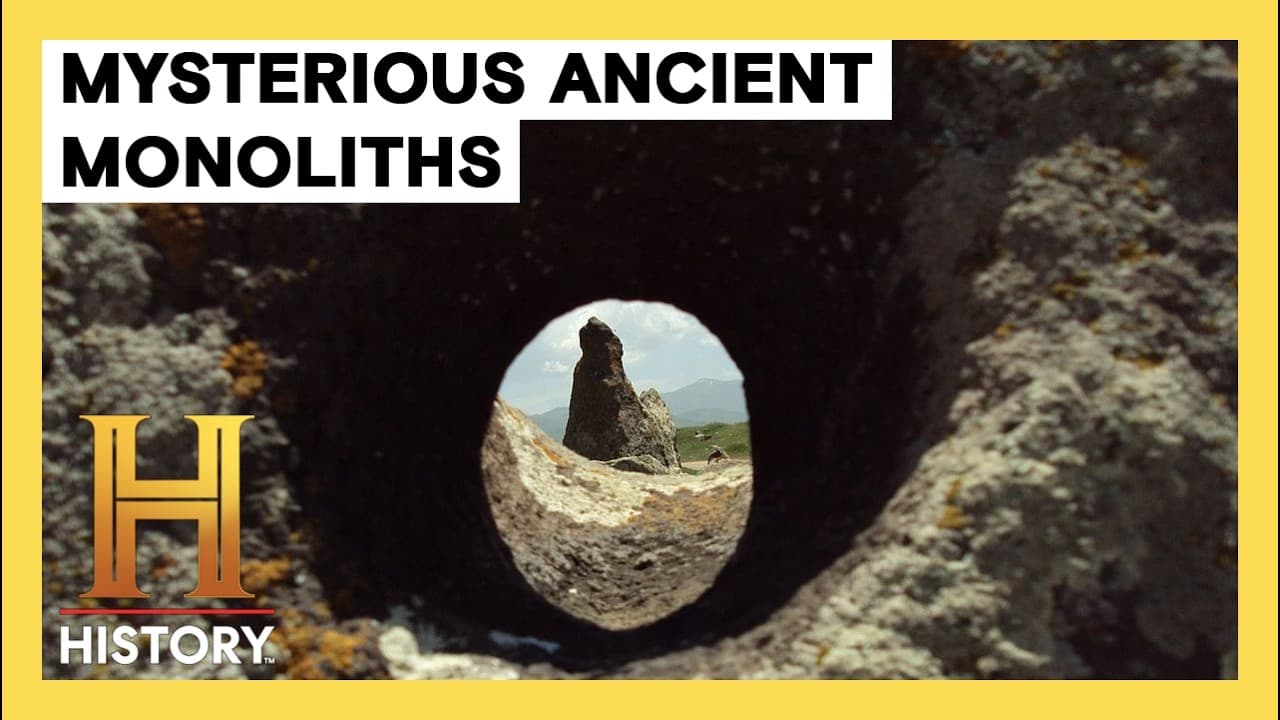
- The program connects several categories of mystery across its chapters, including Antarctic pyramids, Britain's UFO files and secret bunkers, global monoliths, ancient megalithic technology, and Coral Castle. Together, these cases are used to explore whether advanced knowledge had a nonhuman origin.
Install to Summarize YouTube Videos and Get Transcripts
Explore YouTube Video Summarizer or Get YouTube Transcript Extractor
Questions & Answers
Q: What evidence is offered for pyramids in Antarctica?
The episode cites photographs and Google Earth imagery showing large, apparently four-sided and symmetrical formations emerging from Antarctic ice. Joseph White describes one square feature near the Shackleton mountain range as aligned with the compass and measuring exactly two kilometers from corner to corner. Mainstream scientists, however, explain the photographed shapes as natural land formations rather than artificial pyramids.
Q: Why does Joseph White think the Antarctic structure was built intelligently?
Joseph White argues that the formation's square shape, symmetry, right angles, and alignment with north, south, east, and west distinguish it from a random mountain. He also says both corner-to-corner measurements are exactly two kilometers. These observations lead him to describe it as a possible building or pyramid, although the episode also notes that scientists interpret such formations naturally.
Q: How could a pyramid exist beneath Antarctica's ice?
The episode proposes that Antarctica may have remained temperate more recently than mainstream estimates suggest. It uses Charles Hapgood's crustal displacement theory to imagine a sudden geographical shift about 12,000 years ago that rapidly froze a previously habitable region. Under that scenario, an existing civilization and its structures could have been preserved beneath the ice, but the theory was not widely accepted.
Q: What is Charles Hapgood's crustal displacement theory?
Charles Hapgood proposed that portions of Earth's crust experienced violent and sudden shifts during geological history. His theory placed Siberia and Antarctica in somewhat more temperate climates before the end of the last Ice Age, approximately 12,000 years ago. The episode says such shifts could occur within days, potentially freezing an inhabited Antarctic region very quickly, although the idea lacked broad acceptance.
Q: Why is the Oronteus Finaeus map important to the Antarctic theory?
The 1531 Oronteus Finaeus map is presented as showing a continent resembling Antarctica long before modern explorers had a clear picture of it. More unusually, the map allegedly depicts an ice-free coastline and interior features such as mountains, valleys, and rivers. The episode suggests that Finaeus may have consulted a far older map created when those features were visible.
Q: How does the episode connect pyramids with advanced technology?
Contributors propose that pyramids might function as power generators rather than only as monuments. They speculate that pyramids strategically placed around the world could create a standing wave and transmit energy wirelessly. The episode then suggests that advanced ancient ships or extraterrestrial visitors might have used this interconnected energy system for navigation, with Antarctica serving as another location within the proposed network.
Q: Does the episode prove that aliens built ancient mega structures?
No direct proof is presented in the supplied material. The program assembles unusual formations, disputed maps, global pyramids, UFO reports, monoliths, megalithic sites, and theories about advanced technology, then asks whether extraterrestrial visitors could explain them. Its description explicitly identifies ancient alien visitation as a controversial theory, and the Antarctic formations also receive a conventional explanation as natural landforms.
Q: What other unexplained structures and mysteries does the episode examine?
The listed chapters expand beyond Antarctica to examine Britain's UFO files and secret bunkers, the global mystery of monolithic structures, ancient megalithic sites associated with advanced technology, and Coral Castle's alleged anti-gravity secrets. These subjects are grouped around a common question: whether difficult construction, unexplained reports, and unusual monuments indicate forgotten human knowledge or influence from extraterrestrial visitors.
Summary & Key Takeaways
-
Antarctica is presented as a possible repository of ancient secrets because photographs and satellite imagery show large, symmetrical, pyramid-shaped formations. Contributors argue that their apparent alignment, right angles, and scale may indicate intelligent construction, while mainstream scientists explain the photographed features as naturally occurring land formations exposed by melting ice.
-
The episode connects Antarctic mysteries to Charles Hapgood's crustal displacement theory and the Oronteus Finaeus map of 1531. It proposes that Antarctica may once have had a temperate climate and could have frozen rapidly after a catastrophe, potentially preserving evidence of an earlier civilization beneath its extensive ice cover.
-
The broader episode examines Britain's UFO files and secret bunkers, unexplained monolithic structures, ancient megalithic sites associated with advanced technology, and Coral Castle's alleged anti-gravity secrets. These cases support the program's controversial theme that extraterrestrial visitors may have influenced human history, architecture, navigation, or monumental construction.
Read in Other Languages (beta)
Share This Summary 📚
Summarize YouTube Videos and Get Video Transcripts with 1-Click
Try YouTube Summary with ChatGPT & Claude or YouTube Transcript Generator
Explore More Summaries from HISTORY 📚




Summarize YouTube Videos and Get Video Transcripts with 1-Click
Try YouTube Summary with ChatGPT & Claude or YouTube Transcript Generator