Why Does Brown Sugar Lump While White Sugar Stays Fine?
TL;DR
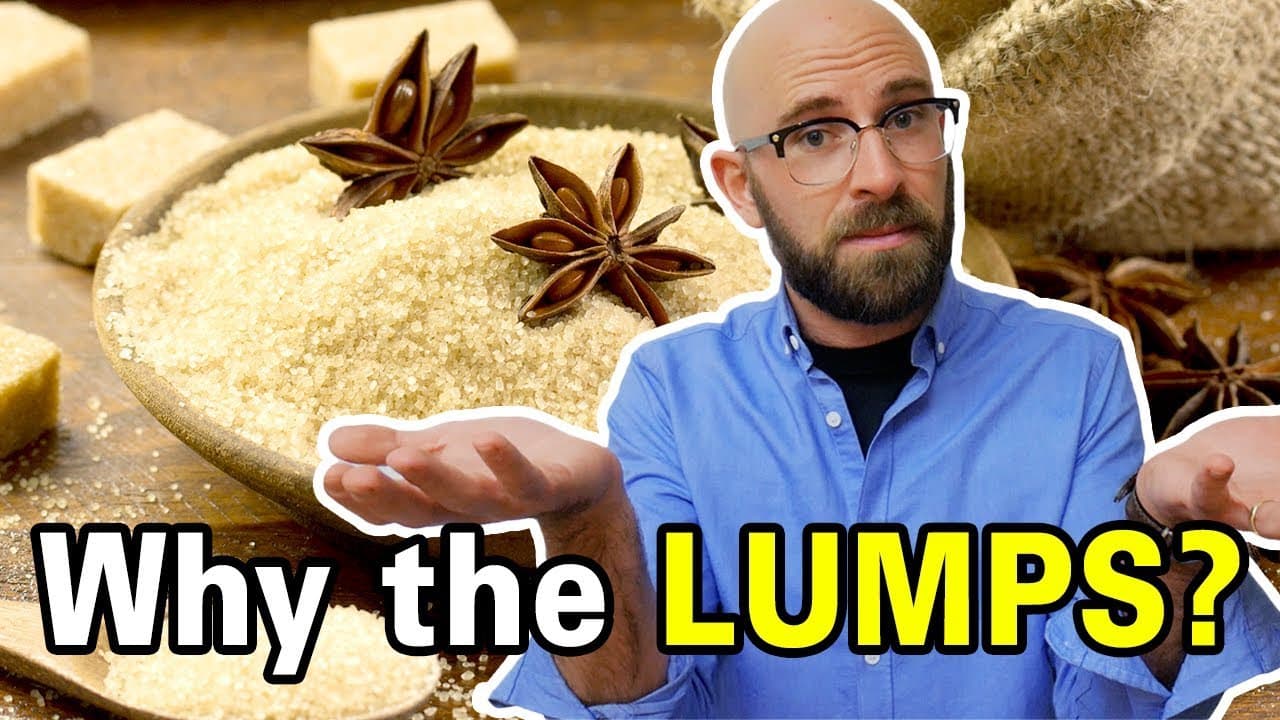
Brown sugar lumps because it contains molasses, which retains moisture and can dry out, forming clumps. In contrast, white sugar is thoroughly dried during processing, preventing lump formation. While both sugars share a similar refining process, the presence of molasses in brown sugar is the key factor that causes it to clump.
Transcript
When we say the word “sugar”, it’s highly likely that the first image to pop into your head is that of the ultra-fine, pure white granulated kind you can buy in most supermarkets. But how does this kind of sugar differ from the less popular brown kind, and why isn’t it as prone to forming into lumps as its dusky cousin? To properly answer this ques... Read More
Key Insights
- 🤎 The refining process for white and brown sugar is the same, with the only difference being the addition or exclusion of molasses.
- ✋ Sugarcane and sugar beets are the primary sources of sugar production, containing a high concentration of sucrose.
- 🤎 Brown sugar contains varying amounts of molasses, resulting in different shades of brown and moisture levels.
- 🤎 Improper storage can cause both brown and white sugar to develop lumps, but each type requires a different method to fix the issue.
- 🪲 The source of sugar (sugarcane or sugar beets) does not affect the quality of the final product.
- 🧑🌾 Beet farms produce less sugar per hectare compared to cane farms due to the cultivation process and the need for annual replanting.
- 🤎 Brown sugar can be produced by leaving some molasses in the sugar, while natural brown sugar skips the step of separating molasses.
- 🤍 White sugar is thoroughly dried before packaging, preventing lump formation.
Install to Summarize YouTube Videos and Get Transcripts
Explore YouTube Video Summarizer or Get YouTube Transcript Extractor
Questions & Answers
Q: Why is brown sugar more prone to forming lumps compared to white sugar?
Brown sugar contains molasses, which contains water. When exposed to air or improper storage, the water in the molasses evaporates, causing the sugar to harden and form lumps.
Q: Does the source of sugar (sugarcane or sugar beets) affect the final product?
No, the source of sugar does not affect the final product, assuming impurities are kept at a negligible level. Both sugarcane and sugar beets contain high concentrations of sucrose, making them ideal sources for sugar production.
Q: Why do beet farms produce less sugar than cane farms per hectare?
Beet farms produce less sugar per hectare compared to cane farms because beets take up more space and need to be replanted every year. Sugarcane, on the other hand, regrows for years after being harvested.
Q: How can I fix lumpy brown sugar or moist white sugar?
For lumpy brown sugar, placing a slice of bread in a sealed container with the sugar overnight can rehydrate it. To fix moist white sugar, you can dry it out by placing it in a warm oven for a few hours.
Summary & Key Takeaways
-
White and brown sugar are both derived from sugarcane or sugar beets, but the refining process is identical.
-
Sugar from sugarcane is not superior to sugar from sugar beets, despite common misconceptions.
-
Brown sugar contains molasses, causing it to harden and form lumps, while white sugar is thoroughly dried before packaging.
Read in Other Languages (beta)
Share This Summary 📚
Summarize YouTube Videos and Get Video Transcripts with 1-Click
Try YouTube Summary with ChatGPT & Claude or YouTube Transcript Generator
Explore More Summaries from Today I Found Out 📚






Summarize YouTube Videos and Get Video Transcripts with 1-Click
Try YouTube Summary with ChatGPT & Claude or YouTube Transcript Generator