What Are the Best Free Speech-to-Text APIs and Libraries?
TL;DR
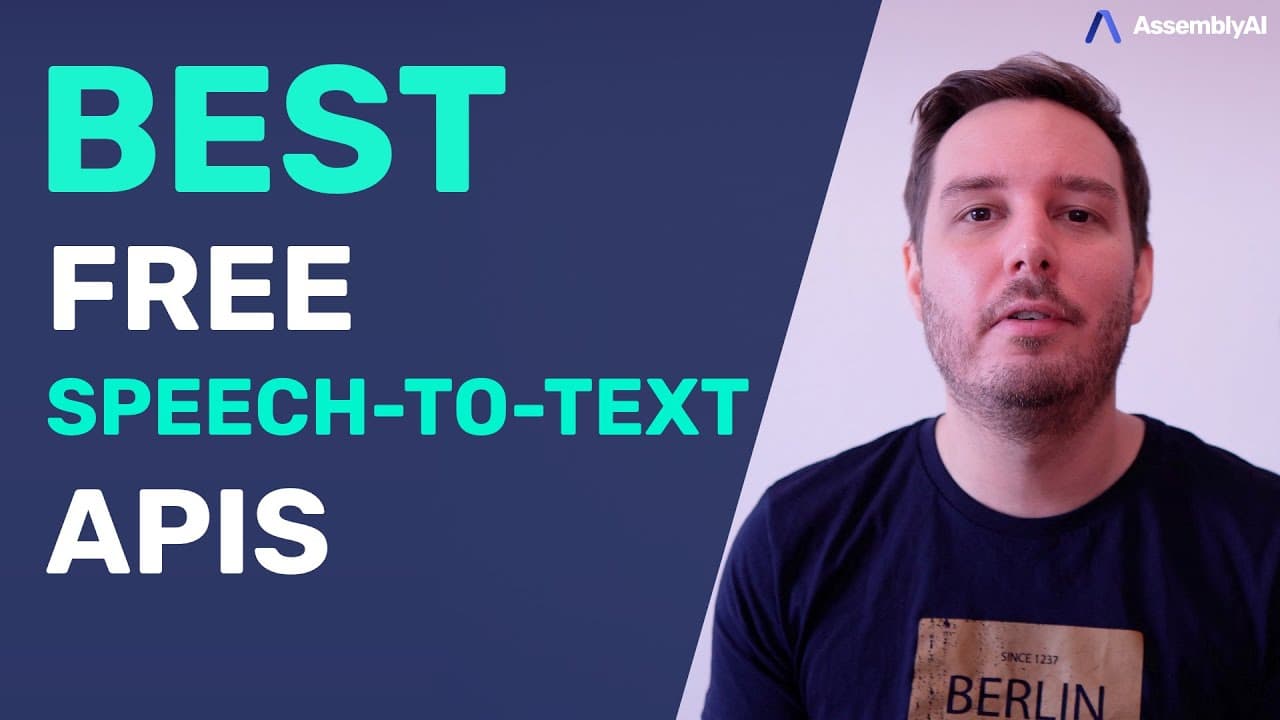
The best free speech-to-text options include APIs like Google Speech-to-Text, Assembly AI, and AWS Transcribe, which offer user-friendly setups and a free tier. Open-source libraries such as Deep Speech, Kaldi, and SpeechBrain are completely free but may require technical expertise and setup. Each option has distinct advantages and limitations based on project needs.
Transcript
do you want to convert speech to text in your own project but don't know where to get started then look no further because in this video we have a look at the best free speech to text apis and also at the top open source libraries for speech recognition converting speech to text is an exciting but also a challenging task luckily there are existing ... Read More
Key Insights
- 🤗 Converting speech to text can be done using APIs or open source libraries, each with its own advantages and disadvantages.
- 🔠 APIs offer easy setup, better accuracy, and additional features, but require payment and an internet connection.
- 🤗 Open source libraries are free, transparent, and offer learning opportunities, but can be challenging to set up and have specific prerequisites.
- 🔠 Google's Speech-to-Text API, Assembly AI's API, and AWS Transcribe are recommended APIs with free tiers.
- 🤗 Deep Speech, Kaldi, Wave to Letter (part of the flashlight project), SpeechBrain, and Coqui STT are recommended open source libraries.
- 📬 Open source libraries like Deep Speech and Kaldi have good out-of-the-box accuracy and support training your own models.
- 💦 Wave to Letter and SpeechBrain are easy to work with and have comprehensive documentation.
- 💨 Coqui STT is a fast and reliable toolkit with support for multiple languages.
Install to Summarize YouTube Videos and Get Transcripts
Explore YouTube Video Summarizer or Get YouTube Transcript Extractor
Questions & Answers
Q: What are the advantages of using an API for speech-to-text conversion?
APIs provide an easy setup, well-trained language models, higher accuracy, and additional features like entity detection and sentiment analysis. They are suitable for users without deep learning knowledge.
Q: What are the advantages of using an open source library for speech-to-text conversion?
Open source libraries are free and offer transparency, allowing users to see what's happening under the hood. They also provide learning opportunities and the ability to contribute to improvement. However, they can be difficult to set up and require specific prerequisites.
Q: What are the best free speech-to-text APIs mentioned in the video?
The video highlights Google's Speech-to-Text API, Assembly AI's API, and AWS Transcribe. These APIs offer free tiers and various pricing options based on usage.
Q: Which open source libraries are recommended for speech-to-text conversion?
The video mentions Deep Speech, Kaldi, Wave to Letter (now part of the flashlight project), SpeechBrain, and Coqui STT as highly recommended open source libraries for speech-to-text conversion.
Summary & Key Takeaways
-
The video discusses the pros and cons of using speech-to-text APIs and open source libraries for converting speech to text.
-
APIs offer easy setup, better accuracy, and additional features, but require payment and an internet connection.
-
Open source libraries are free and offer transparency and learning opportunities but can be challenging to set up and require specific prerequisites.
Read in Other Languages (beta)
Share This Summary 📚
Summarize YouTube Videos and Get Video Transcripts with 1-Click
Try YouTube Summary with ChatGPT & Claude or YouTube Transcript Generator
Explore More Summaries from AssemblyAI 📚

Summarize YouTube Videos and Get Video Transcripts with 1-Click
Try YouTube Summary with ChatGPT & Claude or YouTube Transcript Generator