How Did Steven Win Forged in Fire With a Ngulu?
TL;DR
Steven won the $10,000 Forged in Fire championship by producing a sharp, balanced Ngombe Ngulu that cut cane without resistance, survived clay-pot strikes without detectable edge deformation, and sliced through a ballistics dummy’s jaw and head. His victory showed that careful balance, effective heat treatment, handle indexing, and persistence after warping and a cracked handle component could overcome an opponent’s greater experience.
Transcript
WIL WILLIS: Paul, Steven, congratulations. You're both one step closer to the title of "Forged in Fire" champion and a check for 10 grand. All that you need to do now is go home and recreate an iconic weapon from history. That weapon is the Ngombe Ngulu. Good luck, bladesmiths. We'll see you in five days. [MUSIC PLAYING] STEVEN: I want to get going... Read More
Key Insights
- The Ngombe Ngulu is a difficult blade to shape because its extensive curvature requires careful hammerwork, and each hammering pass can counteract earlier adjustments. Steven treated balance as a central design problem so the unusual weapon would remain controllable and effective when swung.
- Paul’s blade was forged from a leaf spring because he wanted to follow the Ngombe practice, described in the episode, of forming weapons around salvaged material with existing holes or shapes. He used a drift to enlarge a hole already present in the steel.
- Heat treatment is a critical stage because the blade can warp, crack, or fail to harden properly. Steven discovered a warp in his blade’s main section after hardening, while Paul modified his heat-treatment furnace to accommodate the unusually wide upper portion of his weapon.
- Steven’s recovery depended on correcting the warp during tempering and replacing a cracked handle component. Fast-setting epoxy limited his assembly time, and his remaining African blackwood was precious, but he had just enough material to remake the damaged final piece.
- Paul’s handle system used wooden globes as a large pommel and counterweight, plus a weighted pommel nut for fine balance adjustments. He also installed a leather spacer to cushion and dampen vibration, then finished the handle with a leather wrap for grip.
- Both Ngombe Ngulu blades passed the sharpness test by cutting cleanly through the cane man. The judge reported that Paul’s thin, convex edge went directly through the cane, while Steven’s differently weighted and balanced weapon also passed through without noticeable resistance.
- Steven’s blade performed better in the clay-pot durability test because the judge found no edge deformation or alignment problem. Paul’s weapon remained tight and generally held up well, but it developed a slight edge roll that could be detected with a fingernail.
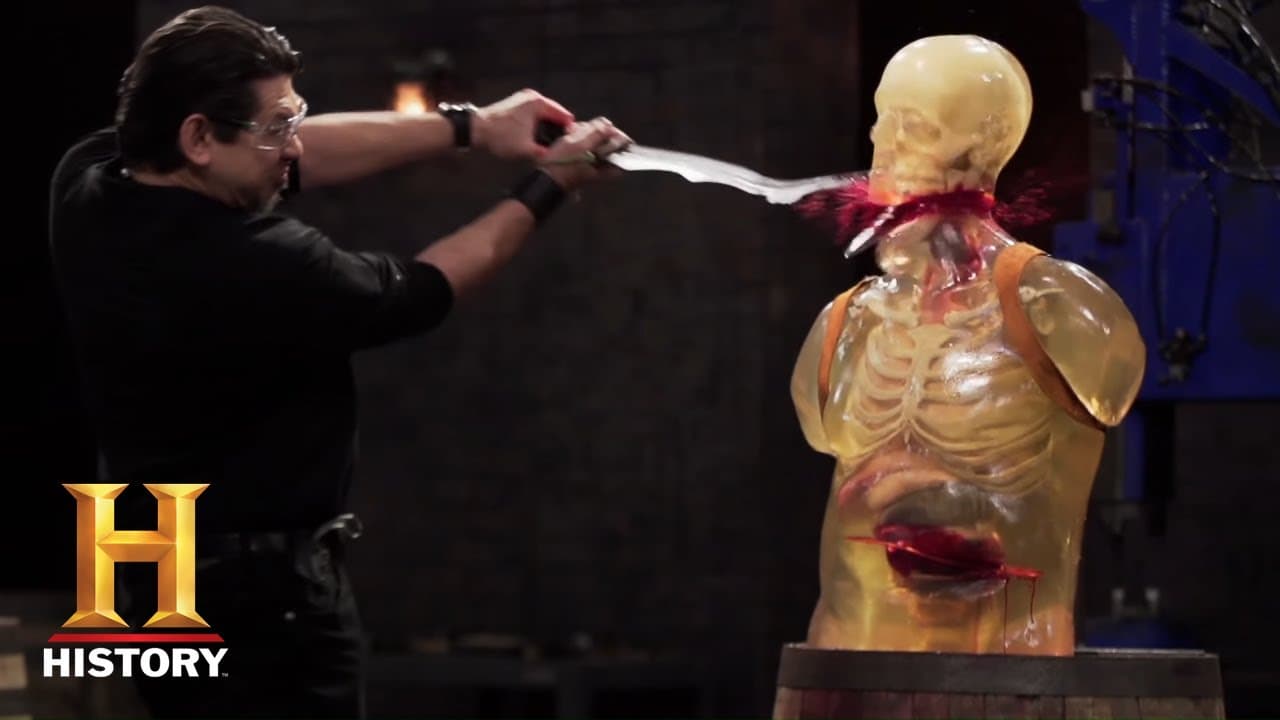
- Steven won because his finished weapon combined sharpness, durability, balance, and effective handle indexing. It lacerated the ballistics dummy into the bowels and cut through the jaw and head, proving that his creativity and functional execution could overcome his lower level of experience.
Install to Summarize YouTube Videos and Get Transcripts
Explore YouTube Video Summarizer or Get YouTube Transcript Extractor
Questions & Answers
Q: How did Steven win Forged in Fire with a Ngombe Ngulu?
Steven won by delivering a functional Ngombe Ngulu that succeeded across the sharpness, durability, and kill tests. His blade passed through the cane without noticeable resistance, remained straight after striking clay pots, and showed no detectable edge deformation. During the kill test, it lacerated the ballistics dummy into the bowels and cut through the jaw and head. The judges selected him over Paul and awarded him $10,000.
Q: What problems did Steven face while forging the Ngombe Ngulu?
Steven faced two major construction problems. His blade developed a warp in the main section after hardening, creating a risk that an attempted correction could crack it. He successfully removed the warp during tempering. Later, he cracked the final handle piece while assembling the handle with fast-setting epoxy. Because there was no way to undo the mistake, he used his limited remaining African blackwood to create a replacement piece.
Q: How did Paul balance his Ngombe Ngulu?
Paul balanced the weapon through several handle and pommel choices. He created the required wooden globes at the handle’s end, describing them as a large pommel and a wooden counterweight. He also made a weighted pommel nut that allowed him to adjust the balance more precisely. A leather spacer cushioned the assembly and dampened vibration, while the final leather wrap provided a secure grip for swinging the unusual blade.
Q: What happened during the Ngombe Ngulu sharpness test?
Both weapons passed the sharpness test by cutting through a cane man. Paul expected his thin, convex edge geometry to perform well, and the judge said his weapon went directly through the cane and felt and cut like a weapon. Steven’s version had a different weight and balance, but its cuts also passed through without resistance. The successful results confirmed that both smiths had produced effective cutting edges.
Q: How did the blades perform in the clay-pot durability test?
Paul’s weapon had good balance and remained tight around the handle and guard after striking the clay pots, but the judge found a slight roll on one area of the edge that could be detected with a fingernail. Steven’s heavier blade stayed straight, retained good balance, and showed no detectable edge deformation. The handle length and wood positioned its balance effectively, helping it remain controllable during the test.
Q: What did the kill test reveal about Steven’s weapon?
The kill test showed that Steven’s blade was sharp, controllable, and capable of delivering the damage expected from the weapon. It lacerated the ballistics dummy deeply into the bowels and cut through the jaw and head. The judge also praised the handle’s indexing, noting that its flattened shape and oval form felt good in the hand. He concluded that Steven’s weapon would kill.
Q: Why was the Ngombe Ngulu difficult for the smiths to forge?
The Ngombe Ngulu presented difficulty because neither finalist had previously made one, and its extensive curvature complicated shaping and balance. Steven needed substantial hammerwork while avoiding changes that would cancel earlier shaping. Both smiths also faced heat-treatment risks, including warping, cracking, and incomplete hardening. Paul had to widen the top of his furnace to fit the blade, while Steven had to correct a significant warp after hardening.
Q: Why did Steven’s victory matter to him?
Steven said the victory proved that he was creative and capable of making a functional weapon, even without being the most experienced competitor. He had not expected to advance so far based on his first-round performance, and winning felt surreal. By recovering from a warped blade and a cracked handle piece, then outperforming Paul in the final evaluation, he demonstrated that commitment and effective problem-solving could produce a successful result.
Summary & Key Takeaways
-
Steven and Paul received five days at their home forges to recreate the Ngombe Ngulu, a curved weapon associated with tribal chiefs and called the Beheading Sword of the Congo. Both smiths concentrated on managing its unusual shape, achieving useful balance, completing heat treatment safely, and constructing handles that could withstand demanding tests.
-
Steven encountered a warp in the main section after hardening, then removed it during tempering. He later cracked the final handle piece while working against fast-setting epoxy, but had enough African blackwood to replace it. Paul used leaf spring steel, adjusted his furnace, and added wooden globes, a weighted pommel nut, leather cushioning, and a wrapped grip.
-
Both weapons passed the cane sharpness test and delivered lethal cuts against the ballistics dummy. Paul’s blade developed a slight edge roll during the clay-pot durability test, while Steven’s showed no detectable edge deformation or misalignment. The judges selected Steven as champion, awarding him $10,000 despite Paul’s greater bladesmithing experience and meticulous finish.
Read in Other Languages (beta)
Share This Summary 📚
Summarize YouTube Videos and Get Video Transcripts with 1-Click
Try YouTube Summary with ChatGPT & Claude or YouTube Transcript Generator
Explore More Summaries from HISTORY 📚






Summarize YouTube Videos and Get Video Transcripts with 1-Click
Try YouTube Summary with ChatGPT & Claude or YouTube Transcript Generator