How Was Nan Madol Built on a Coral Reef?
TL;DR
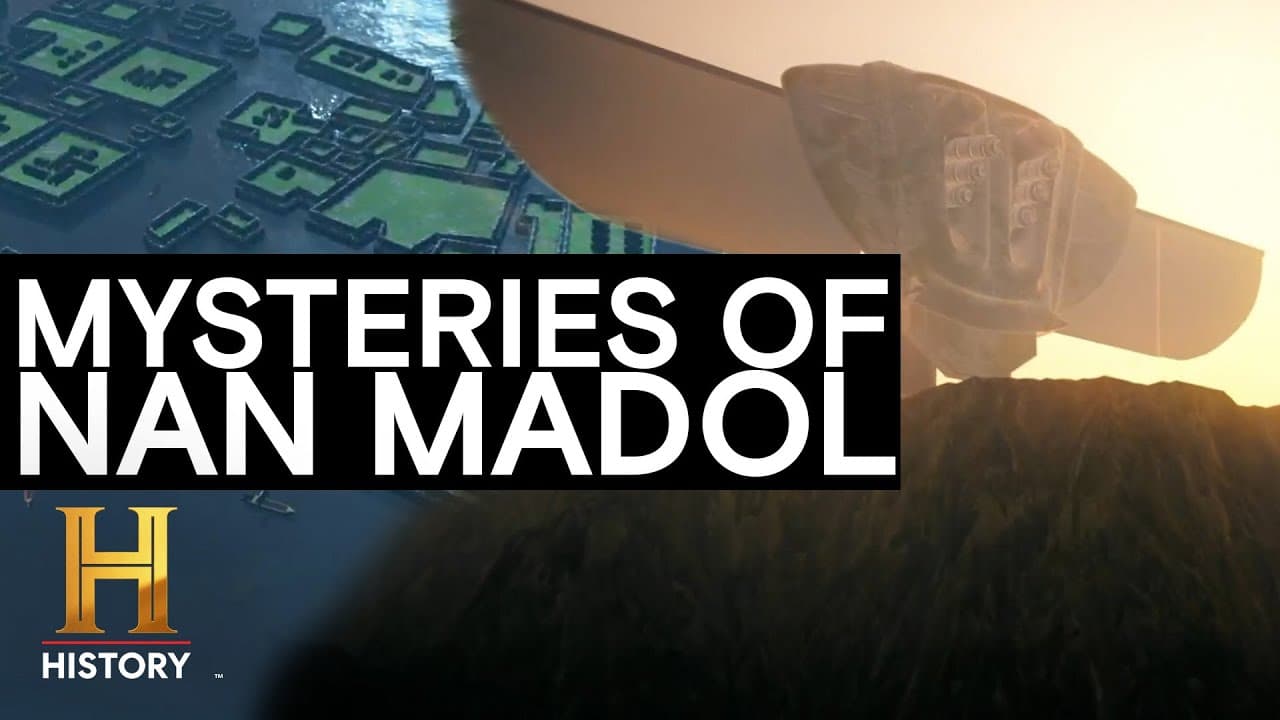
Nan Madol is presented as a vast complex of artificial islands, basalt walls, and submerged remains whose construction method remains disputed. The program contrasts conventional transport theories with local accounts of flying stones, then uses a 2019 lidar survey, field measurements, magnetic observations, and oral traditions to argue that an earlier civilization or extraterrestrial technology might explain the site.
Transcript
in the middle of the Pacific Ocean roughly 2500 mil Northeast of Australia lie the ruins of a once great ancient city nonan madal consisting of hundreds of man-made islands off the eastern coast of Micronesia it has been dubbed the eighth wonder of the world the site of Nan madal on the island of Pompei in Micronesia is one of the strangest places ... Read More
Key Insights
- Nan Madol is described as an 11-square-mile complex of hundreds of artificial islands built on a submerged coral reef off Pohnpei in Micronesia, with massive basalt columns stacked into walls reaching approximately 40 feet in height.
- The site's construction method remains disputed because the basalt reportedly came from across rugged island terrain, while experiments described in the program failed to transport even smaller, one-ton blocks using bamboo rafts associated with the conventional explanation.
- Local oral history says giant twin sorcerers descended from the sky and levitated basalt columns into position. The program treats this tradition as a possible description of misunderstood technology, while acknowledging that it is a legend rather than demonstrated evidence.
- A submerged earlier city called Kahnimweiso is described in local tradition as lying beneath Nan Madol. Basalt-like columns have reportedly been found underwater, supporting the program's proposal that the visible complex may have been constructed over remains from an older civilization.
- Magnetic behavior is presented as a major mystery because compasses reportedly spin when moved along Nan Madol's basalt blocks. Ancient astronaut theorists speculate that elevated electromagnetic energy could have moved stones or supported communication, but the program provides no direct demonstration of either mechanism.
- A 2019 lidar survey revealed what the program calls a specially designed irrigation system on Temwen Island. The discovery offers a possible local source of water and agricultural support, challenging the earlier claim that supplies necessarily had to be transported into Nan Madol.
- Nan Douwas is identified as a royal mortuary associated with Nan Madol's original builders. Measurements taken during the expedition produced an estimated weight of about 54 tons for one corner block, with several large monoliths stacked above one another within a 40-foot structure.
- The extraterrestrial interpretation remains speculative throughout the program because its case combines unexplained engineering, oral traditions, magnetic observations, reported lights, and disputed chronology. These elements raise questions within the narrative, but none directly establishes that visitors from outer space constructed Nan Madol.
Install to Summarize YouTube Videos and Get Transcripts
Explore YouTube Video Summarizer or Get YouTube Transcript Extractor
Questions & Answers
Q: How was Nan Madol built on a submerged coral reef?
The program does not reach a proven explanation for Nan Madol's construction. It describes hundreds of artificial islands and basalt walls assembled on a submerged coral reef, with some columns measuring approximately 18 feet long and four feet across. Conventional accounts propose transportation by bamboo rafts, but tests discussed in the program reportedly failed even with smaller stones. Local traditions instead claim that the stones flew into position.
Q: What makes Nan Madol's basalt construction difficult to explain?
Nan Madol reportedly contains 250 million tons of basalt assembled into artificial islands and walls reaching about 40 feet high. The source of the blocks is described as being across Pohnpei, separated from the site by mountains, valleys, water, and rugged terrain. One measured corner block was estimated at about 54 tons. The program argues that these conditions make quarrying, transportation, lifting, and stacking difficult to reconstruct.
Q: What does local oral history say about Nan Madol's builders?
Local oral history says that giant twin sorcerers came down from the sky, floated above the construction area, and positioned the basalt columns as they wished. Other traditions say stones were flown from the northern part of the island through levitation. The program interprets these accounts as possible memories of misunderstood technology, although the transcript presents no direct physical proof that levitation or extraterrestrial builders were involved.
Q: What did the 2019 lidar survey reveal near Nan Madol?
The lidar project, completed in September 2019 after six months of work, created a three-dimensional representation of areas that were otherwise difficult to examine. According to the program, the survey indicated that Temwen Island had a specially designed irrigation system capable of supporting people near Nan Madol. This offered a possible explanation for obtaining water and food locally instead of bringing every necessary supply into the island complex.
Q: Did bamboo rafts successfully transport Nan Madol's stones?
The program reports that attempts to reproduce the proposed bamboo-raft transportation method were unsuccessful. Guide and preservation officer Gus Kear says trials with small basalt logs did not work using the available rafts. A 1995 television documentary reportedly made several attempts but could not demonstrate the process even with blocks weighing only one ton. These failures question that reconstruction, but they do not prove that raft transport was impossible under all conditions.
Q: Why are magnetic anomalies important to theories about Nan Madol?
The program claims that Nan Madol's basalt produces strong magnetic effects and that a compass spins when moved along individual blocks. Ancient astronaut theorists connect this observation with stories of flying stones, suggesting that magnetism might have helped transport the columns. They also speculate about an electromagnetic vortex or communication portal. However, the transcript includes no experiment showing that the measured magnetic behavior can levitate or move the stones.
Q: Is there evidence of an older submerged city beneath Nan Madol?
Local tradition describes an earlier civilization called Kahnimweiso beneath the water, with Nan Madol supposedly built above it. The program says objects resembling basalt columns have been found underwater around the complex. It uses these reports to suggest that an older settlement may predate the visible structures. The transcript does not provide a confirmed construction date or establish whether the underwater formations are cultural remains from a separate civilization.
Q: Does the program prove that extraterrestrials built Nan Madol?
No direct proof of extraterrestrial construction is presented. The program builds its theory from local stories about sky visitors and levitating stones, unexplained transportation challenges, compass behavior, underwater formations, reported orbs and lights, and speculation about electromagnetic vortices. These details are framed as possibilities and questions. The expedition's measurements and lidar findings document features of the site, but they do not identify extraterrestrials as its builders.
Summary & Key Takeaways
-
Nan Madol is described as an 11-square-mile complex containing hundreds of artificial islands built on a submerged coral reef near Pohnpei. Its walls incorporate enormous basalt columns, including a measured block estimated at about 54 tons. The program emphasizes uncertainty about when the site was constructed and how its materials were transported.
-
Local oral traditions attribute Nan Madol's construction to giant twin sorcerers who descended from the sky and made stones fly into position. The program connects these stories with underwater basalt formations, spinning compass readings, reported hovering lights, and speculation that magnetic forces or an electromagnetic vortex enabled transportation, communication, or extraterrestrial contact there.
-
A six-month lidar project completed in September 2019 revealed what the program describes as a specially designed irrigation system on Temwen Island. Ancient astronaut theorists argue that this discovery challenges assumptions about imported food and water and possibly the accepted builders. Their expedition also reports that attempted bamboo-raft transport tests failed with smaller basalt blocks.
Read in Other Languages (beta)
Share This Summary 📚
Summarize YouTube Videos and Get Video Transcripts with 1-Click
Try YouTube Summary with ChatGPT & Claude or YouTube Transcript Generator
Explore More Summaries from HISTORY 📚


Summarize YouTube Videos and Get Video Transcripts with 1-Click
Try YouTube Summary with ChatGPT & Claude or YouTube Transcript Generator