Ravi Patel on Optimism, Marriage, and Creativity
TL;DR
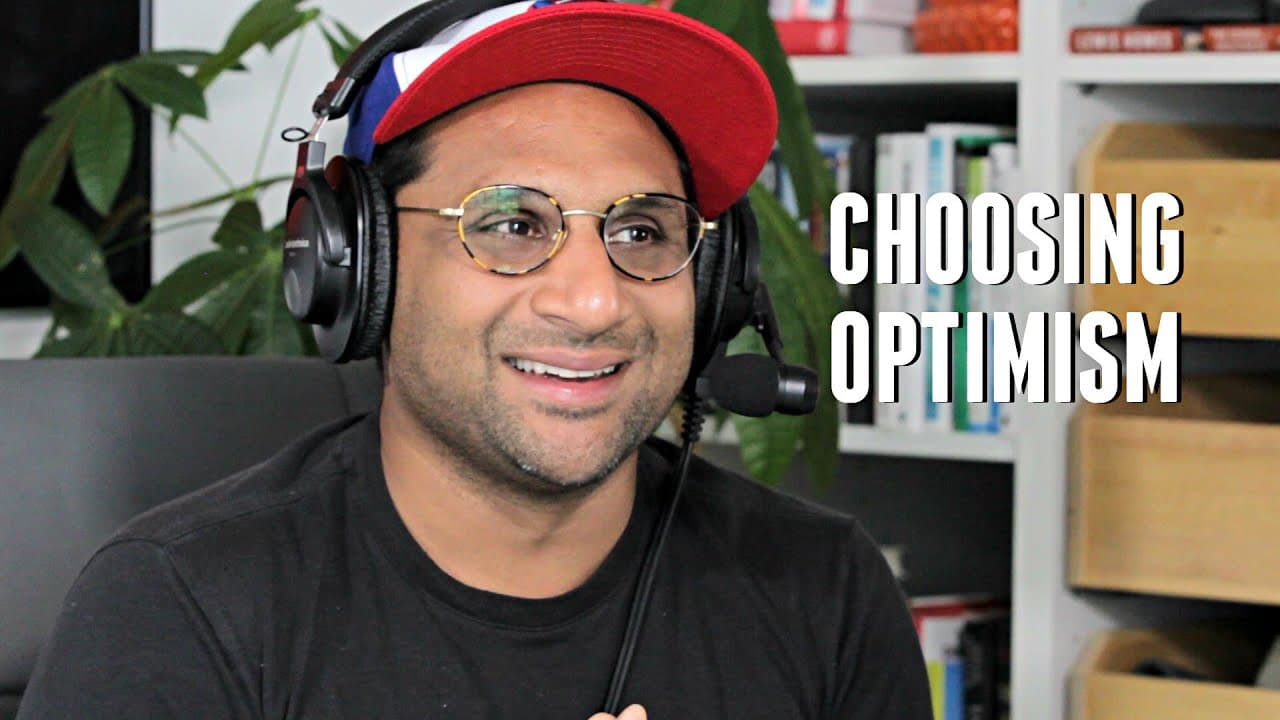
Changing routines, appearance, or surroundings can reset how you interpret yourself and the world, while shared experiences can strengthen relationships. Ravi Patel connects optimism with experimentation, openness, and intentional reframing, drawing on marriage, creative work, wellness trends, and Burning Man to show how unfamiliar experiences can reveal assumptions and create new perspectives.
Transcript
Welcome, everyone, back to the School of Greatness podcast. Very excited about our guest, Ravi Patel- Hey, man ... in the house. Good to see you, brother. What's up, man? Thanks for having me. I'm very excited, uh, that you're here, and, uh, for those that don't know who you are, um, you're an actor, but you're also much more than that, and you als... Read More
Key Insights
- Changing familiar routines can alter a person's perspective because even small experiments, such as changing a hairstyle or wearing unfamiliar clothing, affect how someone feels and interprets social reactions. Patel presents novelty as a practical way to observe assumptions that normally remain invisible.
- Juice cleansing functions as a mental reset in Patel's account because the unusual routine creates a distinct starting point from which a person can redefine what comes next. He emphasizes perceived clarity, focus, strength, and stamina, although the conversation frames these points as personal experience rather than established medical guidance.
- Shared activities can create opportunities for bonding because agreeing to an unusual experience gives people something distinctive to navigate together. Patel says he does not like passing up such opportunities, even jokingly embracing the idea of completing a future cleanse with Howes.
- Aging changed Patel's relationship with energy and physical activity because he found himself needing more stretching, becoming injured more easily during sports, and wanting to sleep earlier. These changes pushed him to consider how to preserve energy without feeling guilty about doing less work.
- Burning Man challenged ordinary assumptions through an environment where money was absent from everyday exchanges and people primarily gave things away. Patel found the different social rules welcoming and significant because they demonstrated that familiar systems are not the only possible framework for human interaction.
- Clothing affects internal experience because an unfamiliar outfit can change the lens through which a person sees the world. Patel says Burning Man gave him a new respect for fashion, which he had previously treated mainly as a way to gain approval or romantic attention.
- Perceived social judgment is partly shaped by projection because people notice how others appear to react to their presentation. Patel argues that clothing changes both external impressions and, more importantly, a person's interpretation of those impressions, influencing the resulting experience.
- Marriage can reorganize personal motivation because Patel found himself questioning purpose after no longer pursuing women. His comments frame this as a primal and personal tension, while also making clear that he loves his wife and is adjusting to a new stage of life.
Install to Summarize YouTube Videos and Get Transcripts
Explore YouTube Video Summarizer or Get YouTube Transcript Extractor
Questions & Answers
Q: How can changing your appearance change your mindset?
Changing your appearance can disrupt the familiar lens through which you experience yourself and other people. Ravi Patel suggests trying an outfit outside your comfort zone, changing how you part your hair, or making another visible adjustment. The experiment may influence how you feel, how others respond, and how you interpret their responses, revealing how strongly perception shapes everyday experience.
Q: What did Ravi Patel learn from Burning Man?
Ravi Patel learned that basic assumptions about social life can be replaced by a different set of rules. He encountered an environment without ordinary monetary exchanges, where people largely gave things away and welcomed one another. His strongest personal insight concerned clothing: dressing unusually changed how he felt, introduced him to fashion's psychological value, and reframed his experience of the surrounding world.
Q: Why does Ravi Patel describe experience as subjective?
Patel describes experience as subjective because people encounter the world through their own interpretations rather than from a completely neutral viewpoint. Clothing illustrates his point: changing an outfit can influence confidence, attention, and expectations about other people's reactions. Those expectations then affect what a person notices and how each interaction feels, even when the external situation may not have fundamentally changed.
Q: How does Ravi Patel use unfamiliar experiences as a reset?
Patel uses unfamiliar experiences to interrupt established habits and create a new psychological starting point. He describes wellness practices such as cleansing as ways to shake things up, feel different, and consciously define what comes next. His interest is not limited to health routines. Travel, unconventional environments, appearance changes, and shared experiments can serve the same reframing function.
Q: Why does Ravi Patel value shared experiences?
Ravi Patel values shared experiences because they provide direct opportunities to bond with another person. When someone invites him to do something unusual together, his instinct is to participate rather than reject the invitation. His playful willingness to attempt a future cleanse with Lewis Howes demonstrates this attitude: the activity matters partly because navigating it together can deepen the relationship.
Q: How has getting older affected Ravi Patel's routines?
At age 37, Ravi Patel says physical activity requires more preparation and recovery than it once did. He reports needing substantial stretching, experiencing injuries when playing sports, and feeling ready to sleep around 8:00. These changes contrast with his earlier drive to pursue many projects, leading him to explore routines that might improve energy, focus, and stamina.
Q: What does Ravi Patel say about juice cleansing?
Ravi Patel presents juice cleansing as a personal strategy for mental clarity, focus, strength, and stamina. He says the difficult stage can be followed by a euphoric feeling and recommends five to six days based on his experience. He also treats cleansing as a psychological reset. These statements are personal observations from the conversation, not independently established health claims.
Q: How did marriage affect Ravi Patel's sense of motivation?
Marriage prompted Ravi Patel to reconsider a source of motivation he describes as primal: pursuing romantic partners. He says he loves and is obsessed with his wife, yet still wonders what replaces the chase as a motivating force. His comments do not reject marriage. Instead, they reveal the adjustment involved when an old incentive disappears and purpose must be reconsidered.
Summary & Key Takeaways
-
Ravi Patel describes himself as an actor who also wrote and directed Meet the Patels with his sister. His conversation with Lewis Howes moves between comedy and reflection, exploring creative work, marriage, personal motivation, health experiments, and the difficulty of maintaining energy and focus while entering a different stage of adulthood.
-
Patel treats unfamiliar experiences as opportunities to reset his thinking. He discusses juice cleanses as mental resets and says he rarely passes up a chance to bond through a shared activity. His openness to experimentation reflects a broader belief that disrupting routines can expose assumptions and create a different perspective on ordinary life.
-
Burning Man taught Patel that experience depends partly on framing. Its gift-oriented culture and unconventional clothing challenged familiar social rules, while unusual outfits showed him how appearance can affect feelings, behavior, and perceived reactions from others. He concludes that people experience the world through interpretation rather than through a completely objective lens.
Read in Other Languages (beta)
Share This Summary 📚
Summarize YouTube Videos and Get Video Transcripts with 1-Click
Try YouTube Summary with ChatGPT & Claude or YouTube Transcript Generator
Explore More Summaries from Lewis Howes 📚




Summarize YouTube Videos and Get Video Transcripts with 1-Click
Try YouTube Summary with ChatGPT & Claude or YouTube Transcript Generator