How Can AI Defend and Threaten Cybersecurity?
TL;DR
Artificial intelligence can strengthen cybersecurity by detecting threats, automating routine work, prioritizing vulnerable systems, and analyzing data at scale. The same mathematical tools can help attackers select targets, generate convincing false content, improve phishing, and manipulate or poison classifiers, so defenders must pursue innovation while objectively accounting for adversarial use and model fragility.
Transcript
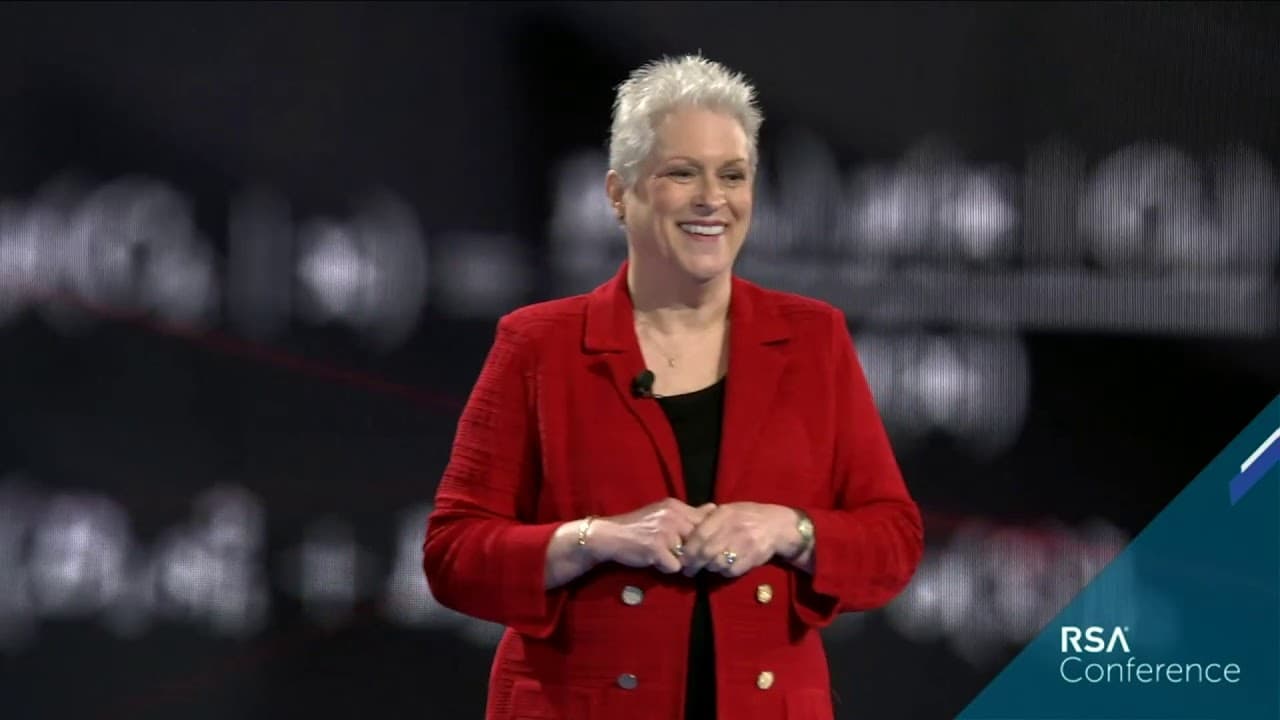
Please welcome Senior Vice President and Chief Technology Officer, McAfee, Steve Grobman. Aerospace. Flight in the twentieth century has changed every aspect of our lives. We now move between continents in hours, not days or weeks. Businesses, supply chains, economies are all conducted globally, and our ability to explore the world and the universe... Read More
Key Insights
- Technology is morally neutral at the operational level because an airplane wing, encryption algorithm, or machine learning model cannot understand the purpose it serves. Human choices determine whether the same capability supports rescue, privacy, medical care, extortion, warfare, or more effective criminal activity.
- Cryptography is a dual-use technology because the same algorithm can protect information from theft or hold an organization for ransom. Earlier debates about restricting strong encryption confronted a fundamental constraint: encryption is mathematics, and preventing people from performing mathematics is not a practical control strategy.
- Artificial intelligence is becoming foundational to cybersecurity because it can detect threats, automate delegated tasks, evaluate information at scale, and help organizations use scarce expertise more effectively. Automation can free skilled personnel to concentrate on the most complex and critical elements of organizational defense.
- Public data can support safety or criminal optimization because models do not distinguish benevolent objectives from harmful ones. San Francisco crime records can help identify hotspots and guide patrols, but the same records can train a classifier to estimate whether particular crime conditions are associated with arrest.
- A basic crime prediction model can produce useful results with limited implementation effort. The demonstrated system used 50 lines of Python and a machine learning model from the Spark library to classify crimes as arrested or not arrested using factors such as crime type, locale, and precinct.
- Cyber attackers can frame victim selection as a classification problem by estimating which machines are more or less vulnerable. A model that ranks machines by predicted exploitability lets an attacker concentrate first on targets with the highest estimated probability of being vulnerable.
- Synthetic media can strengthen information warfare because artificial intelligence can generate highly believable false video, voice, or text. A model trained with freely available public recordings produced fabricated footage that placed one person's words into another person's mouth, illustrating the potential for deliberate chaos.
- Adversarial machine learning exposes the fragility of security classifiers because attackers actively try to evade or poison them. Small changes to the data presented to a model can cause an incorrect conclusion, even when those changes may be difficult for a human observer to perceive.
Install to Summarize YouTube Videos and Get Transcripts
Explore YouTube Video Summarizer or Get YouTube Transcript Extractor
Questions & Answers
Q: How can artificial intelligence improve cybersecurity?
Artificial intelligence can improve cybersecurity by detecting threats beyond previously available capabilities, automating delegated tasks, and processing large volumes of data to locate meaningful signals. It can also reduce pressure created by the industry's talent shortage. By assigning suitable work to automated systems, organizations can preserve skilled personnel for the most complex and critical defensive decisions.
Q: Why is artificial intelligence considered a dual-use technology?
Artificial intelligence is dual-use because a model treats its assignment as mathematics rather than as a moral choice. The same underlying methods can detect cancer, identify crime hotspots, find cyber threats, optimize a crime spree, or select vulnerable machines for attack. The intention and application come from people, not from the model itself.
Q: How can public crime data be misused with machine learning?
Public crime data can be misused to estimate which circumstances make an arrest more or less likely. The demonstration classified incidents as arrested or not arrested using variables such as crime type, locale, and precinct. A criminal could use those predictions to choose conditions that appear to reduce the probability of arrest and make criminal activity more effective.
Q: How can cybercriminals use AI to select targets?
Cybercriminals can treat target selection as a classification problem. A machine learning model can examine available information about many machines and predict which systems are more or less vulnerable. Attackers can then rank potential victims and begin with machines assigned the highest probability of vulnerability, focusing their effort where exploitation appears easiest.
Q: How can deepfake content support cyberattacks?
Deepfake technology can generate believable but fabricated video, voice, or text that makes people appear to say or do things that never occurred. Attackers can weaponize that false content for information warfare and social exploitation. The demonstrated example trained a model on freely available public recordings and produced artificial footage placing different words into a person's mouth.
Q: Why can AI make phishing more effective?
Artificial intelligence can help adversaries produce automated, targeted content for social engineering and phishing. This can raise the probability that a recipient accepts the message and falls for the deception. The approach combines the personalized effectiveness associated with spearphishing and the broad scale associated with traditional phishing, allowing attackers to pursue many people with more tailored material.
Q: What is adversarial machine learning in cybersecurity?
Adversarial machine learning studies how attackers can evade or poison machine learning classifiers. An adversary may alter small portions of the data sent to a model so that it reaches an incorrect conclusion. This issue is especially important in cybersecurity because hostile actors deliberately adapt their inputs and behavior to defeat the defensive model evaluating them.
Q: Why are cybersecurity AI models more fragile than weather models?
Cybersecurity models operate against adversaries who actively try to evade, mislead, or poison them. A weather model may improve at tracking a hurricane without causing physical laws to change in response. A cyber defense model faces a different environment because attackers can observe defensive behavior, modify their tactics, and manipulate inputs to produce incorrect classifications.
Summary & Key Takeaways
-
Technology does not understand morality, so the same underlying capability can produce valuable or destructive outcomes. Flight enabled rescue and global mobility but also transformed warfare, while cryptography protects information yet supports ransomware. Artificial intelligence extends this recurring tension because models perform mathematical tasks without understanding whether their purpose helps defenders or attackers.
-
Artificial intelligence can help cybersecurity teams detect previously unseen threats, automate delegated tasks, address talent constraints, and examine data at a scale beyond human analysts. These benefits are especially important when defenders must locate meaningful signals within overwhelming volumes of information and preserve skilled personnel for the most complex and critical security problems.
-
Artificial intelligence also gives adversaries new leverage. Simple models can identify favorable conditions for physical crime or rank machines by predicted vulnerability. Generative techniques can fabricate convincing video, voice, or text, while adversarial machine learning can evade or poison classifiers through small data changes. Progress therefore requires both adoption and critical evaluation.
Read in Other Languages (beta)
Share This Summary 📚
Summarize YouTube Videos and Get Video Transcripts with 1-Click
Try YouTube Summary with ChatGPT & Claude or YouTube Transcript Generator
Explore More Summaries from RSAC Cybersecurity 📚






Summarize YouTube Videos and Get Video Transcripts with 1-Click
Try YouTube Summary with ChatGPT & Claude or YouTube Transcript Generator