What Causes Spontaneous Human Combustion?
TL;DR
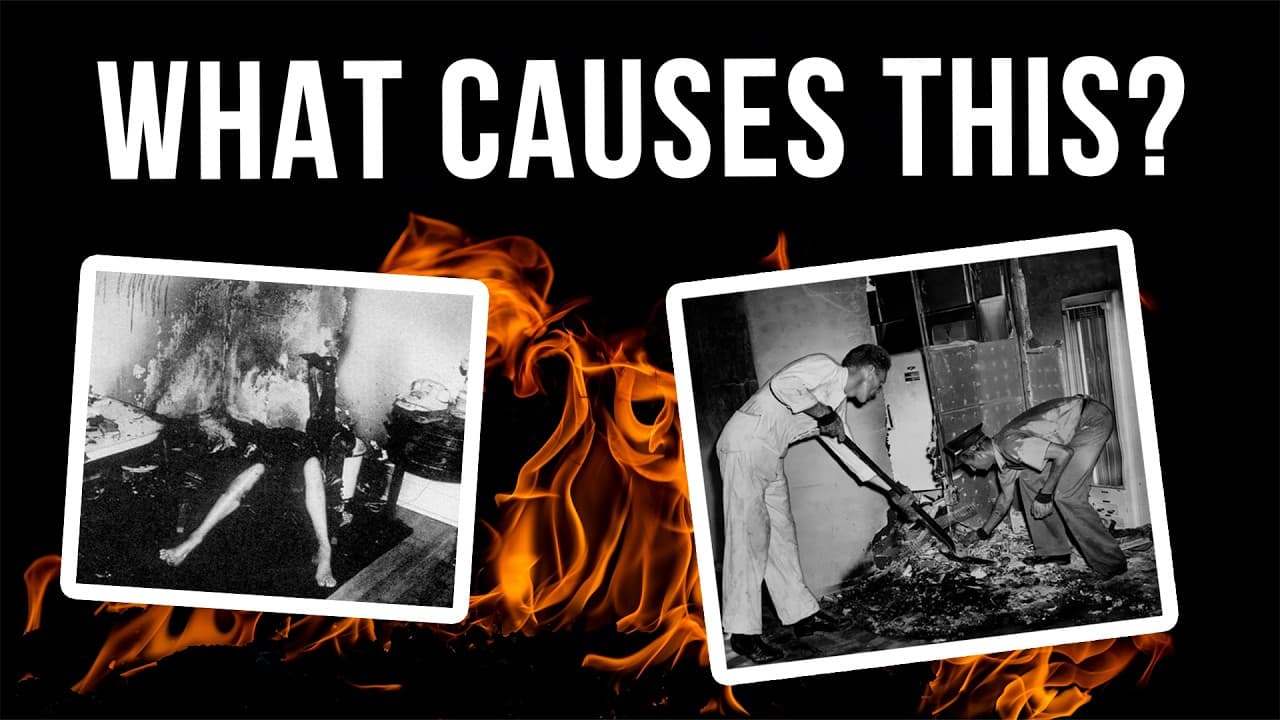
Spontaneous human combustion is often explained by the 'wick effect,' where a person's body fat acts like a candle, burning slowly without spreading fire to surroundings. Many cases involve individuals who were incapacitated by alcohol or health issues and near a source of ignition. Despite historical fascination, scientific explanations debunk supernatural theories.
Transcript
For those of us of the slightly more seasoned vintage growing up in or living in the late 20th century, which was totally only a decade ago, and I'll take no further input on this matter, spontaneous human combustion ranks alongside the likes of Quicksand, the Bermuda Triangle, and Rain That Melts Your Skin Off as one of those things that everyone ... Read More
Key Insights
- Spontaneous human combustion is often attributed to the 'wick effect,' where body fat acts like a candle's wax, burning slowly.
- Most cases involve individuals who were incapacitated, often due to alcohol, medication, or health issues, and near a source of ignition.
- Historical fascination with spontaneous human combustion has been fueled by sensationalized reports and supernatural theories.
- Scientific investigations have debunked supernatural explanations, attributing combustion to mundane causes like nearby flames.
- The 'wick effect' suggests that clothing absorbs liquefied fat, allowing the body to burn without igniting surrounding objects.
- Many reported cases involve elderly individuals, often found near fireplaces or with smoking materials, supporting accidental ignition theories.
- The persistence of spontaneous human combustion myths is attributed to selective reporting and sensationalism in media.
- Modern scientific understanding provides logical explanations for spontaneous human combustion, reducing its prevalence in media.
Install to Summarize YouTube Videos and Get Transcripts
Explore YouTube Video Summarizer or Get YouTube Transcript Extractor
Questions & Answers
Q: What is the 'wick effect' in spontaneous human combustion?
The 'wick effect' is a phenomenon where a person's body fat acts like a candle's wax, allowing the body to burn slowly. Clothing absorbs the liquefied fat, sustaining the flame without igniting surrounding objects. This effect explains why some bodies are found mostly incinerated while nearby items remain unburned.
Q: Why do most spontaneous human combustion cases involve elderly individuals?
Many spontaneous human combustion cases involve elderly individuals because they are often more susceptible to being incapacitated by alcohol, medication, or health issues. This incapacity prevents them from responding to an ignition source, such as a fireplace or cigarette, leading to the 'wick effect' burning their bodies.
Q: How have scientific investigations debunked supernatural explanations for spontaneous human combustion?
Scientific investigations have debunked supernatural explanations by demonstrating that spontaneous human combustion can be explained by mundane causes, such as the 'wick effect.' Studies show that nearby flames or embers can ignite clothing, and the body's fat sustains the fire, contradicting supernatural theories.
Q: What common factors are found in spontaneous human combustion cases?
Common factors in spontaneous human combustion cases include the presence of an ignition source, such as a fireplace or cigarette, and the victim's incapacitation due to alcohol or health issues. These factors, combined with the 'wick effect,' explain the body's incineration while nearby objects remain unburned.
Q: Why do spontaneous human combustion myths persist despite scientific explanations?
Spontaneous human combustion myths persist due to selective reporting and sensationalism in media. Many reports focus on mysterious aspects, ignoring logical explanations like the 'wick effect.' This sensationalism fuels public fascination and perpetuates myths despite scientific debunking of supernatural theories.
Q: How does the 'wick effect' explain the selective burning of the human body?
The 'wick effect' explains selective burning by suggesting that clothing absorbs liquefied fat, allowing the body to burn without igniting nearby items. The slow, smoldering fire consumes the body while leaving extremities like feet and hands unburned, as they lack sufficient fat or wick material to sustain the flame.
Q: What role does media sensationalism play in spontaneous human combustion cases?
Media sensationalism plays a significant role by focusing on mysterious and supernatural aspects of spontaneous human combustion cases. This selective reporting ignores scientific explanations and fuels public fascination, perpetuating myths despite logical debunking of supernatural theories by scientific investigations.
Q: How has modern scientific understanding reduced the prevalence of spontaneous human combustion in media?
Modern scientific understanding has reduced the prevalence of spontaneous human combustion in media by providing logical explanations like the 'wick effect.' These explanations debunk supernatural theories, making the topic less sensational and reducing its appeal in media focused on factual reporting.
Summary & Key Takeaways
-
Spontaneous human combustion is often explained by the 'wick effect,' where the body's fat acts like a candle, burning slowly without spreading fire to surroundings. Many cases involve individuals incapacitated by alcohol or health issues near a source of ignition. Despite historical fascination, scientific explanations debunk supernatural theories.
-
The 'wick effect' suggests that clothing absorbs liquefied fat, allowing the body to burn without igniting surrounding objects. Most cases involve elderly individuals, often found near fireplaces or with smoking materials, supporting accidental ignition theories. Scientific investigations have debunked supernatural explanations.
-
The persistence of spontaneous human combustion myths is attributed to selective reporting and sensationalism in media. Modern scientific understanding provides logical explanations, reducing its prevalence in media. The fascination with spontaneous human combustion has been fueled by sensationalized reports and supernatural theories.
Read in Other Languages (beta)
Share This Summary 📚
Summarize YouTube Videos and Get Video Transcripts with 1-Click
Try YouTube Summary with ChatGPT & Claude or YouTube Transcript Generator
Explore More Summaries from Today I Found Out 📚





Summarize YouTube Videos and Get Video Transcripts with 1-Click
Try YouTube Summary with ChatGPT & Claude or YouTube Transcript Generator