What Are NVIDIA's Key Innovations Announced at GTC 2018?
TL;DR
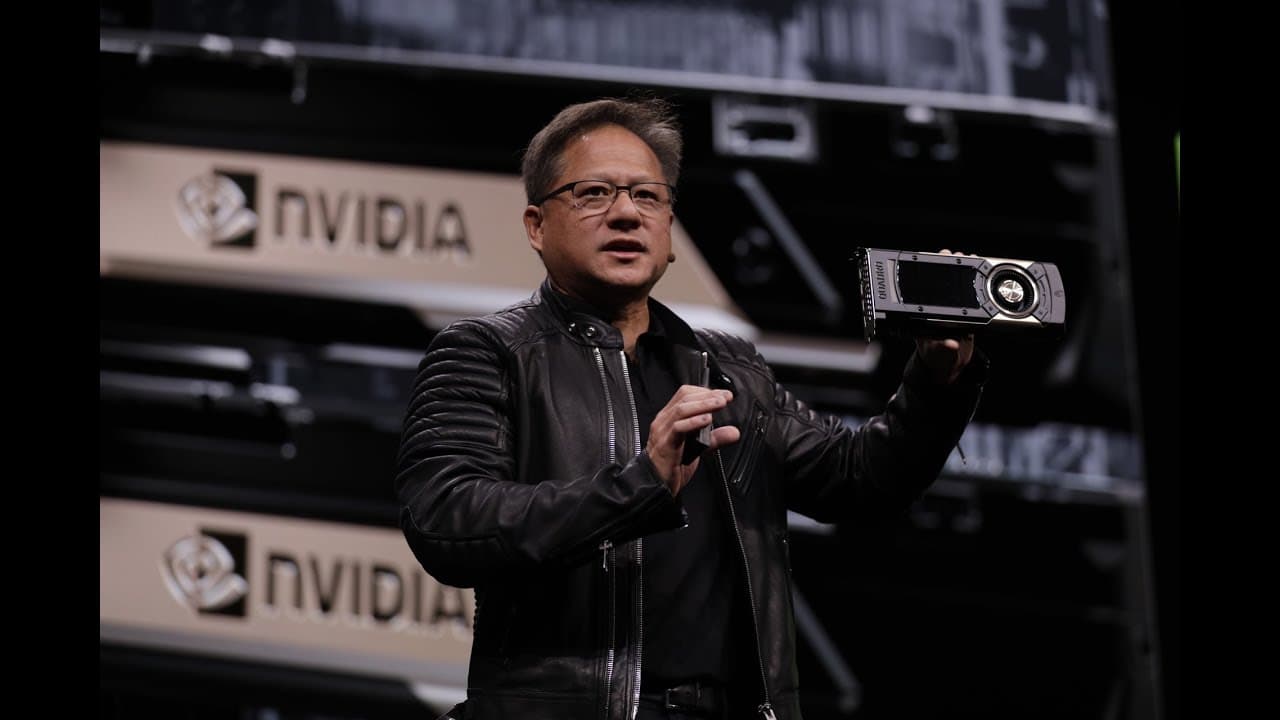
NVIDIA unveiled groundbreaking technologies at GTC 2018, including real-time ray tracing with NVIDIA RTX and the Quadro GV100, the world's largest workstation GPU. They also launched Project Clara, which modernizes medical imaging, and Drive Constellation, a virtual reality simulator for autonomous vehicles, showcasing advancements in AI and deep learning.
Transcript
[Applause] Jennsen ma we have so much to talk about today we have a lot of new products to show you we're talking about mazing graphics we want to talk about mazing science amazing AI and amazing robots so let's get going computer graphics is the driving force of the GPU it is computationally insatiable recreating virtual reality is one of the most... Read More
Key Insights
- 👻 Real-time ray tracing technology allows for more realistic and immersive computer graphics experiences.
- 🇨🇷 The Quadro GV100 workstation GPU brings significant improvements in performance, scalability, and cost savings to the market.
- 😷 Project Clara revolutionizes medical imaging by virtualizing existing medical instruments and enabling faster and more accurate diagnoses.
- 🪛 NVIDIA's focus on deep learning and neural networks is driving advancements in AI technology and applications.
- 🦻 Drive Constellation offers a virtual reality world simulator for training and testing autonomous machines, aiding the development of autonomous vehicles.
Install to Summarize YouTube Videos and Get Transcripts
Explore YouTube Video Summarizer or Get YouTube Transcript Extractor
Questions & Answers
Q: What is NVIDIA RTX technology, and how does it impact computer graphics?
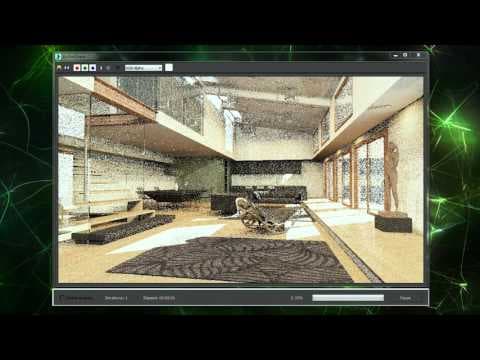
NVIDIA RTX technology enables real-time ray tracing in computer graphics, allowing for more realistic and immersive visual experiences, with images rendered at 4k resolution and 60 frames per second.
Q: How does the Quadro GV100 workstation GPU differ from previous GPUs?
The Quadro GV100 is the first workstation GPU based on the Volta architecture and features a new interconnect called NVLink, allowing for improved performance and scalability. It brings real-time ray tracing to the market and offers cost savings when multiple GPUs are used.
Q: What is Project Clara, and how does it revolutionize medical imaging?
Project Clara is a medical imaging supercomputer that can upgrade existing medical instruments by streaming ultrasound information into a GPU server, creating volumetric and high-resolution images. It allows for faster and more accurate medical diagnoses and treatments.
Q: How does NVIDIA support deep learning and neural networks?
NVIDIA provides efficient and powerful GPUs, such as the DGX-2, which can handle the high computational requirements of deep learning and neural networks. NVIDIA also offers optimized frameworks and libraries, including TensorRT and TensorRT 4.0, for improved performance and accuracy in inference.
Summary & Key Takeaways
-
NVIDIA introduces NVIDIA RTX technology, allowing for real-time ray tracing in computer graphics, and announces the Quadro GV100, the world's largest workstation GPU.
-
The company showcases advancements in medical imaging, with Project Clara, a medical imaging supercomputer that can virtually upgrade existing medical instruments.
-
NVIDIA discusses the growth of deep learning and the need for powerful GPUs to handle the increasing complexity of neural networks.
-
The company outlines its roadmap for autonomous vehicles and introduces Drive Constellation, a virtual reality world simulator for training and testing autonomous machines.
Read in Other Languages (beta)
Share This Summary 📚
Summarize YouTube Videos and Get Video Transcripts with 1-Click
Try YouTube Summary with ChatGPT & Claude or YouTube Transcript Generator
Explore More Summaries from NVIDIA 📚

Summarize YouTube Videos and Get Video Transcripts with 1-Click
Try YouTube Summary with ChatGPT & Claude or YouTube Transcript Generator