Lipids - Fatty Acids, Triglycerides, Phospholipids, Terpenes, Waxes, Eicosanoids
TL;DR
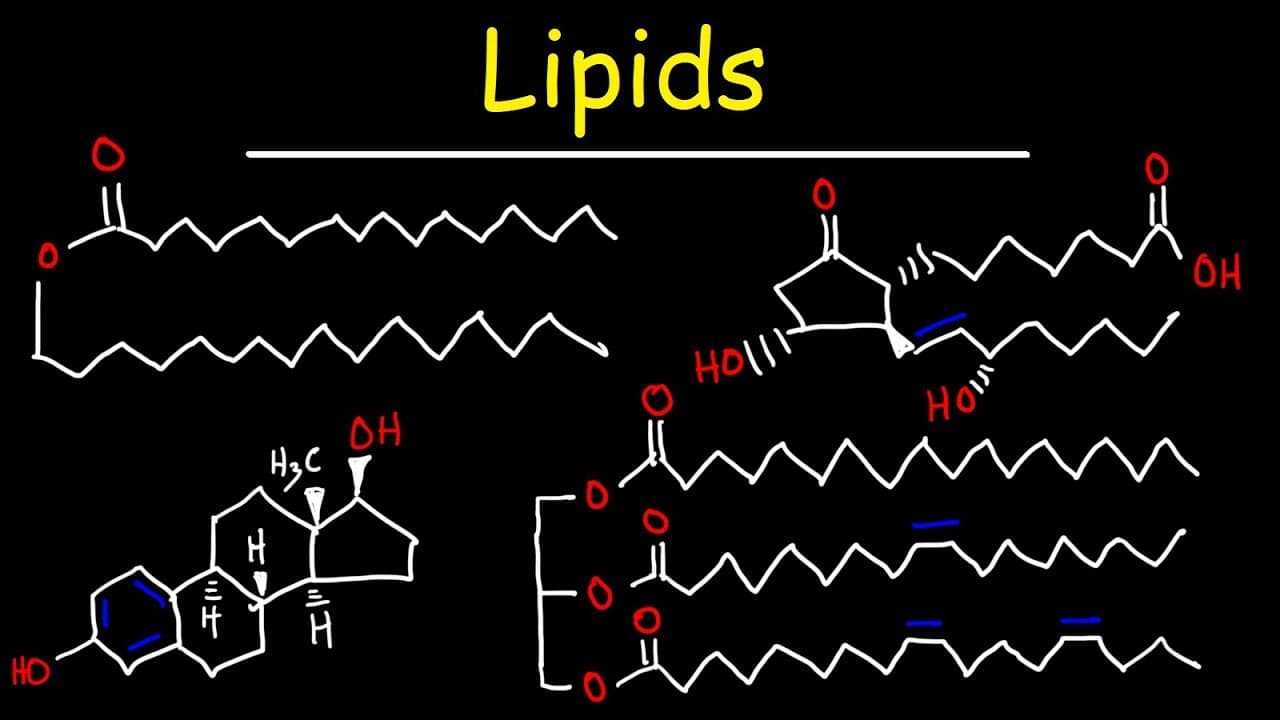
Lipids are hydrophobic molecules, including fatty acids, triglycerides, phospholipids, steroids, waxes, terpenes, and icosanoids, that play a crucial role in long-term energy storage, cell membrane structure, thermal insulation, and various bodily functions.
Transcript
in this video we're going to focus on lipids so lipids would be the fats and oils that you've seen in everyday life these include fatty acids triglycerides phospholipids steroids waxes terpenes prostaglandins and things like that now lipids are nonpolar which means that they're mostly hydrophobic that is they don't mix well with water hydro means w... Read More
Key Insights
- ❓ Lipids are hydrophobic molecules mainly composed of carbon and hydrogen bonds.
- 🍉 Triglycerides are highly effective for long-term energy storage, storing more than carbohydrates.
- 🤕 Phospholipids form the cell membrane, with hydrophilic heads and hydrophobic tails.
- ❓ Steroids, including cholesterol and sex hormones, have diverse roles in the body.
- 🌒 Waxes are nonpolar molecules with long alkyl chains, used for coatings and insulation.
- ℹ️ Terpenes are lipids with structural units of isoprene, found in various natural sources.
Install to Summarize YouTube Videos and Get Transcripts
Explore YouTube Video Summarizer or Get YouTube Transcript Extractor
Questions & Answers
Q: What are fatty acids and what are their components?
Fatty acids are long chains of hydrocarbons that contain a polar carboxylic acid group and a nonpolar hydrocarbon tail. They are composed mainly of carbon and hydrogen atoms.
Q: How are triglycerides formed, and what is their major function?
Triglycerides are formed by reacting glycerol with three fatty acid molecules through a dehydration synthesis reaction, resulting in a molecule used for long-term energy storage.
Q: What are phospholipids and what is their role in the body?
Phospholipids consist of a phosphate group, glycerol molecule, and two fatty acid chains. They form the cell membrane, with the hydrophilic head facing water and the hydrophobic tails facing the interior of the cell.
Q: What are the functions of steroids in the body?
Steroids, such as cholesterol, estradiol, testosterone, and cortisol, have various functions, including maintaining cell membrane fluidity, acting as sex hormones, reducing inflammation, and regulating stress responses.
Summary & Key Takeaways
-
Lipids are nonpolar molecules that are mostly made up of carbon and hydrogen bonds, making them hydrophobic and unable to mix well with water.
-
Triglycerides are highly effective for long-term energy storage as they can store more than twice the amount of energy compared to carbohydrates.
-
Lipids, such as phospholipids, make up the cell membrane and provide thermal insulation and protection.
Read in Other Languages (beta)
Share This Summary 📚
Summarize YouTube Videos and Get Video Transcripts with 1-Click
Try YouTube Summary with ChatGPT & Claude or YouTube Transcript Generator
Explore More Summaries from The Organic Chemistry Tutor 📚






Summarize YouTube Videos and Get Video Transcripts with 1-Click
Try YouTube Summary with ChatGPT & Claude or YouTube Transcript Generator