Nuclear Fusion Breakthrough; Powering Electric Vehicles; Carbon Capture | 60 Minutes Full Episodes
TL;DR
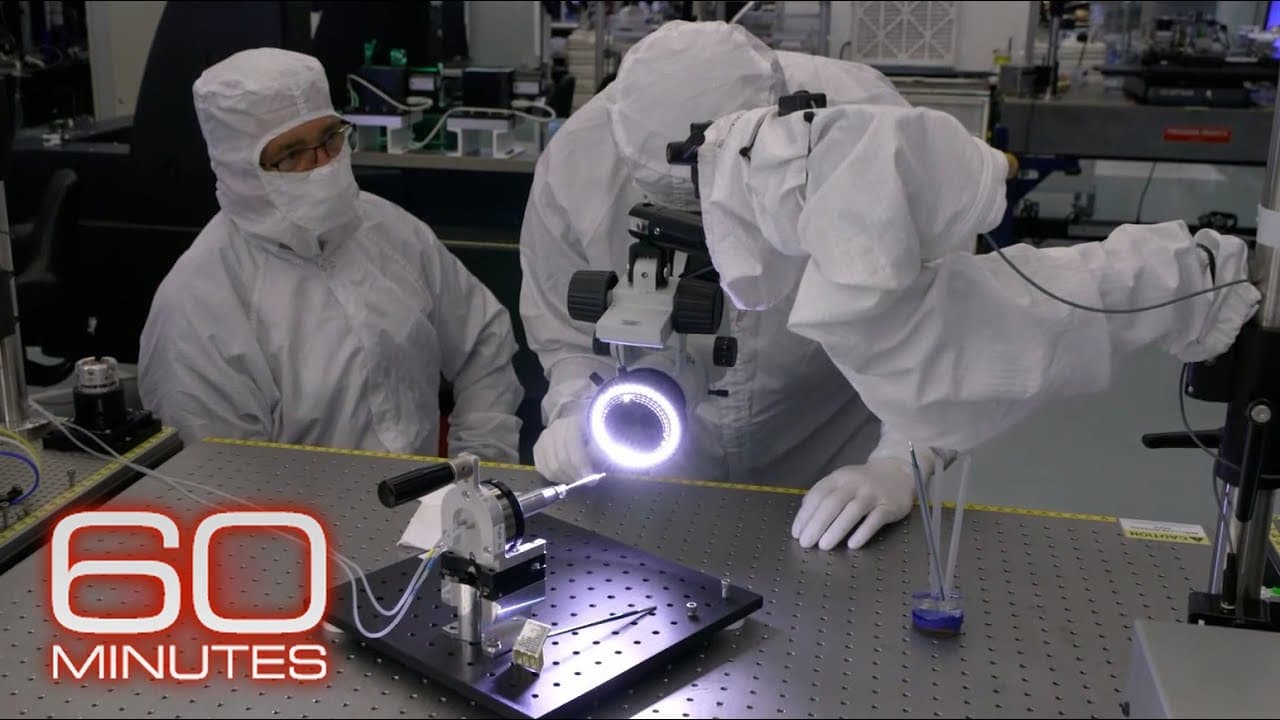
Lawrence Livermore National Laboratory achieved fusion ignition by using the National Ignition Facility’s 192 lasers to put two units of energy into an experiment that produced about three units. The episode also examines Energy Source Minerals’ effort to extract lithium from California’s Salton Sea for electric-vehicle batteries. Commercial fusion remains distant, so read on to understand the breakthrough, its extraordinary engineering, and the challenges ahead.
Transcript
last month the nearest star to the Earth was in California in a laboratory for the first time the world's largest lasers forced atoms of hydrogen to fuse together in the same kind of energy producing reaction that fires the sun it lasted less than a billionth of a second but after six Decades of toil and failure the Lawrence Livermore National Labo... Read More
Key Insights
- 👨🔬 Lawrence Livermore National Laboratory achieved a fusion reaction breakthrough after decades of research and development.
- 👻 The National Ignition Facility (NIF) allows scientists to study extreme conditions found in celestial objects and nuclear weapons.
- 🚙 Extracting lithium from the Salton Sea region offers potential for a domestic lithium supply, reducing reliance on imports for electric vehicle production.
- 🥶 The success of fusion energy and increased lithium production are crucial for the global transition to sustainable and carbon-free energy sources.
- 😀 Despite the recent breakthrough, achieving commercial fusion power and scaling up lithium operations face significant technical and financial challenges.
- ❓ The success of these technologies relies on continued funding, political support, and societal acceptance.
- 🚙 The growth of the electric vehicle industry and the availability of domestic lithium resources have the potential to transform the energy and transportation sectors.
Install to Summarize YouTube Videos and Get Transcripts
Explore YouTube Video Summarizer or Get YouTube Transcript Extractor
Questions & Answers
Q: What nuclear fusion breakthrough did Lawrence Livermore National Laboratory achieve?
On December 5, the laboratory used the National Ignition Facility to ignite a fusion reaction that produced more energy than the lasers delivered to the experiment. Two units of energy went in, and about three units came out, marking a breakthrough after nearly 200 attempts over 13 years.
Q: What is the National Ignition Facility, and what was it built to do?
The National Ignition Facility, or NIF, is the world’s largest and most energetic laser. Built starting in the 1990s for three and a half billion dollars, it creates extreme high-energy and high-density conditions so scientists can study environments resembling the centers of giant planets, the Sun, and operating nuclear weapons.
Q: What does fusion ignition mean?
Ignition means starting a fusion reaction that releases more energy than the lasers put into the experiment. It occurs when the fuel becomes hot and dense enough, quickly enough, and remains confined long enough for fusion reactions to begin sustaining themselves.
Q: How does the National Ignition Facility create a fusion reaction?
NIF uses 192 powerful lasers housed in tubes longer than a football field. Their beams deliver energy to a tiny target, vaporizing it and driving an implosion that forces hydrogen atoms to fuse under conditions hotter than the center of the Sun.
Q: Why are NIF’s fusion targets made with nearly perfect diamond shells?
The shells must be almost perfectly round, with roughness 100 times better than a mirror. Imperfections could make the implosion uneven and cause the fusion reaction to fizzle, so the laboratory forms the shells from diamond by vaporizing carbon.
Q: What changes helped produce the successful December 5 fusion shot?
The team used a thicker target so it would retain its shape longer. Researchers also found a way to increase the laser shot’s power without damaging the lasers.
Q: Why is commercial fusion power still difficult to achieve?
The successful reaction lasted less than a billionth of a second, and the facility’s target size is constrained by the finite energy its lasers can deliver. Commercial power would also require more frequent reactions, greater energy gain, more efficient lasers, and a larger supply of nearly perfect diamond target shells.
Q: How could lithium extraction from California’s Salton Sea support electric vehicles?
Energy Source Minerals is building a plant in the Salton Sea region to extract lithium, a crucial component of electric-vehicle batteries. The operation could provide a domestic lithium supply for electric-vehicle production in the United States.
Summary & Key Takeaways
-
Lawrence Livermore National Laboratory successfully achieves fusion reaction using the world's largest lasers, a significant step towards commercial fusion power.
-
The National Ignition Facility (NIF), built by Lawrence Livermore, aims to study high-energy, high-density conditions similar to those found in extreme celestial objects.
-
Energy Source Minerals builds a plant in California's Salton Sea region to extract lithium, a crucial component for electric vehicle batteries, offering potential for a domestic lithium supply in the US.
Read in Other Languages (beta)
Share This Summary 📚
Summarize YouTube Videos and Get Video Transcripts with 1-Click
Try YouTube Summary with ChatGPT & Claude or YouTube Transcript Generator
Explore More Summaries from Full Episodes | 60 Minutes 📚

Summarize YouTube Videos and Get Video Transcripts with 1-Click
Try YouTube Summary with ChatGPT & Claude or YouTube Transcript Generator