How to Grow Revenue by Protecting Customer Privacy
TL;DR
Protecting customer privacy can increase revenue by strengthening trust, attracting customers, improving personalized services, supporting premium features, enabling consensual data monetization, and creating dedicated privacy products. The foundation is contextual privacy: collect and use personal data only with consent, for a mutually understood purpose, while clearly explaining the benefit customers receive and requesting permission when the context changes.
Transcript
Hi, everyone. Thank you for listening. My name is Laura Koetzle, and I am the VP and group director for Security and Risk Research at Forrester. And this session is five ways to drive revenue by protecting customer privacy. So this is an era of amazing innovation, as all of us know, and I'm just gonna give two examples here. Uh, the fact that I can... Read More
Key Insights
- Consumer privacy is becoming a competitive factor because customers increasingly understand the consequences of sharing personal information. They can enforce their rights, cancel transactions, and move to alternatives when a company provides inadequate protection or fails to explain how its data practices work.
- Contextual privacy is the consensual collection and use of personal data within a mutually agreed context and for a mutually agreed purpose. Customers should know why data is collected, what the company will do with it, and how sharing it benefits them.
- Privacy can attract customers when products provide visible controls and understandable notifications. Apple's consumer-facing privacy features show users which applications access information in the background and let them decide whether that access should continue, making privacy part of the product experience.
- Personalized services can create value by aggregating customer data with permission. Services such as TripIt and Mint depend on personal information to deliver useful experiences, encourage continued use, support paid services, and connect customers with third-party offerings while maintaining the trust their businesses require.
- Privacy-enhanced services can support premium pricing because customers already understand freemium models. A company may offer a free service alongside a paid option that provides greater privacy, control, or an alternative funding mechanism, as illustrated by Google Contributor's approach to supporting publishers instead of relying only on advertising.
- Consensual data monetization can generate revenue when collection, sharing, and commercial use are transparent. Data companies can sell information for activities such as credit scoring, mortgage decisions, and direct marketing, but the practice becomes acceptable only when customers knowingly authorize it in exchange for services they value.
- Privacy itself can become a product through dashboards, controls, and data-residency options. AVG's Privacy Fix helps consumers manage what they reveal across devices and settings, while JotForm offers a simple option for storing data in the European Union to address residency concerns.
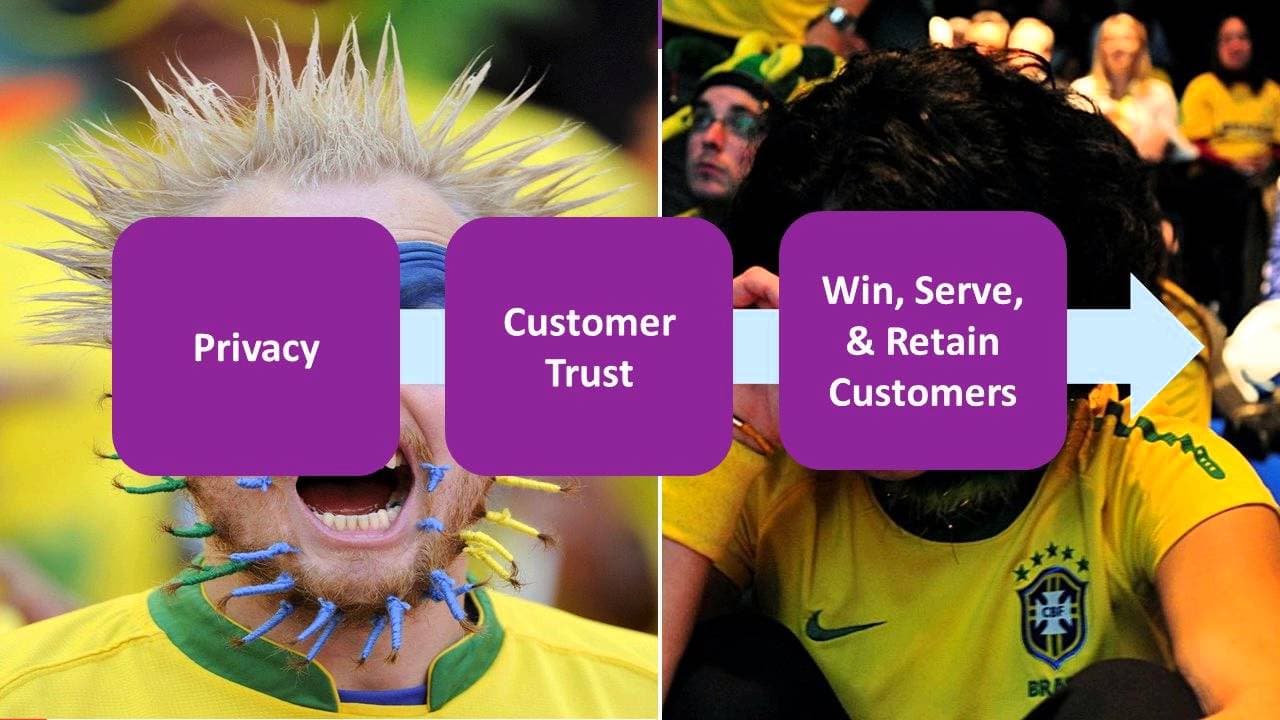
- Strong privacy practices can reduce risk and increase revenue at the same time. By building trust, a company can win, serve, and retain more customers while reducing the likelihood that unclear, intrusive, or unauthorized data practices will trigger customer departures, legal action, or financial penalties.
Install to Summarize YouTube Videos and Get Transcripts
Explore YouTube Video Summarizer or Get YouTube Transcript Extractor
Questions & Answers
Q: What is contextual privacy?
Contextual privacy is a business practice in which personal data is collected and used consensually within a mutually agreed context and for a mutually agreed purpose. Customers should understand why a company needs their information, what it plans to do with that information, and what recognizable benefit they will receive. If the context or purpose changes, the company should request permission again in a useful and transparent manner.
Q: How can protecting customer privacy increase revenue?
Protecting customer privacy can increase revenue by creating trust that helps a company attract, serve, and retain customers. The five approaches described are using privacy to attract customers, aggregating data for personalized services, charging a premium for privacy-enhanced features, monetizing customer data transparently with consent, and turning privacy controls or capabilities into products. These methods can also reduce risk from poor data practices.
Q: Why does customer trust matter when monetizing personal data?
Customer trust matters because people can choose competitors when they believe a company inadequately protects their information or hides how it uses data. Businesses such as TripIt and Mint rely on personal data as a central asset for delivering services. If customers stop trusting them and withdraw access, those companies lose the information required to personalize services, support connections, and sustain their business models.
Q: How can privacy features help attract more customers?
Privacy features can attract customers by making data practices visible and giving individuals meaningful control. Apple's consumer-facing approach provides notifications about applications using information in the background and allows users to approve or stop that access. Such controls demonstrate that privacy is part of the product experience, which can strengthen confidence among customers who increasingly consider personal-information protection when choosing where to spend money.
Q: How can companies use customer data for personalized services?
Companies can aggregate customer data with consent and use it to provide services that customers recognize as valuable. TripIt and Mint illustrate businesses whose offerings depend on personal information and can encourage users to pay, use the service more frequently, or connect with third parties. The arrangement depends on transparent purposes and continued protection because losing customer trust would undermine the data access supporting the service.
Q: When can a company charge more for privacy?
A company can charge more for privacy when it offers a clearly enhanced service within a model customers understand, such as a free version paired with a more capable paid version. Google Contributor is presented as an example that lets users support selected companies, causes, and publishers instead of depending solely on advertising. The premium must provide an understandable privacy-related choice or benefit that customers value.
Q: How can businesses monetize customer data responsibly?
Businesses can monetize customer data responsibly by collecting and selling it only with explicit consent and transparent explanations. Customers should understand what information is involved, who may use it, the agreed purpose, and the benefit they receive. Data can support activities such as credit scoring, mortgage decisions, and direct marketing, but monetization should remain within the approved context instead of occurring as an undisclosed background practice.
Q: What kinds of privacy capabilities can become products?
Privacy capabilities can become products when they directly help consumers or companies control disclosure, settings, or data location. AVG's Privacy Fix is described as a dashboard for managing what a person reveals across devices and contexts. JotForm provides a one-click option to store data in the European Union, giving organizations and consumers a practical way to address data-residency requirements and concerns.
Summary & Key Takeaways
-
Privacy is becoming a purchasing consideration as consumers grow more sophisticated, enforce their rights, and abandon companies they do not trust. Businesses that transparently monetize customer data with consent can strengthen customer relationships, while companies that mishandle personal information risk losing customers, facing financial consequences, and eventually becoming less competitive.
-
Contextual privacy means collecting and using personal data consensually within a mutually agreed context and for a mutually agreed purpose. Customers should understand why information is collected, how it will be used, and what benefit they receive. If the purpose or context changes, the company should request permission again in a useful way.
-
Companies can generate revenue from privacy through five approaches: attracting customers with stronger controls, using aggregated data for personalized services, charging for enhanced privacy, monetizing data transparently with consent, and selling privacy itself as a product. Together, these approaches can reduce business risk while improving customer acquisition, service, and retention.
Read in Other Languages (beta)
Share This Summary 📚
Summarize YouTube Videos and Get Video Transcripts with 1-Click
Try YouTube Summary with ChatGPT & Claude or YouTube Transcript Generator
Explore More Summaries from RSAC Cybersecurity 📚





Summarize YouTube Videos and Get Video Transcripts with 1-Click
Try YouTube Summary with ChatGPT & Claude or YouTube Transcript Generator