Does The Wonderful Wizard of Oz Critique Capitalism?
TL;DR
The Wonderful Wizard of Oz can be interpreted as both a critique of American capitalism and a celebration of urban consumer culture. Henry Littlefield first proposed these connections, linking characters to real-life social issues of the late 19th century. While some scholars argue it critiques capitalism, others suggest it embraces the new consumer era, indicating the text's lasting relevance.
Transcript
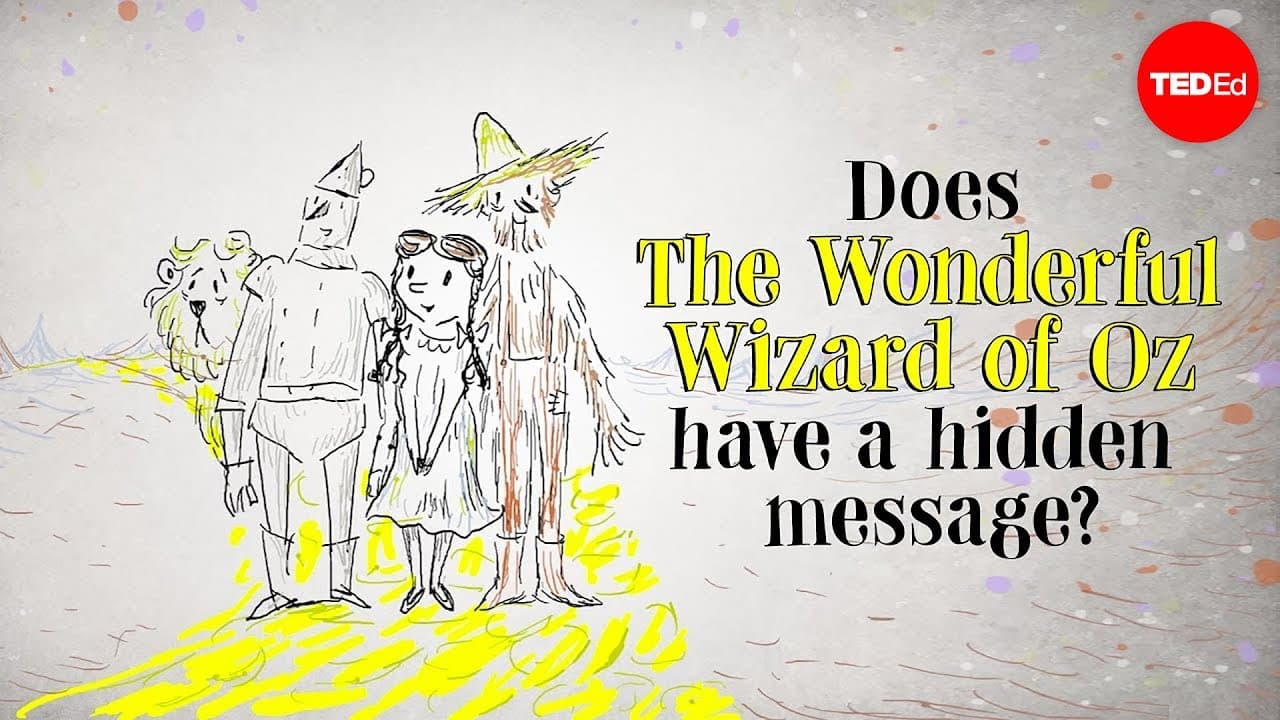
In the summer of 1963, a high school teacher changed the way the world looked at "The Wizard of Oz." His name was Henry Littlefield, and he was teaching an American history class. He'd made it to the late 19th century, a time called The Gilded Age, but he was struggling to keep his class interested in the complex social and economic issues of the ... Read More
Key Insights
- 🥳 "The Wizard of Oz" can be analyzed in different ways, either as a critique of American capitalism or a celebration of urban consumer culture.
- 💨 Henry Littlefield and his students found connections between the book's characters and real-life events, providing a unique way to teach American history.
- 🏈 Littlefield's theory gained widespread acceptance and was even mentioned in American history textbooks.
Install to Summarize YouTube Videos and Get Transcripts
Explore YouTube Video Summarizer or Get YouTube Transcript Extractor
Questions & Answers
Q: How did Henry Littlefield use "The Wizard of Oz" to teach American history?
Littlefield saw connections between the book's characters and events in the late 19th century, such as the struggles of farmers and workers during the Gilded Age. He used these connections to engage his students and help them understand historical concepts.
Q: What were some of the analogies made by Littlefield and his students?
Littlefield claimed that Dorothy represented a typical American girl, the Scarecrow symbolized the farmer, the Tin Woodman represented the industrial worker, and the Cowardly Lion was William Jennings Bryan. These connections highlighted the social and economic issues of the time.
Q: Why did Littlefield's theory gain popularity?
Littlefield's theory of "The Wizard of Oz" as a critique of American capitalism appealed to people in the 1960s. Other scholars supported his claims, and the proposed analogies and connections became widely accepted.
Q: How did some recent scholars interpret "The Wizard of Oz" differently?
Some scholars, like William Leach, argue that the book is actually a celebration of the new urban consumer culture. They believe that the dazzling Emerald City represents the shiny, new America and its consumerism.
Summary & Key Takeaways
-
Henry Littlefield, a high school teacher, found connections between "The Wonderful Wizard of Oz" and the social and economic issues of the late 19th century, using it to teach American history.
-
Littlefield and his students discovered parallels between characters and events in the book and real-life situations, such as the Populist movement and the struggles of farmers and workers.
-
Littlefield's theory gained popularity, but some recent scholars have interpreted the book differently, suggesting it is a celebration of urban consumer culture.
Read in Other Languages (beta)
Share This Summary 📚
Summarize YouTube Videos and Get Video Transcripts with 1-Click
Try YouTube Summary with ChatGPT & Claude or YouTube Transcript Generator
Explore More Summaries from TED-Ed 📚



Summarize YouTube Videos and Get Video Transcripts with 1-Click
Try YouTube Summary with ChatGPT & Claude or YouTube Transcript Generator