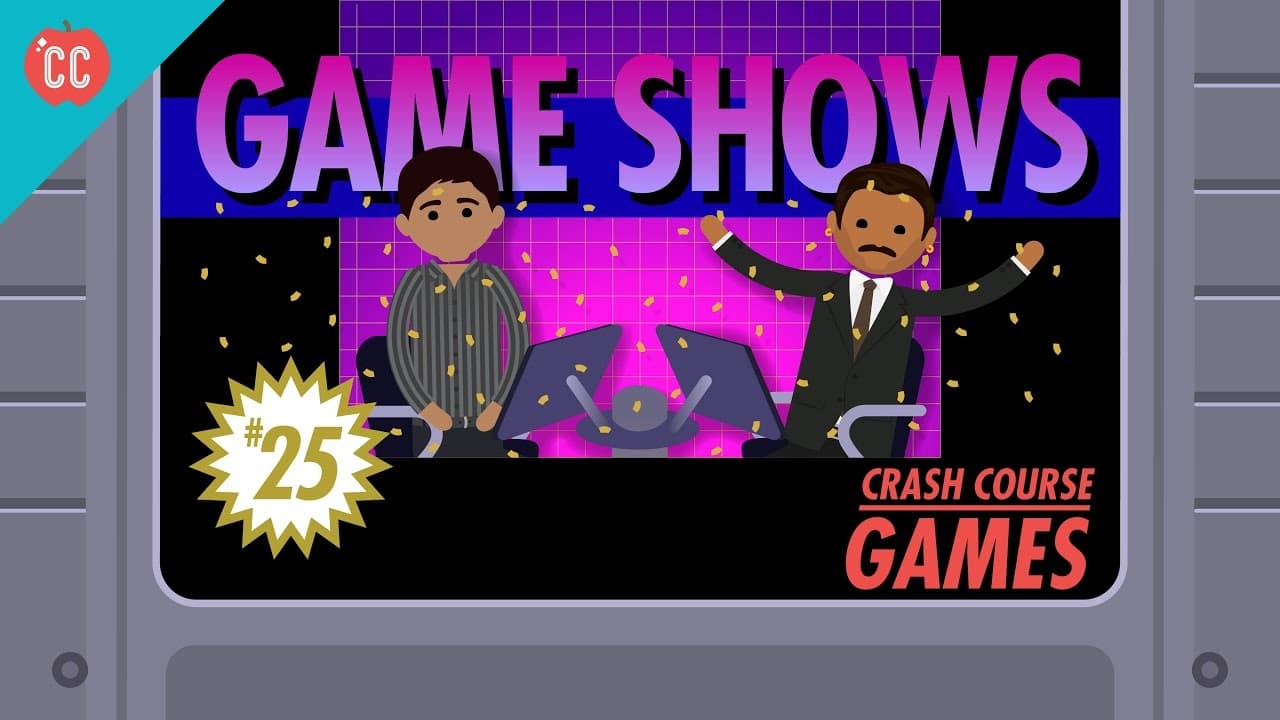
The History of Game Shows: Crash Course Games #25
TL;DR
Game shows have evolved from radio quizzes to cultural icons.
Transcript
Hi I’m Andre Meadows and this is Crash Course Games. If you’ve ever stayed home sick on a weekday and channel surfed, you’re probably familiar with today’s topic: game shows. While it might seem like there’s not much substance to the genre that brought us such shows as Cash Cab and Are You Smarter Than a 5th Grader?, they’ve actually been an import... Read More
Key Insights
- Game shows began in the 1920s on the radio as quiz shows, evolving from activities like puzzles and spelling bees.
- The first TV game show was England's 1938 Spelling Bee, marking a shift from radio to television for the genre.
- Quiz and panel shows were the two major varieties, with quiz shows focusing on Q&A and panel shows involving celebrity panelists.
- In the 1950s, game shows faced a scandal involving rigged contests, leading to stricter regulations and a shift in perception.
- Game shows transitioned from highbrow to low-prestige entertainment, becoming flashier and incorporating music and sound effects.
- The 1990s saw a resurgence with reality competition shows like Who Wants to Be a Millionaire? and American Idol.
- Game shows impact contestants and audiences differently, with contestants experiencing high stakes and audiences enjoying entertainment and competition.
- Research shows game shows are popular for their relatability, big prizes, and the possibility of winning through everyday knowledge.
Install to Summarize YouTube Videos and Get Transcripts
Explore YouTube Video Summarizer or Get YouTube Transcript Extractor
Questions & Answers
Q: What was the first TV game show and its significance?
The first TV game show was England's 1938 Spelling Bee. Its significance lies in marking the transition of game shows from radio to television, paving the way for the genre's evolution into a major form of entertainment media. This shift allowed for a broader audience reach and set the stage for the development of new game show formats.
Q: How did the 1950s scandal affect game shows?
The 1950s scandal involved rigged game shows like Twenty-One, where outcomes were prearranged to favor certain contestants. This led to public outrage and skepticism, prompting regulatory changes that outlawed prearranged outcomes. The scandal shifted the genre's perception from highbrow to low-prestige entertainment, influencing the development of flashier, more entertainment-focused game shows.
Q: What led to the resurgence of game shows in the 1990s?
The 1990s resurgence of game shows was driven by the introduction of reality competition formats like Who Wants to Be a Millionaire? These shows offered big prizes and involved increased audience participation, appealing to viewers' desires for relatable contestants and the thrill of potentially winning substantial rewards. This shift revitalized the genre and significantly impacted American television.
Q: How do game shows impact contestants and audiences differently?
Game shows impact contestants by placing them in high-stakes situations with significant pressure due to the potential for winning or losing large prizes. For audiences, game shows offer entertainment, relaxation, and a sense of companionship. Viewers enjoy the relatability of contestants and the drama of the competition, often experiencing a competitive rush vicariously through the participants.
Q: What are the main factors that draw people to watch game shows?
People are drawn to game shows for several reasons: they feature ordinary people, offer the chance to win big prizes, and require demonstrating everyday knowledge. Additionally, game shows are ranked high for entertainment, convenience, companionship, and relaxation, providing viewers with a unique blend of excitement and relatability that keeps them engaged and entertained.
Q: How do game shows differ from other game genres discussed in the series?
Game shows differ from other game genres in that they often involve audience participation and focus on entertainment rather than direct player involvement. Unlike video games or board games, where players actively participate, game shows allow viewers to engage passively, enjoying the competition and drama without direct involvement. This makes them more accessible and relatable to a wider audience.
Q: What role does risk-taking play in game shows?
Risk-taking is a crucial element in game shows, particularly for contestants. Studies have shown that contestants' risk aversion varies based on previous outcomes, with those experiencing extreme results being more prone to taking risks. This dynamic adds to the drama and unpredictability of game shows, making them more engaging for both contestants and audiences.
Q: Why are game shows considered part of a larger entertainment culture?
Game shows are considered part of a larger entertainment culture because they combine elements of competition, drama, and relatability, appealing to a broad audience. They have evolved alongside other media forms, influencing and being influenced by cultural trends. As accessible entertainment, game shows reflect societal values and interests, making them a significant part of the media landscape.
Summary & Key Takeaways
-
Game shows originated in the 1920s on radio, evolving from quiz shows to TV icons like Jeopardy! and The Price is Right, significantly impacting U.S. culture.
-
The genre faced a major scandal in the 1950s, leading to regulatory changes and a shift towards more entertainment-focused formats with big prizes.
-
In the 1990s, game shows resurged with reality competition formats, appealing to audiences through relatability, big prizes, and the thrill of competition.
Read in Other Languages (beta)
Share This Summary 📚
Summarize YouTube Videos and Get Video Transcripts with 1-Click
Try YouTube Summary with ChatGPT & Claude or YouTube Transcript Generator
Explore More Summaries from CrashCourse 📚




Summarize YouTube Videos and Get Video Transcripts with 1-Click
Try YouTube Summary with ChatGPT & Claude or YouTube Transcript Generator