What Is the Historical Impact of Iron and Steel?
TL;DR
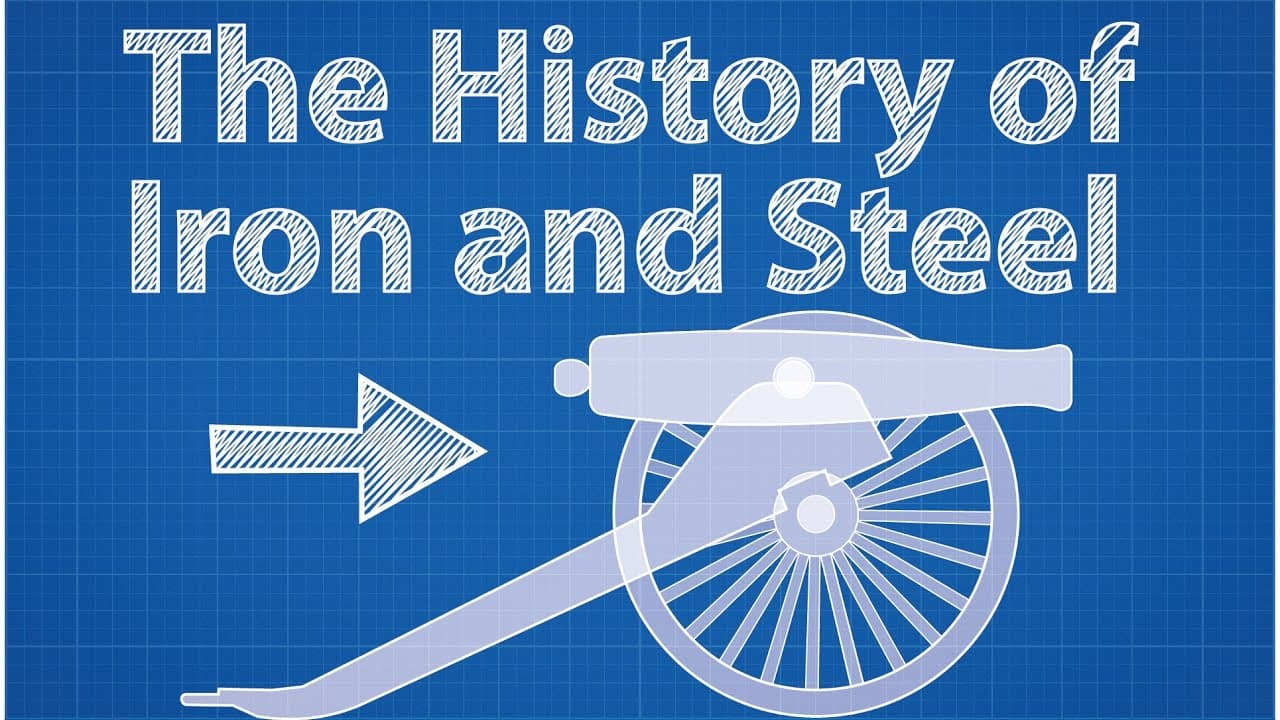
Iron and steel have been crucial in shaping human civilization, marking distinct eras from the Stone Age to the Industrial Revolution. The ability to extract and produce these materials revolutionized tools and infrastructure, made possible advancements like the Bessemer process, which enabled mass steel production and became a key indicator of economic growth and development.
Transcript
We take many of the things for granted these days, but as a materials engineer I have always found it incredible how much we take materials for granted. Everything we build is dependant on these materials. They are so significant that we have named entire periods of human history after them. From the stone age to the information (space) age. They h... Read More
Key Insights
- Materials have historically defined eras, from the Stone Age to the Iron Age, influencing societal development and technological progress.
- Iron's earliest use dates back to 3500 BC in Egypt, where it was sourced from meteoric iron due to its heavenly associations.
- The Iron Age's timeline varies globally, with Britain's Iron Age starting around 800 BC and ending with the Roman invasion in 43 AD.
- Iron and steel primarily differ in carbon content, affecting their hardness and ductility; cast iron is hard but brittle, while steel balances these properties.
- The transition from bloomeries to blast furnaces dramatically increased iron production, although blast furnaces produce high-carbon cast iron.
- The Bessemer process revolutionized steel production by efficiently removing impurities, although it initially struggled with phosphorus content.
- Steel's availability spurred industrial growth, particularly in the rail industry, and is a key indicator of a country's economic progress.
- Innovations in steel production, such as the Bessemer process and later improvements, enabled modern infrastructure, including skyscrapers and bridges.
Install to Summarize YouTube Videos and Get Transcripts
Explore YouTube Video Summarizer or Get YouTube Transcript Extractor
Questions & Answers
Q: What was the primary source of iron before extraction technology?
Before humans developed the technology to extract iron from ore, the primary source of iron was meteoric iron. This iron was highly prized due to its heavenly associations, and it was used in ancient Egypt as early as 3500 BC. The lack of oxygen in space allowed meteors to deliver iron in a usable form to Earth.
Q: How did the Iron Age vary across different regions?
The Iron Age began at different times across the world, depending on when societies learned to extract iron from its ore. In Britain, the Iron Age started around 800 BC and ended with the Roman invasion in 43 AD. This variability highlights how technological advancements spread unevenly across regions.
Q: What distinguishes iron from steel?
The primary difference between iron and steel lies in their carbon content. Iron with a carbon content above 2% is considered cast iron, which is hard yet brittle. Steel, on the other hand, contains 0.2% to 2% carbon, providing an ideal balance of hardness and ductility, making it more versatile for various applications.
Q: What role did bloomeries play in iron production?
Bloomeries were the early furnaces used to smelt iron ore, utilizing charcoal as a heat source. They produced small quantities of iron by heating the ore below its melting point, allowing impurities to form a molten slag. Despite their limited output, bloomeries revolutionized human life by enabling local communities to produce their own iron tools and weapons.
Q: How did the Bessemer process change steel production?
The Bessemer process revolutionized steel production by introducing a method to efficiently remove impurities from molten iron. It involved blowing air through the iron to oxidize impurities, with manganese added to remove excess oxygen. This process was fast and economical, making steel more accessible and fueling industrial growth.
Q: Why was phosphorus a problem in early steel production?
Phosphorus in steel made it brittle, posing a significant challenge in early steel production. The Bessemer process initially failed to remove phosphorus effectively, limiting its use to low-phosphorus iron ores. This issue was later resolved by adding limestone to the process, which drew phosphorus into the slag, enhancing steel quality.
Q: What impact did steel have on infrastructure development?
The mass production of steel had a profound impact on infrastructure development. Steel's strength and durability enabled the construction of modern railroads, skyscrapers, and bridges, such as the Golden Gate Bridge. Its availability was crucial for industrial expansion, marking it as a key indicator of a nation's economic progress.
Q: How did the Bessemer process initially struggle with efficiency?
The Bessemer process was initially too efficient, removing too much carbon and leaving excess oxygen in the iron. This problem was addressed by adding spiegeleisen, an alloy containing manganese, which reacted with the oxygen to reduce its content and adjusted the carbon levels as needed, improving the process's overall effectiveness.
Summary & Key Takeaways
-
The video discusses the historical significance of materials, particularly iron and steel, in shaping human civilization. It explores the transition from the Stone Age to the Iron Age and how materials have defined human progress.
-
Iron's initial use was from meteoric sources until humans learned to extract it from ore, marking the beginning of the Iron Age. The development of steel, with its balanced properties, played a crucial role in industrial advancements.
-
The Bessemer process was pivotal in mass-producing steel, overcoming initial challenges like phosphorus removal. This advancement was crucial for infrastructure development, marking steel as a measure of economic growth.
Read in Other Languages (beta)
Share This Summary 📚
Summarize YouTube Videos and Get Video Transcripts with 1-Click
Try YouTube Summary with ChatGPT & Claude or YouTube Transcript Generator
Explore More Summaries from Real Engineering 📚





Summarize YouTube Videos and Get Video Transcripts with 1-Click
Try YouTube Summary with ChatGPT & Claude or YouTube Transcript Generator