What Are 17 Micro-Habits to Improve Your Focus?
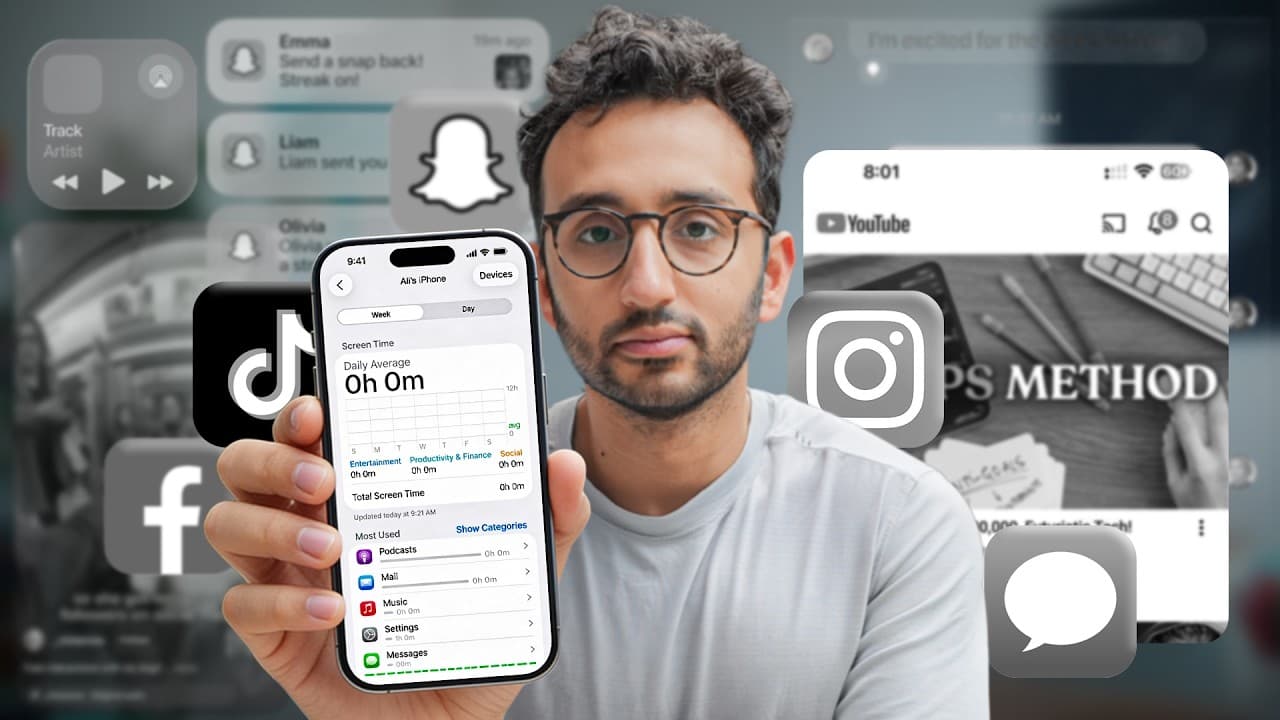
TL;DR
You can improve your focus by adopting small habits that make sustained attention easier, including using the 5-minute rule, choosing long-form content, limiting distracting apps, and keeping your phone away while working. The transcript also recommends naming internal emotional triggers, tracking visible progress, varying your work environment, and taking genuinely recharging breaks. Read on for practical ways to apply these habits.
Transcript
Ladies and gentlemen, welcome back to the channel. In this video, we're going to talk through 17 micro habits that you can incorporate into your life to try and fix your attention span before it's too late and the robots come for us all. The first 5 minutes of any task are the ones where we are the most prone to getting distracted. There's an absol... Read More
Key Insights
- The 5-minute rule helps overcome initial distraction by committing to a task for just five minutes.
- Consuming long-form content, such as books or movies, trains your attention span better than short-form media.
- Keeping phones out of the bedroom reduces distractions and improves sleep quality.
- Setting screen time limits on apps can significantly enhance focus and reduce unnecessary phone usage.
- Changing work environments, like working in coffee shops, can improve focus by training attention in varied settings.
- Understanding internal triggers, such as boredom or anxiety, is crucial for managing distractions effectively.
- Tracking progress, like writers do with word counts, motivates continued focus by providing a sense of achievement.
- Taking recharging breaks, rather than stimulating ones, helps maintain energy and focus during work sessions.
Install to Summarize YouTube Videos and Get Transcripts
Explore YouTube Video Summarizer or Get YouTube Transcript Extractor
Questions & Answers
Q: What micro-habits can improve focus and attention span?
Start with the 5-minute rule, consume more long-form content, and keep your phone away from your bed and workspace. Other habits include setting app limits, changing work environments, identifying emotional triggers, tracking progress, and taking recharging rather than stimulating breaks.
Q: How does the 5-minute rule help improve focus?
Commit to a task for just 5 minutes when starting or whenever you feel distracted. The transcript says distraction peaks before beginning, while staying focused usually becomes easier about 5 minutes into the task.
Q: Why can long-form content improve attention span?
Books, audiobooks, movies, and TV shows require attention for longer periods than TikToks, Instagram Reels, or YouTube Shorts. Watching a movie or show without simultaneously reaching for your phone gives you another way to practice sustained attention.
Q: How can I reduce phone distractions while working?
The gold standard is putting the phone in another room. If that is impractical, place it away from your desk in do-not-disturb mode; at minimum, disable notifications and turn it face down.
Q: What phone habits can improve focus at night?
Charge your phone outside the bedroom so you cannot scroll in bed. If it must remain in the room, place the charger across the bed and configure the phone to block distracting apps automatically after a chosen time.
Q: How should I respond to internal triggers for distraction?
Pause and name the emotion behind the urge to escape, such as boredom, anxiety, fear, uncertainty, insecurity, or perfectionism. Then close your eyes and allow yourself to feel the discomfort instead of immediately reaching for your phone; repeated practice can make distraction less likely.
Q: Why does tracking progress help maintain focus?
Visible progress can make repetitive work feel motivating and encourage you to continue. Examples in the transcript include tracking a writer’s word count, watching an experience bar rise in a game, or adding a bead to a jar for every sales call.
Q: What makes a break genuinely recharging?
A recharging break restores energy instead of adding more stimulation or unfinished concerns. Checking email, Slack, social media, or notifications can add items to your mental to-do list, so breaks should focus on activities that genuinely recharge you.
Summary & Key Takeaways
-
The key to improving focus lies in adopting small, manageable habits that address both external distractions and internal triggers. Techniques like the 5-minute rule, consuming long-form content, and setting screen time limits on phones help maintain attention. Additionally, changing work environments and understanding emotional triggers can enhance one's ability to concentrate.
-
Reducing phone usage, especially before bed, and setting automatic app blocks can prevent distractions and improve sleep. Watching content without subtitles and working in varied environments, such as busy coffee shops, can also train the brain to focus better. These habits collectively contribute to a more productive and focused lifestyle.
-
Tracking progress and taking genuine breaks are essential for maintaining focus and motivation. By surrounding oneself with focused individuals and addressing basic needs like sleep and nutrition, one can effectively improve their attention span. These strategies, when combined, create a robust system for enhancing focus and productivity.
Read in Other Languages (beta)
Share This Summary 📚
Summarize YouTube Videos and Get Video Transcripts with 1-Click
Try YouTube Summary with ChatGPT & Claude or YouTube Transcript Generator
Explore More Summaries from Ali Abdaal 📚



Summarize YouTube Videos and Get Video Transcripts with 1-Click
Try YouTube Summary with ChatGPT & Claude or YouTube Transcript Generator