How to Build an Affordable DIY Water Cooling System
TL;DR
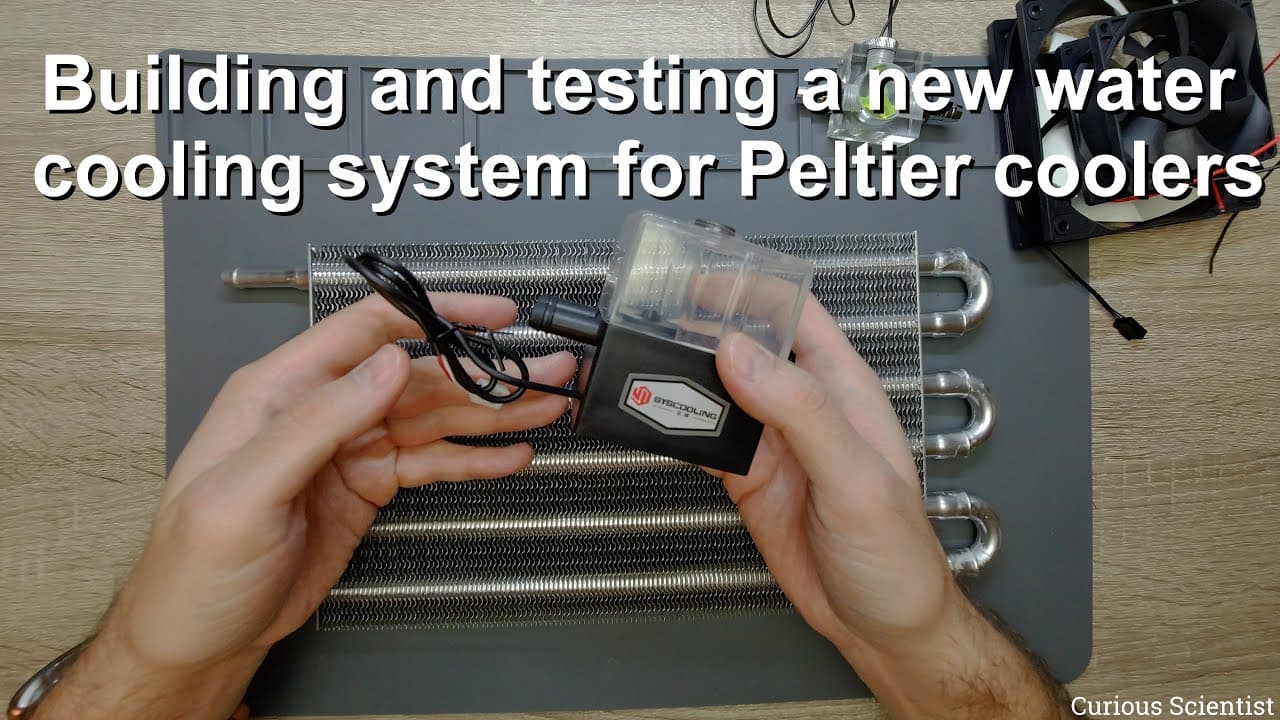
To build an affordable DIY water cooling system, use a larger radiator from a car part, a pump with an integrated water tank, and add temperature monitoring for efficiency. This setup can significantly improve cooling performance while reducing costs, especially when paired with effective fan configurations.
Transcript
welcome everyone in this video i'm going to talk about water cooling again so i published a video maybe a year ago about this system and that came out to be quite popular so i want to give some additions to that and i also want to show you some even better cooling systems so what you see in this corner is basically a kit so you can buy this 12 by 2... Read More
Key Insights
- 🥳 DIY water cooling systems can be built with inexpensive car parts without sacrificing performance.
- 🥵 Larger radiators increase heat dissipation capacity and overall cooling efficiency.
- 😎 Monitoring inlet and outlet temperatures is essential for evaluating cooling performance.
- 😎 Efficient fan configurations can drastically improve cooling system effectiveness.
- 😎 The quieter operation of a cooling system enhances user experience during intensive tasks.
- ❓ Continuous testing and experimentation are crucial for assessing system performance and identifying areas for improvement.
- 👻 Utilizing thermistors allows for precise temperature data collection and monitoring.
Install to Summarize YouTube Videos and Get Transcripts
Explore YouTube Video Summarizer or Get YouTube Transcript Extractor
Questions & Answers
Q: What are the main components required for a DIY water cooling system?
A typical DIY water cooling system includes a radiator, pump, water tank, hoses, fans, and cooling blocks for either CPU or GPU. The radiator helps dissipate heat, while the pump circulates the coolant through the system. Temperature monitoring is also recommended for performance assessment.
Q: How does the new cooling system compare to the old one?
The new system offers a larger radiator that can dissipate more heat, costs significantly less, and is quieter than the previous design. The older system cost around $75-$80, while the new one can be assembled for around $50, providing better performance for a fraction of the price.
Q: What measurements are taken to evaluate the cooling performance?
The video utilizes a flow indicator and thermistors to measure inlet and outlet water temperatures in the cooling system. This data allows the creator to assess the effectiveness of the cooling setup by comparing the temperature drop across the radiator.
Q: What improvements could enhance the cooling performance?
The creator suggests that improving airflow by using more powerful fans could significantly enhance cooling performance. Testing various configurations of fan sizes and placements is recommended to optimize temperature drops in the radiator.
Q: What types of fans are recommended for optimal performance?
The creator mentions utilizing either larger fans or higher RPM fans to improve airflow through the radiator. This adjustment can lead to a more effective cooling performance by ensuring better heat dissipation from the system.
Q: Why is quiet operation highlighted in the new system?
The new water cooling system is noted for its silence primarily due to the pump's design, which generates minimal noise. The creator emphasizes that isolating the pump from the surface can reduce vibrations and make the system even quieter.
Q: How does this video relate to previous content published by the creator?
This video serves as a follow-up to an earlier publication focused on water cooling systems. It builds on previous lessons and experiments, incorporating viewer feedback and additional insights gained since the last video.
Summary & Key Takeaways
-
The video discusses DIY water cooling systems, comparing a previously used system to a newer, more efficient design utilizing cheaper components like a larger radiator and more effective cooling fans.
-
Specific components highlighted include a water tank, a pump, and temperature monitoring tools to assess cooling performance and efficiency in dissipating heat from components.
-
The creator suggests potential improvements, emphasizing the importance of fan efficiency in achieving desired temperature drops and overall system performance.
Read in Other Languages (beta)
Share This Summary 📚
Summarize YouTube Videos and Get Video Transcripts with 1-Click
Try YouTube Summary with ChatGPT & Claude or YouTube Transcript Generator
Explore More Summaries from Curious Scientist 📚

![Building a coil winder [Part 6] - A few improvements thumbnail](/_next/image?url=https%3A%2F%2Fi.ytimg.com%2Fvi%2F3eyxG_g2iUA%2Fhqdefault.jpg&w=750&q=75)
Summarize YouTube Videos and Get Video Transcripts with 1-Click
Try YouTube Summary with ChatGPT & Claude or YouTube Transcript Generator