The Search for Primitive and Intelligent Life on Other Planets
TL;DR
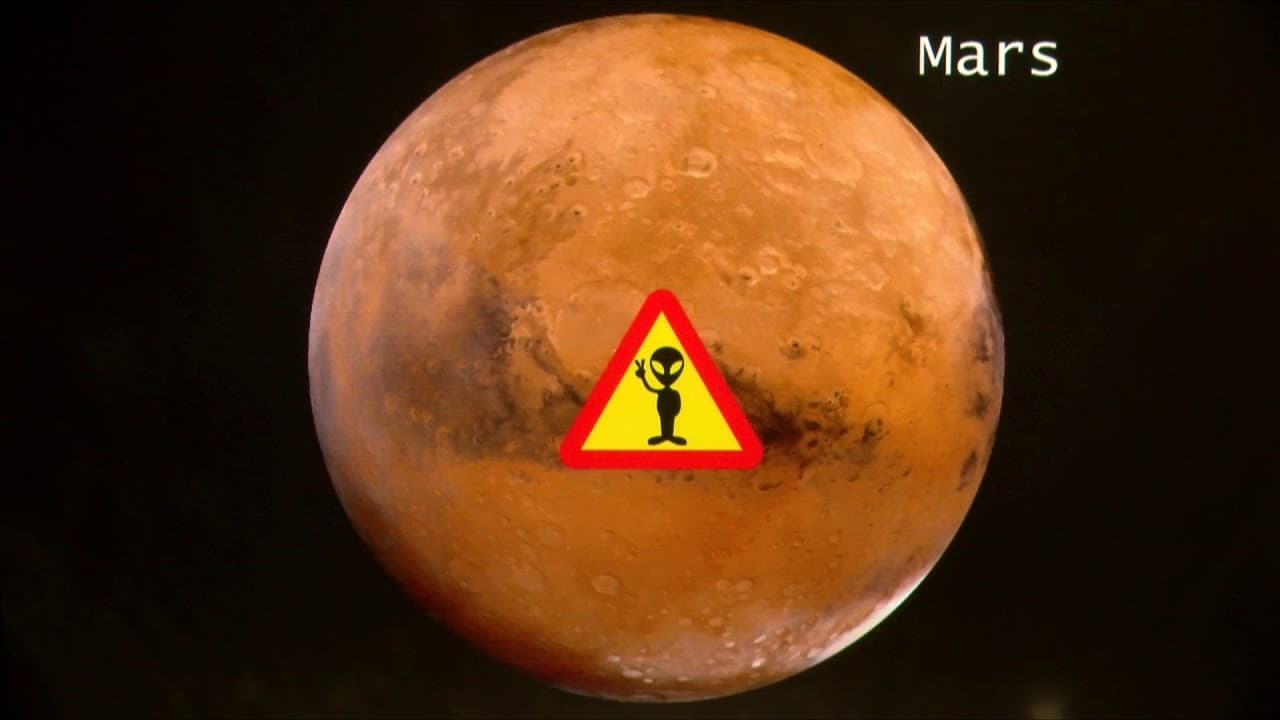
The chances of finding extraterrestrial life are significant due to the vast number of habitable planets identified, including those in the habitable zone around stars like Proxima Centauri. The search encompasses both primitive life and potential intelligent civilizations, with strong evidence suggesting life could exist in various forms throughout the universe. Cosmic modesty supports the idea that humans are not unique in the cosmos.
Transcript
goody good evening everybody thank you very much for coming and for being so patient with us I'm Charles Alcock I'm the director of the harvard-smithsonian Center for Astrophysics but you're not here to see me you're here to see my colleague professor avi low I've got a very official looking I'm introduction here and then I'll say something persona... Read More
Key Insights
- 👨🔬 The search for extraterrestrial life depends on the search for primitive and intelligent life, with different approaches and success potentials.
- ✋ Cosmic modesty suggests that humans are not special and the likelihood of finding life elsewhere is high, especially given the vast number of habitable planets.
- 💦 The study of habitable planets within our solar system, such as Mars, Europa, and Enceladus, provides insights into the potential for microbial life and the presence of liquid water.
- 🥺 The Starshot project aims to develop interstellar travel capabilities and explore space, potentially leading to the discovery of relics or artifacts from advanced civilizations.
Install to Summarize YouTube Videos and Get Transcripts
Explore YouTube Video Summarizer or Get YouTube Transcript Extractor
Questions & Answers
Q: How likely is it that we will find evidence of extraterrestrial life in our lifetime?
The likelihood of finding evidence of extraterrestrial life depends on factors such as the longevity of civilizations and the fraction of habitable planets that host intelligent life. While the search for primitive life is more limited in scope, the search for intelligent life covers a larger volume and may have more success. However, detecting signals or artifacts from other civilizations is challenging and requires careful observation and analysis.
Q: Can the Starshot project help in the search for advanced civilizations?
The Starshot project aims to develop interstellar travel capabilities and explore space, potentially allowing for the study of artifacts or relics from advanced civilizations. The movement of civilizations towards clusters of galaxies or the existence of technology capable of interstellar travel may leave traces for us to discover. By detecting these traces, we may gain insights into the longevity and behavior of other civilizations.
Q: What are some challenges in the search for extraterrestrial life?
One of the challenges is the detection of signals from advanced civilizations, as they may be different from what we expect. Additionally, the identification of relics or artifacts requires careful analysis and differentiation from natural phenomena. Communication and coordination between different civilizations are also important for collaborative exploration and preservation of resources.
Q: How can gravitational waves and neutron star mergers affect the search for extraterrestrial life?
Gravitational waves and neutron star mergers can produce rare elements like gold, uranium, and molybdenum, which are significant for life as we know it. A planet or civilization located near such events may have different resource availability compared to our own. By studying these events and their impacts, we may gain insights into the potential diversity of resources in the universe.
Summary
In this video, Professor Avi Loeb discusses the search for extraterrestrial life and the possibility of traveling to distant worlds. He emphasizes the importance of maintaining our childhood curiosity and the privilege of asking questions without knowing the answers. Professor Loeb talks about the concept of cosmic modesty and how it challenges the notion that humans are special or unique in the universe. He discusses the discovery of habitable planets around other stars and the potential for finding life as we know it. He also talks about the possibility of intelligent life and the need to explore our own solar system as well as objects that may have originated from outside our solar system. Finally, he introduces the concept of using light as a propulsion system for space travel, specifically the Starshot project, which aims to send a spacecraft to the nearest star system, Alpha Centauri.
Questions & Answers
Q: What is the privilege of doing science?
The privilege of doing science is that you can ask questions without knowing the answer in advance. It allows us to maintain our childhood curiosity into our adult life and learn from making mistakes.
Q: How is the search for extraterrestrial life described in Professor Loeb's work?
Professor Loeb describes the search for extraterrestrial life as the fundamental question of whether we are alone. It involves exploring the existence of life similar to what we find on Earth, both primitive and intelligent life.
Q: What is the principle of cosmic modesty?
The principle of cosmic modesty suggests that we are not special and there is no reason to think that life is unique to Earth. It is supported by the vastness of the universe and the discovery of habitable planets around other stars.
Q: What are the considerations for a planet to have liquid water and the potential for life as we know it?
In order for a planet to have liquid water, it needs an atmosphere to provide the external pressure necessary to maintain liquid phase. However, surrounding a low-mass planet with an atmosphere doesn't guarantee its retention. Additionally, the brighter the star, the farther a planet can be while maintaining liquid water on its surface. The chemistry of life as we know it on Earth depends on liquid water.
Q: How many stars are estimated to host Earth-sized planets in the habitable zone?
According to findings from the Kepler satellite, about a quarter of all stars host Earth-sized planets in the habitable zone. This suggests that there may be many habitable planets in the observable universe.
Q: What is the likelihood of life existing around low-mass stars compared to stars similar to the Sun?
Research suggests that low-mass stars are less likely to develop diverse forms of life compared to stars similar to the Sun. This is due to the powerful winds and lack of sufficient ultraviolet radiation affecting the habitable zone around low-mass stars.
Q: What are some interesting places to search for potential extraterrestrial life in our solar system?
Mars, Enceladus, and Europa are some interesting places to search for potential extraterrestrial life in our solar system. Mars shows evidence of water and there might be subsurface oceans under the ice of Enceladus and Europa. Clouds on Venus have also been mentioned as a possible location for life.
Q: What is the significance of the discovery of the first asteroid that originated outside the solar system?
The discovery of the first asteroid that originated outside the solar system, known as `Oumuamua, is significant because it challenges what we understand about objects in the solar system. Its unique elongated shape and deviation from the Sun's gravitational field raise questions about its origin and whether it has a central engine. This, along with the possibility of capturing other objects from outside the solar system, opens up new avenues for exploring the potential for extraterrestrial life.
Q: How can we potentially travel to distant worlds and what is the concept behind the Starshot project?
The concept is to use light as a propulsion system by using a powerful laser to push a sail attached to a spacecraft. This sail is pushed by the light of the laser, and the spacecraft can reach speeds close to the speed of light. The Starshot project aims to send a spacecraft to the nearest star system, Alpha Centauri, within a quarter of a century using this technology.
Q: What are the challenges associated with the Starshot project?
There are many challenges associated with the Starshot project, including the need for powerful lasers, material studies to construct a strong enough sail, and overcoming the limitations of current rocket technology. Many of these challenges are being addressed through advances in electronics and laser technology.
Summary & Key Takeaways
-
Professor Avi Loeb discusses the privilege of scientific inquiry and the search for extraterrestrial life, focusing on the possibility of finding life similar to that on Earth.
-
The concept of cosmic modesty is introduced, suggesting that humans are not special and there is a high likelihood of finding life beyond our planet.
-
The habitable planets in other star systems and the importance of liquid water, atmosphere, and conditions for life are explored, including the potential habitability of Proxima Centauri B.
-
Loeb discusses the potential for intelligent life and the challenges in detecting signals from other civilizations. He also explores the possibility of finding relics of dead civilizations and the implications for our own civilization.
Read in Other Languages (beta)
Share This Summary 📚
Summarize YouTube Videos and Get Video Transcripts with 1-Click
Try YouTube Summary with ChatGPT & Claude or YouTube Transcript Generator
Explore More Summaries from Harvard University 📚






Summarize YouTube Videos and Get Video Transcripts with 1-Click
Try YouTube Summary with ChatGPT & Claude or YouTube Transcript Generator