The Truth about Deep Sea Mining
TL;DR
Deep sea mining offers valuable resources but poses ecological risks.
Transcript
Deep underwater, 4 km down, beyond the reach of our star’s light, lie these dark potato-shaped nodules. They have been there for millions of years, slowly growing in size, and these oddly shaped bulbs may hold the key to an electric future. We have known about these formations for over 150 years. In 1873, HMS Challenger even managed to collect ... Read More
Key Insights
- Deep sea nodules contain valuable metals like manganese, cobalt, nickel, and copper, crucial for battery production and the electric vehicle market.
- The deep sea is one of the last untouched ecosystems, raising concerns about the impact of mining on unique marine life.
- Nodules form over millions of years through a slow process involving oxidized metal layers, making their extraction a significant ecological concern.
- The International Seabed Authority oversees seabed mineral activities but has yet to grant mining licenses, only exploratory missions.
- Mining operations could provide enough metals for millions of electric car batteries, highlighting their economic potential.
- Environmental concerns include potential destruction of marine habitats and the impact of sediment plumes on ocean ecosystems.
- Deep sea mining could reduce emissions compared to land-based mining, offering a more sustainable option for metal extraction.
- The dilemma lies in balancing ecological preservation with the urgent need for resources to combat climate change.
Install to Summarize YouTube Videos and Get Transcripts
Explore YouTube Video Summarizer or Get YouTube Transcript Extractor
Questions & Answers
Q: What are the main metals found in deep sea nodules?
Deep sea nodules primarily contain manganese, cobalt, nickel, and copper. These metals are crucial for modern technology, especially in battery production for electric vehicles. The nodules form over millions of years and are scattered across the ocean floor, offering a potentially vast resource for sustainable energy solutions.
Q: Why is there concern about mining these nodules?
Mining deep sea nodules raises concerns due to the potential impact on largely untouched marine ecosystems. The deep sea hosts unique species that rely on these nodules, and extracting them could lead to habitat destruction and biodiversity loss. Additionally, sediment plumes from mining operations could disrupt ocean ecosystems.
Q: How does deep sea mining compare to land-based mining in terms of emissions?
Deep sea mining has the potential to significantly reduce emissions compared to land-based mining. Studies suggest reductions of up to 80% for nickel, 76% for copper, 29% for cobalt, and 22% for manganese. This is largely due to the naturally occurring nature of nodules and the efficiency of ship-based transport.
Q: What role does the International Seabed Authority play in deep sea mining?
The International Seabed Authority (ISA) regulates mineral-related activities on the seabed. Based in Kingston, Jamaica, the ISA has not yet granted mining licenses but has approved exploratory missions to assess the feasibility and impact of mining operations. These missions help gather data to inform future decisions.
Q: What technological challenges are associated with deep sea mining?
Deep sea mining presents significant technological challenges. Extracting nodules from the ocean floor requires advanced technology, such as autonomous submarines and self-propelled rovers. Transporting nodules to the surface is energy-intensive, with proposed methods including compressed air and centrifugal pumps. These technologies need further development to be efficient and environmentally friendly.
Q: What are the environmental concerns related to sediment plumes?
Sediment plumes from mining operations are a primary environmental concern. These plumes can affect multiple levels of the ocean ecosystem, potentially disrupting photosynthetic organisms and filter feeders. While studies suggest rapid dilution reduces impact, the long-term effects on marine life and biodiversity are still uncertain.
Q: How do scientists predict where nodules are located?
Scientists predict nodule locations based on environmental factors like oxygenation levels and metal sources in seawater. Nodules form in areas with these conditions, and their presence is confirmed in high concentrations in the Pacific and Indian Oceans. This knowledge helps guide exploratory missions and potential mining operations.
Q: What ethical considerations are associated with deep sea mining?
Deep sea mining raises ethical considerations about balancing resource extraction with ecological preservation. While it offers a solution to supply chain issues and aids in combating climate change, it also risks destroying unknown ecosystems. The dilemma lies in weighing the potential benefits against the irreversible impact on marine life.
Summary & Key Takeaways
-
Deep sea nodules, rich in valuable metals, have been known for over 150 years, but mining them poses significant ecological risks. Advances in technology are enabling exploratory missions, but the impact on unique marine life remains a concern.
-
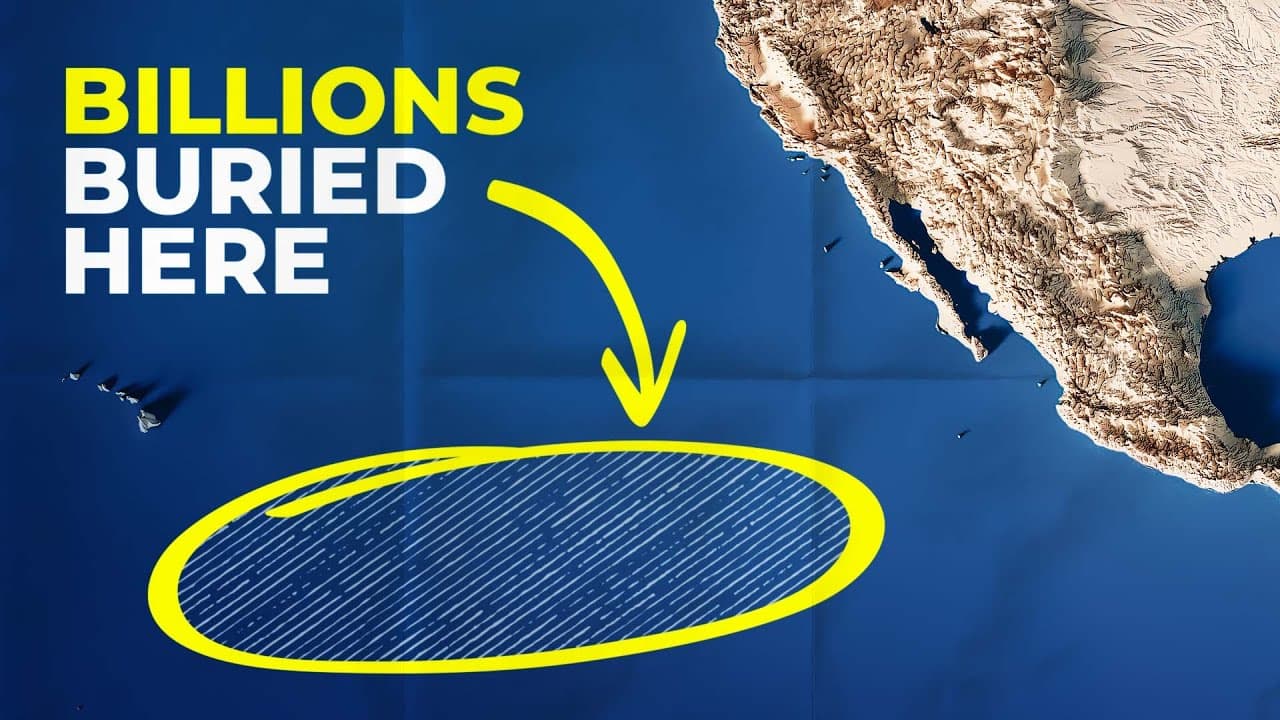
The International Seabed Authority regulates seabed mineral activities, with exploratory missions focusing on areas like the Clarion-Clipperton Zone. Mining these nodules could provide essential resources for electric vehicles, aiding the transition to renewable energy.
-
Environmental challenges include potential habitat destruction and sediment plumes affecting ocean ecosystems. While deep sea mining could reduce emissions compared to land-based mining, the ecological impact and ethical considerations remain critical issues.
Read in Other Languages (beta)
Share This Summary 📚
Summarize YouTube Videos and Get Video Transcripts with 1-Click
Try YouTube Summary with ChatGPT & Claude or YouTube Transcript Generator
Explore More Summaries from Real Engineering 📚






Summarize YouTube Videos and Get Video Transcripts with 1-Click
Try YouTube Summary with ChatGPT & Claude or YouTube Transcript Generator