Could Alien DNA Be Hidden in Life on Earth?
TL;DR
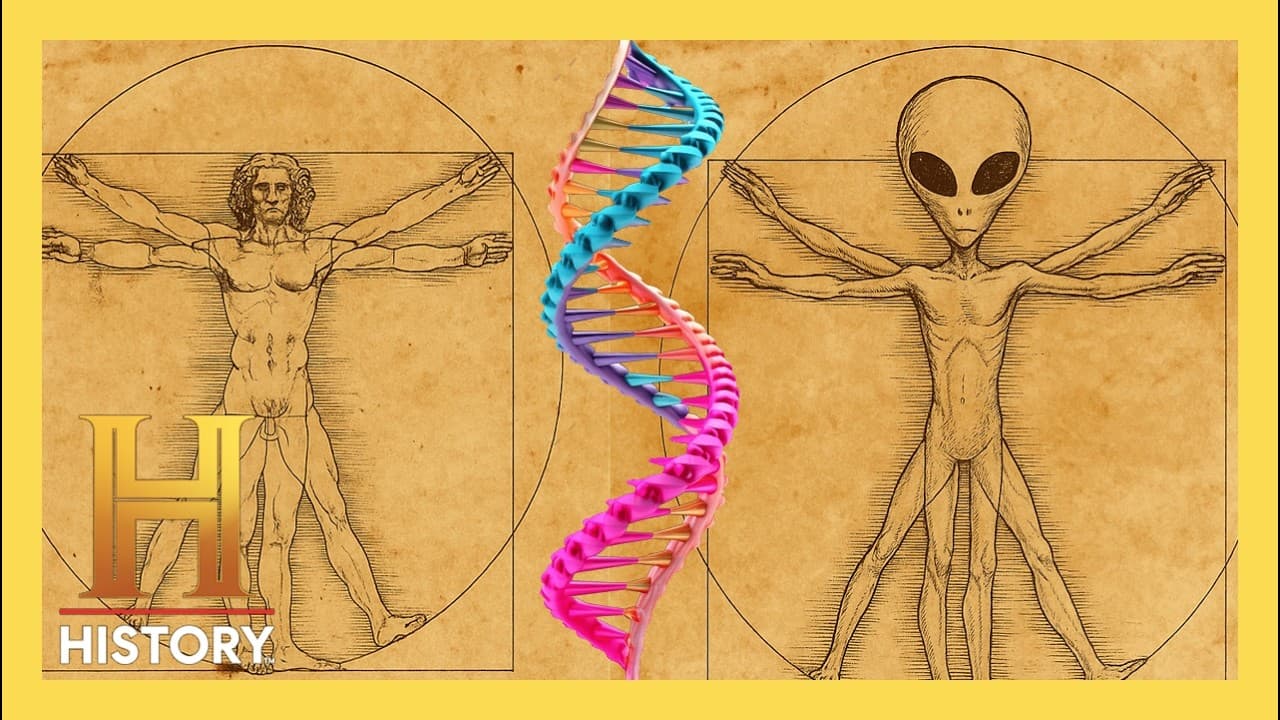
No evidence presented establishes that extraterrestrial DNA exists in humans or other Earth organisms. The program instead connects unusual genomes, elongated Paracas skulls, DNA data storage, octopus biology, panspermia, and abduction accounts to speculate that alien life may share DNA with Earth life or may have influenced human development.
Transcript
Paris, France. July 2013. Scientists announced the discovery of an entirely new class of extremely large microbes called Pandora viruses. Up to 94% of the Pandora virus genome has nothing in common with any other life form on Earth. These very large viruses, the Pandora viruses, they have a very high frequency of genes that basically don't correspo... Read More
Key Insights
- Pandora viruses are extremely large microbes whose genomes were described as having up to 94% with no correspondence to other known life forms, although they still share DNA with Earth life. The program treats that contrast as support for panspermia rather than proof of extraterrestrial origin.
- Panspermia is presented as the hypothesis that life throughout the universe may be based on DNA, making Earth organisms biologically related to life elsewhere. The transcript does not demonstrate this universal premise, but uses it to frame later claims about aliens, humans, and genetic compatibility.
- Alien hybridization is proposed through abductee accounts involving the alleged removal of blood, sperm, and eggs during medical experimentation. The program speculates that extraterrestrial intelligence could manipulate human DNA, then associates declining testosterone, frailty, and androgyny with that proposed process without establishing causation.
- The Paracas skulls are elongated remains excavated from burial complexes associated with people who lived from 800 BC to 100 BC. Mainstream archaeologists attribute their shape primarily to infant headbinding, a practice that reshapes the skull while its bones remain soft.
- Paracas skull number 44 is described as weighing 2.88 pounds, having 20% greater cranial capacity than normal, and lacking a sagittal suture. Researchers featured in the program argue that headbinding cannot explain every reported feature, including larger eye sockets, foramina, and robust jaws.
- Preliminary DNA testing of Paracas skull number 44 reportedly found segments that did not match material known to be human. The program interprets this as possibly indicating an ancient bloodline related to Homo sapiens, while its stronger claim of extraterrestrial ancestry remains speculation within the transcript.
- Synthetic DNA storage works by encoding digital information through the four DNA components represented as A, T, C, and G. Scientists embedded files used to create a 3D-printed bunny into its plastic, allowing a small sample to be decoded and used to reproduce the object.
- Octopuses are portrayed as biologically unusual because they have about 50,000 genes, distributed neural systems, rapid camouflage, tool use, three hearts, nine brains, and extensive RNA editing. The program uses these traits to raise an extraterrestrial-origin hypothesis, but the traits themselves do not establish that conclusion.
Install to Summarize YouTube Videos and Get Transcripts
Explore YouTube Video Summarizer or Get YouTube Transcript Extractor
Questions & Answers
Q: What are Pandora viruses, and why are they linked to aliens?
Pandora viruses are an extremely large class of microbes announced by scientists in Paris in July 2013. The transcript says up to 94% of their genome has nothing in common with other known Earth life, although they contain DNA. Panspermia supporters interpret that combination as compatible with their belief that DNA-based life exists throughout space, but the program provides no direct evidence that these viruses came from space.
Q: How does panspermia connect human DNA with alien life?
Panspermia supporters in the program propose that all life in the universe is based on DNA. If that premise were true, humans and extraterrestrial organisms could share a biological foundation and possibly be genetically related. The program then connects this possibility to alien abduction stories and hybridization theories. However, the transcript presents universal DNA and human-alien compatibility as hypotheses, not demonstrated scientific conclusions.
Q: Why does the program connect alien abductions to human genetics?
The program cites abductee accounts describing medical experimentation and the removal of blood, sperm, and eggs aboard alleged UFOs. It speculates that an alien intelligence might be altering human DNA to increase compatibility between species. It further associates possible hybridization with lower testosterone, greater frailty, and androgyny, but it offers no demonstrated link between reported human trends and extraterrestrial genetic intervention.
Q: What is unusual about the elongated Paracas skulls?
The Paracas skulls are described as elongated remains found on Peru's southern coast in burial complexes excavated beginning in 1927. Skull number 44 reportedly weighs 2.88 pounds, has 20% greater cranial capacity than normal, and lacks a sagittal suture. Other featured specimens reportedly have large eye sockets, robust jaws, and unusual openings, although mainstream archaeologists identify infant headbinding as the likely explanation for elongation.
Q: Does DNA testing prove the Paracas skulls were extraterrestrial?
No conclusive extraterrestrial proof is presented. The transcript says preliminary testing of Paracas skull number 44 found certain DNA segments that did not match anything known to be human. A featured researcher interprets this as possibly indicating an ancient bloodline related to Homo sapiens but not specifically Homo sapiens. The program then advances an alien interpretation, but that conclusion goes beyond the reported test result.
Q: How was DNA used to store data in a plastic bunny?
Scientists bound negatively charged biological DNA molecules with positively charged protective silica particles and encoded the digital files for a 3D-printed bunny into its plastic. A small piece could then be sampled, decoded, and used to print another bunny carrying the same synthetic DNA. The method uses DNA's four-component system, represented as A, T, C, and G, to store digital information compactly without ongoing storage energy.
Q: Could ancient artifacts contain information encoded in DNA?
The transcript establishes that synthetic DNA can store digital files inside a manufactured object, remain on a shelf without storage energy, and be replicated inexpensively. Ancient astronaut theorists extend this capability into the possibility that artifacts, crystals, stones, or living organisms might conceal knowledge left by extraterrestrials. The program provides this as an intriguing speculation and does not identify an ancient artifact from which such encoded information has actually been extracted.
Q: Why does the program suggest octopuses could be extraterrestrial?
The program highlights an octopus genome of about 50,000 genes compared with roughly 25,000 in humans, along with rapid camouflage, tool use, three hearts, nine brains, distributed neural processing, and RNA editing. It argues that these unusual features and questions about ancestry invite an extraterrestrial explanation. However, the transcript frames alien origin as a possibility and does not show that octopuses arrived from outside Earth.
Summary & Key Takeaways
-
Pandora viruses contain DNA, yet the transcript says up to 94% of their genome has nothing in common with other known Earth life. Panspermia supporters interpret this unusual genome as compatible with the idea that DNA could occur throughout space, while the program extends that premise into speculation about biological relationships with aliens.
-
The program links alleged abduction experiments and reported human biological changes to a proposed alien hybridization effort. It also examines elongated Paracas skulls, contrasting the archaeological explanation of infant headbinding with claims that unusual anatomy and preliminary DNA results might indicate a bloodline related to, but distinct from, Homo sapiens.
-
Synthetic DNA embedded in a plastic bunny demonstrates how digital files can be stored, copied, and retrieved from physical objects. The program uses this genuine storage concept to speculate that ancient artifacts or natural materials might conceal information. It then presents octopus genetics, distributed cognition, camouflage, and RNA editing as possible extraterrestrial clues.
Read in Other Languages (beta)
Share This Summary 📚
Summarize YouTube Videos and Get Video Transcripts with 1-Click
Try YouTube Summary with ChatGPT & Claude or YouTube Transcript Generator
Explore More Summaries from HISTORY 📚


Summarize YouTube Videos and Get Video Transcripts with 1-Click
Try YouTube Summary with ChatGPT & Claude or YouTube Transcript Generator