What Role Does Government Play in a Market Economy?
TL;DR
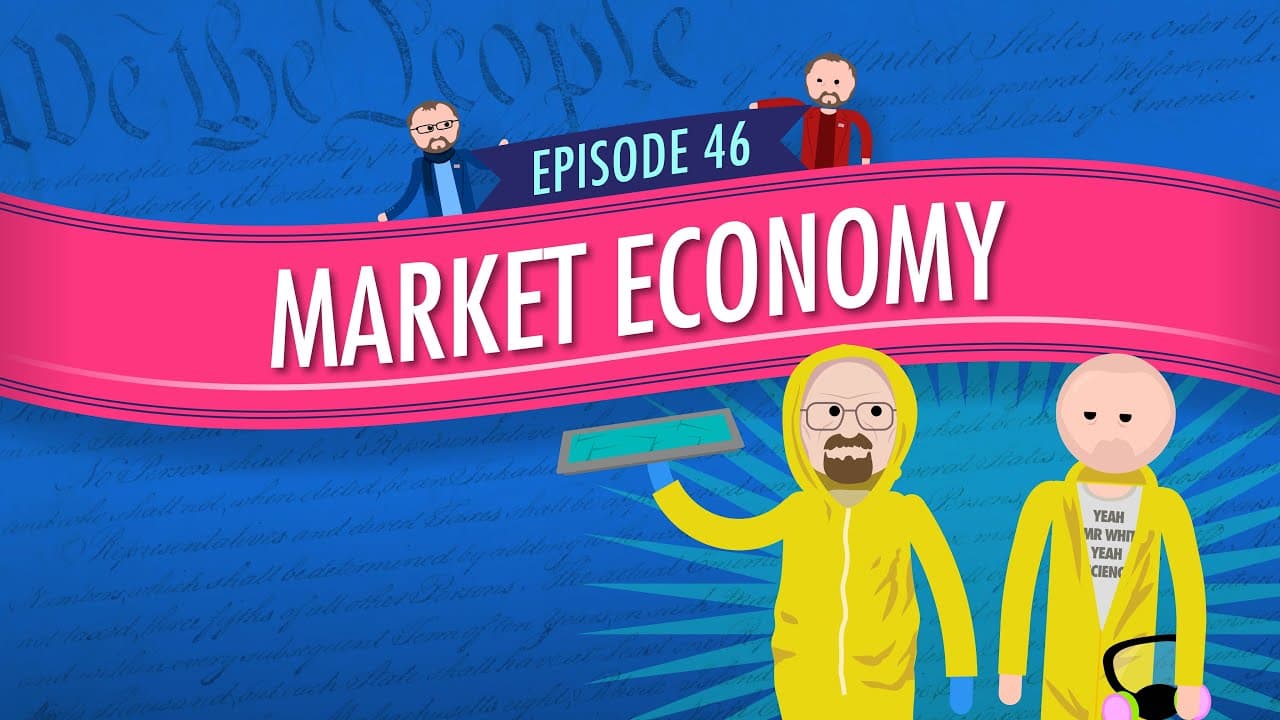
Government is essential for establishing a market economy by enforcing law and order, defining property rights, and regulating exchange rules. It also provides public goods, creates a labor force, addresses negative externalities, and promotes competition to ensure a fair and efficient market system.
Transcript
Hello. I’m Craig and this is Crash Course Government and Politics and today we’re going to turn to a topic that is near and dear to our wallets at Crash Course: economics. Now, I know that dedicated fans are saying: “Hold on Craigers, you have a whole series about economics. Tell me about government.” To those fans, I say: “you’re right…and don’t c... Read More
Key Insights
- The government is essential in creating and maintaining a market economy by establishing law and order, which provides predictability and security for trade and production.
- Property rights are defined and protected by the government, ensuring ownership and facilitating buying and selling through established legal systems.
- Rules of exchange are governed by the government, which controls what can be legally bought and sold, affecting market transactions significantly.
- Market standards, such as weights and measures, are set by the government to ensure fair trade and a level playing field for buyers and sellers.
- Public goods, like public transportation and rural electrification, are provided by the government when markets fail to do so, benefiting the overall economy.
- The government aids in creating a labor force through compulsory education and student loans, ensuring a competent workforce for the economy.
- Negative externalities, such as pollution, are ameliorated by the government through regulations and taxes, aligning private costs with social costs.
- Promoting competition is a government role, preventing monopolies and ensuring consumers benefit from competitive pricing and quality products.
Install to Summarize YouTube Videos and Get Transcripts
Explore YouTube Video Summarizer or Get YouTube Transcript Extractor
Questions & Answers
Q: How does the government establish a market economy?
The government establishes a market economy by creating a legal framework that includes law and order, property rights, and rules of exchange. These elements provide predictability and security, facilitating trade and production. The government also sets market standards and provides public goods, contributing to an efficient and stable economic system.
Q: What role does the government play in property rights?
The government defines and protects property rights, ensuring ownership and facilitating transactions. Legal systems and laws, such as trespass laws, establish what individuals can do with their property, allowing for secure buying and selling. This protection is crucial for a functioning market economy, as it provides certainty for property owners.
Q: How does the government influence exchange rules?
The government influences exchange rules by controlling what can be legally bought and sold. This includes regulations on substances like alcohol and drugs and prohibitions on activities such as slavery and prostitution. By setting these rules, the government exerts significant control over market transactions, ensuring legal and ethical exchanges.
Q: What are public goods, and how does the government provide them?
Public goods are services provided by the government that can be enjoyed by everyone and cannot be denied to individuals. Examples include public transportation and rural electrification. The government steps in to provide these goods when markets fail to do so, ensuring access and supporting the economy's overall functionality.
Q: How does the government create a labor force?
The government creates a labor force through compulsory education laws, ensuring a basic level of competence among future workers. It also provides student loans to facilitate higher education and runs training programs. These efforts help develop a skilled workforce, essential for economic productivity and growth.
Q: What are negative externalities, and how does the government address them?
Negative externalities are harmful byproducts of market transactions, such as pollution. The government addresses them through regulations and taxes, forcing companies and consumers to account for these external costs. By aligning private costs with social costs, the government mitigates negative impacts on public health and the environment.
Q: Why is promoting competition important, and what is the government's role?
Promoting competition is important because it ensures consumers receive the best products at fair prices. The government prevents monopolies through anti-trust laws, ensuring a competitive market environment. By regulating monopolistic practices, the government protects consumer interests and promotes economic efficiency.
Q: Can a free market exist without government intervention?
While some argue that markets are natural phenomena, the video suggests that a free market cannot exist without government intervention. The government provides essential structures like legal frameworks, public goods, and competition regulations, which are necessary for a stable and efficient market economy. Without these, markets may fail to function effectively.
Summary & Key Takeaways
-
The government plays a fundamental role in establishing and maintaining a market economy by ensuring law and order, defining property rights, and governing exchange rules. These actions create a predictable and secure environment for economic activities.
-
Public goods, such as transportation and electrification, are provided by the government, especially when markets fail to do so. This provision supports the economy's overall health and stability by addressing deficiencies in a free market.
-
The government also promotes competition and addresses negative externalities through regulations and taxes. These measures help align private costs with social costs, ensuring a fair and efficient market system.
Read in Other Languages (beta)
Share This Summary 📚
Summarize YouTube Videos and Get Video Transcripts with 1-Click
Try YouTube Summary with ChatGPT & Claude or YouTube Transcript Generator
Explore More Summaries from CrashCourse 📚

Summarize YouTube Videos and Get Video Transcripts with 1-Click
Try YouTube Summary with ChatGPT & Claude or YouTube Transcript Generator