How to Draw Lewis Structures in Organic Chemistry
TL;DR
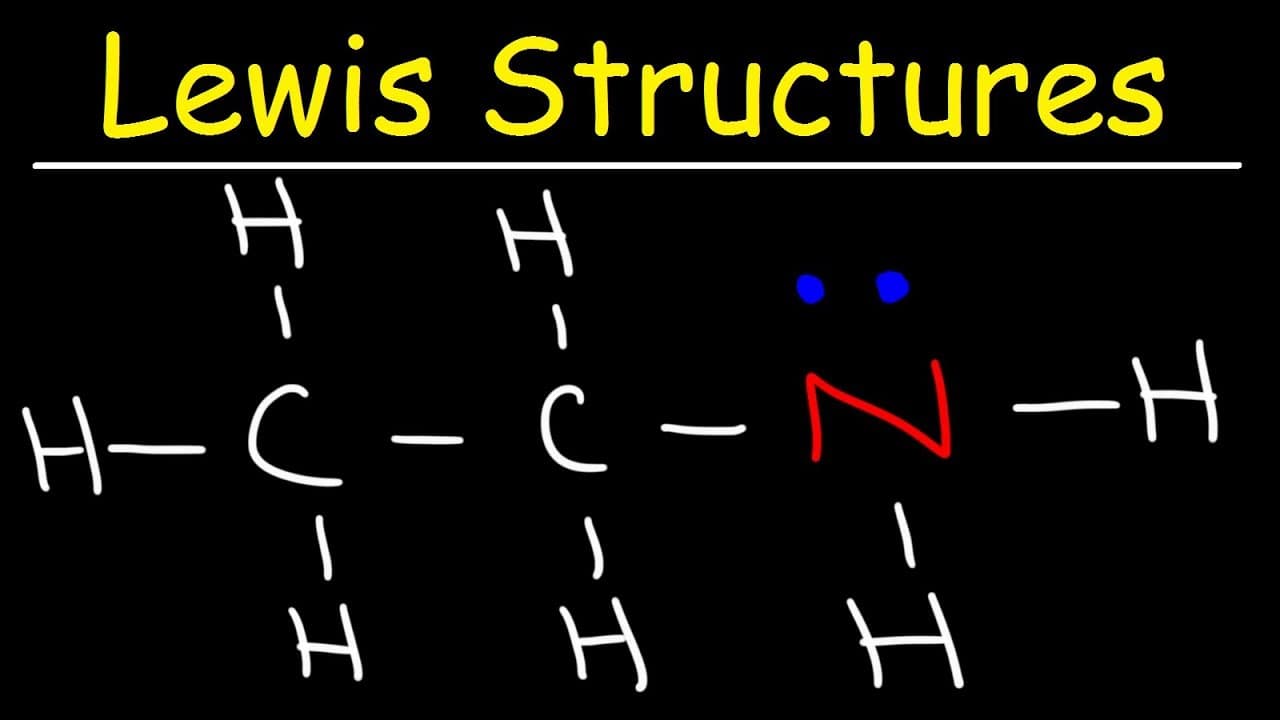
To draw a Lewis structure, give each element its preferred number of bonds: hydrogen forms one, carbon four, nitrogen three, oxygen two, and halogens like fluorine and chlorine one. Oxygen carries two lone pairs, nitrogen one, and halogens three. Work through the formula left to right, adding a double bond whenever a carbon still needs to reach four bonds, as in ethene or acetaldehyde. Follow along for worked examples like methane, methanol, and dimethyl ether.
Transcript
in this video we're going to talk about how to draw some basic lewis structures within the realm of organic chemistry so let's go over some basic things you need to know hydrogen can only form one bond elements like boron carbon nitrogen oxygen fluorine they could form multiple bonds boron likes to form three bonds when it's in its neutral state no... Read More
Key Insights
- 📏 Each element has specific rules for bonding in Lewis structures.
- 💁 Hydrogen can only form one bond, while other elements can form multiple bonds.
- 😐 Oxygen typically forms two bonds and has two lone pairs when neutral.
- 💁 Halogens form one bond and have three lone pairs.
- 🫀 Charges on atoms can affect the number of bonds and lone pairs they have.
- 🌀 Oxygen gains a lone pair when it has a negative charge and loses a lone pair when it has a positive charge.
- ⏫ Aldehydes have a carbon-oxygen double bond and are named with the suffix -al.
- ⏫ Alkenes have a carbon-carbon double bond and are named with the suffix -ene.
Install to Summarize YouTube Videos and Get Transcripts
Explore YouTube Video Summarizer or Get YouTube Transcript Extractor
Questions & Answers
Q: How do you draw a Lewis structure in organic chemistry?
Start by knowing each element's preferred number of bonds, then connect the atoms so every element reaches that number. Hydrogen forms one bond, carbon four, nitrogen three, oxygen two, and halogens one. Read the formula from left to right and place the atoms accordingly, adding lone pairs and double bonds as needed so each atom is satisfied.
Q: How many bonds does each common element like to form?
In their neutral states, carbon likes four bonds, nitrogen three, oxygen two, and hydrogen only one. Boron forms three, halogens (fluorine, chlorine, bromine, iodine) form one, phosphorus three, and silicon four. Sulfur usually forms two but can form six, as in sulfate.
Q: How many lone pairs do oxygen, nitrogen, and the halogens have?
When neutral, oxygen forms two bonds and has two lone pairs. Nitrogen forms three bonds and typically has one lone pair. Halogens like fluorine and chlorine form one bond and carry three lone pairs, since they start with seven valence electrons and need just one more to reach eight.
Q: What is the Lewis structure for methanol (CH3OH)?
Reading left to right, a carbon is bonded to three hydrogens, each forming a single bond. That carbon is bonded to an oxygen, which forms two bonds and has two lone pairs, and the oxygen is bonded to a final hydrogen. This gives methanol, a type of alcohol.
Q: How do you draw the Lewis structure for acetaldehyde (CH3CHO)?
Begin with the CH3 group (a carbon with three hydrogens), then attach it to a second carbon. To let that carbon have four bonds, the oxygen two, and the hydrogen one, you place a double bond between the carbon and oxygen and bond the carbon directly to the hydrogen. This carbon-oxygen double bond is the aldehyde functional group.
Q: What is the Lewis structure for ethene (C2H4)?
Draw the two carbon atoms first, then split the four hydrogens evenly, putting two on each carbon for symmetry. Each carbon then has only two bonds, so you add a double bond between the two carbons to give each four bonds. A double bond between two carbons makes this an alkene.
Q: Why can hydrogen only form one bond?
Hydrogen is in the first row of the periodic table, so it can hold a maximum of two electrons. Reaching that limit requires just one bond. Elements like carbon, nitrogen, oxygen, and fluorine instead aim for eight electrons around them, which is why they form more bonds.
Q: How does a charge change an atom's bonds and lone pairs?
A charge lets an element deviate from its neutral bonding number. For example, boron normally forms three bonds but can change when charged. For oxygen, a negative charge adds a lone pair while a positive charge removes one.
Summary & Key Takeaways
-
Lewis structures are diagrams that show the bonding and lone pair electrons in a molecule. Different elements have different rules for bonding.
-
Hydrogen can only form one bond, while elements like boron, carbon, nitrogen, oxygen, and fluorine can form multiple bonds.
-
Boron likes to form three bonds in its neutral state, carbon likes to form four bonds, nitrogen likes to form three bonds, and oxygen likes to form two bonds.
-
(Content reviewed on 2026-08-27.)
Read in Other Languages (beta)
Share This Summary 📚
Summarize YouTube Videos and Get Video Transcripts with 1-Click
Try YouTube Summary with ChatGPT & Claude or YouTube Transcript Generator
Explore More Summaries from The Organic Chemistry Tutor 📚





Summarize YouTube Videos and Get Video Transcripts with 1-Click
Try YouTube Summary with ChatGPT & Claude or YouTube Transcript Generator