How Can Cloud Security Scale Like a Casino?
TL;DR
Cloud security scales by trading rigid infrastructure control for architectures that support extensive monitoring, strong access controls, encryption, and automated restrictions across growing services. Like a casino using statistics instead of regulating every gambler individually, security teams should design systems that detect meaningful patterns and preserve favorable outcomes without depending on scarce staff or fixed hardware choke points.
Transcript
Thank you. Thank you. So good morning, everybody, and thank you for joining me here. Uh, I'm here to talk to you about cloud security, and, um, I have this, this great casino story I'm gonna tell at the end of my talk. Um, and before then, I'm just gonna sorta take you on a journey that I have gone through over the last four years as I have, uh, ac... Read More
Key Insights
- Cloud migration is presented as inevitable because organizations increasingly want to stop managing infrastructure that is unrelated to their core services. Security practitioners therefore need to prepare for cloud architectures whether they personally consider the transition beneficial or harmful.
- Traditional enterprise environments are already producing repeated, media-worthy breaches. The cited incidents occurred in conventional companies using traditional architectures, databases, and operating systems, showing that existing methods have not adequately secured either the past or the present.
- Cloud security depends on applying familiar fundamentals correctly, not inventing an entirely new security discipline. The essential practices include basic access controls, effective monitoring, appropriate encryption, restricted privileges, service whitelisting, and controls that prevent unauthorized lateral movement.
- Security teams have been out-scaled by the number of services, ports, servers, and users they must protect. The transcript cites two hundred thousand open information security jobs in the United States as evidence that organizations lack enough staff for manual enforcement.
- Centralized security choke points restrict visibility because monitoring depends on finite network hardware and span-port capacity. When intrusion detection and inspection tools sit behind a major switch, teams can examine only the packets that the architecture and available processing capacity permit.
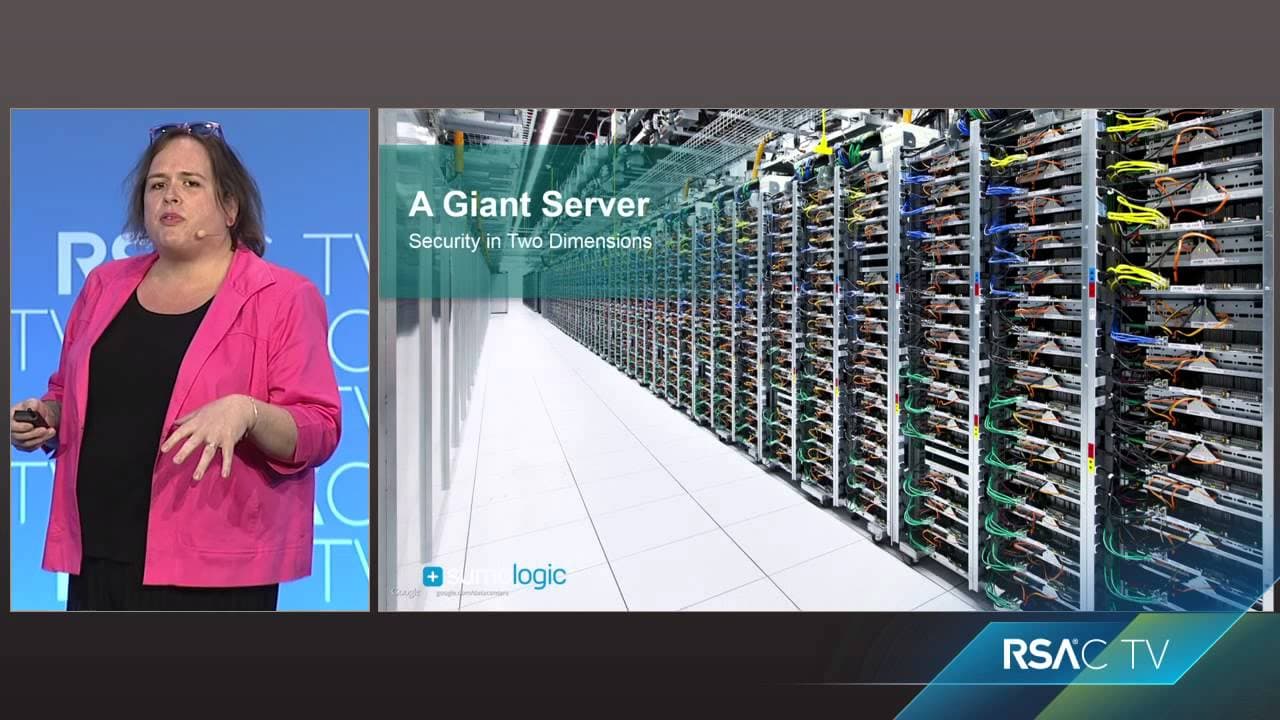
- Physical data centers function like giant, capacity-limited computers with finite memory, storage, and bandwidth. Their operational demands also require expertise in raised floors, rack density, wattage, cooling, and related concerns that do not directly deliver the company’s customer-facing service.
- Dedicated security appliances can become obsolete before they are fully deployed. The speaker’s Zeus appliance inspected about twenty percent of the required traffic for one application, yet it still represented an improvement over the approximately five percent available with a smaller system.
- The casino model trades individual control for scalable statistical assurance. Instead of regulating every gambler separately, a casino observes aggregate behavior and structures operations so the house retains an advantage, offering a model for cloud security at extensive scale.
Install to Summarize YouTube Videos and Get Transcripts
Explore YouTube Video Summarizer or Get YouTube Transcript Extractor
Questions & Answers
Q: Why are traditional security architectures failing to scale?
Traditional architectures concentrate security controls at limited choke points while the number of services, ports, servers, users, and packets continues growing. Available staff, bandwidth, processing capacity, and inspection hardware cannot cover everything. Consequently, organizations apply controls only to fractions of their environments, even though practitioners already understand the access restrictions, monitoring, encryption, and network rules they want to enforce.
Q: What security fundamentals should cloud environments apply?
Cloud environments should apply strong access controls, comprehensive monitoring, appropriate encryption, non-privileged service accounts, tightly restricted operating-system permissions, and service whitelisting. Registered services should communicate only with other approved services. The environment should also reject unexpected packets and prevent attackers from moving laterally between systems. These are established fundamentals whose consistent implementation has been limited by traditional architecture and scale.
Q: How does the casino analogy apply to cloud security?
The casino analogy describes trading detailed control for scalable assurance. A casino does not regulate every gambler’s individual decision. It uses statistics and an operating structure designed to ensure proper gaming and preserve the house’s advantage. Applied to cloud security, this means observing activity at scale, recognizing meaningful patterns, and designing the architecture so secure outcomes do not depend on manually controlling every event.
Q: Why does centralized network monitoring provide incomplete visibility?
Centralized monitoring depends on physical choke points, such as a firewall and intrusion detection system connected near a major network switch. The switch, span port, inspection appliance, and available processing capacity can handle only a limited amount of traffic. As packet volume grows, the organization samples or inspects only a fraction rather than performing deep packet inspection across every packet in the environment.
Q: Why can dedicated security appliances become obsolete quickly?
Dedicated appliances take time to budget, procure, install, and configure, while the business continues changing. During a purchasing process lasting perhaps six months, a company may release two software versions, gain customers, add users and employees, or alter its business model. The hardware then remains constrained by a thirty-six-month depreciation cycle, even though it may have been undersized before deployment finished.
Q: What did the Zeus inspection appliance demonstrate?
The appliance named Zeus was purchased to perform deep packet inspection for one application and contained multiple four-port network interface cards. Despite being treated as a powerful solution, it could inspect only about twenty percent of the traffic that required monitoring. That was better than the approximately five percent achieved by the smaller appliance, but it remained a substantial security compromise.
Q: Why does the speaker call secure data centers boxes?
A large data center can be understood as one giant computer with finite memory, disk space, bandwidth, and processing capacity. Security teams learn to operate within those fixed constraints and request larger appliances inside the same environment. This box-centered thinking encourages compromises based on available hardware instead of architecture designed to apply protections consistently as the company and its services grow.
Q: How should security teams prepare for continued cloud adoption?
Security teams should accept that cloud adoption is occurring and focus on securing the resulting architectures rather than debating whether migration is desirable. Preparation requires identifying failures in current environments, returning to established security fundamentals, and choosing architectures that can apply controls at growing scale. Monitoring, permissions, encryption, approved service communication, and resistance to lateral movement remain central requirements.
Summary & Key Takeaways
-
Traditional enterprise security has failed to keep pace with expanding services, ports, servers, and users. Organizations understand foundational practices such as access control, monitoring, encryption, service whitelisting, and prevention of lateral movement, but staffing shortages and centralized network choke points prevent those protections from being applied consistently across the entire environment.
-
Physical data centers impose fixed limits on memory, storage, bandwidth, packet inspection, and security budgets. Large appliances may inspect only a fraction of relevant traffic, become obsolete before deployment, and remain tied to thirty-six-month depreciation cycles while software, customers, employees, and business models continue changing much faster than the installed hardware.
-
Cloud adoption requires a change in architectural thinking rather than a rejection of established security principles. The casino analogy recommends trading detailed control over every individual action for scalable observation and statistical assurance. Cloud architecture can help practitioners apply familiar fundamentals broadly, monitor behavior, and maintain favorable security outcomes as demand changes.
Read in Other Languages (beta)
Share This Summary 📚
Summarize YouTube Videos and Get Video Transcripts with 1-Click
Try YouTube Summary with ChatGPT & Claude or YouTube Transcript Generator
Explore More Summaries from RSAC Cybersecurity 📚


Summarize YouTube Videos and Get Video Transcripts with 1-Click
Try YouTube Summary with ChatGPT & Claude or YouTube Transcript Generator