How Does Civic Decentralize Digital Identity?
TL;DR
Civic lets people keep identity information on their own devices and share it securely with chosen organizations instead of relying on centralized databases. Its network supports reusable identity verification and KYC, while the broader discussion argues that token projects need realistic product timelines, appropriate securities compliance, and cooperation between regulators and industry.
Transcript
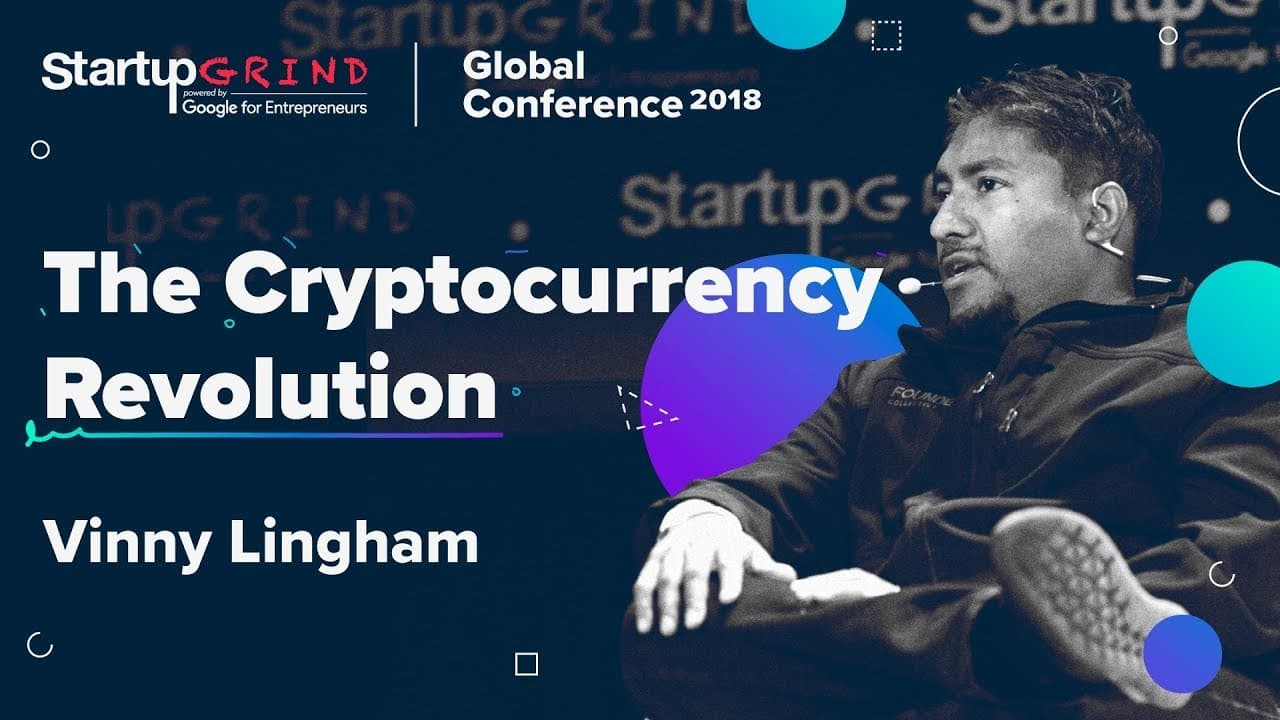
Awesome to be here. So a few disclosures. Number one, no financial advice is being given out here. Uh, and number two, I hold Civic. Uh, and so with that, um, what is Civic and why should everyone buy it? Hey, Michael. You know I can't answer that question. But let's start with the first part of that. The first part of that. What is Civic? What is ... Read More
Key Insights
- Civic is a network for decentralized identity verification that allows personal information to remain on a user’s device. Civic does not store that information centrally, but provides the infrastructure through which users can verify and share selected identity details with third parties.
- Centralized identity databases create concentrated security risks because a successful breach can expose records belonging to many people. Device-based storage distributes personal information across individual users, so a single attack cannot compromise the entire identity network in the same way.
- Civic’s KYC process works by letting users scan identity documents with a phone, verify the information, and securely transmit it from their device to a third party. This replaces repeated exchanges of passports, licenses, and utility bills through email.
- Reusable identity verification reduces duplication because users do not need to scan and submit the same information whenever they encounter another verification request. Once information has been verified on the phone, Civic’s system can support later transfers to organizations that need to validate it.
- Token offerings increasingly require attention to securities rules, investor accreditation, KYC, and restrictions involving particular jurisdictions. Projects accepting American participants may need accreditation and identity checks, while projects excluding them may need a way to demonstrate that exclusion.
- Token classifications form a spectrum that includes decentralized currencies, utility tokens, and securities. A blockchain token can represent conventional financial arrangements, such as debt, while gaining token-based transferability and tradability without changing the underlying economic function of the arrangement.
- Regulation is more likely to produce a balanced outcome when industry participants and regulators work together. Regulatory involvement is presented as unavoidable because authorities are concerned about scams, money laundering, illegitimate organizations, and people losing money in token markets.
- Enterprise blockchain products can require long sales and deployment cycles before reaching production at banks or other financial institutions. Token buyers may underestimate this workload, making experienced teams, faster routes to market, sufficient funding, and contingency planning especially important.
Install to Summarize YouTube Videos and Get Transcripts
Explore YouTube Video Summarizer or Get YouTube Transcript Extractor
Questions & Answers
Q: What is Civic and how does its identity network work?
Civic is a network model for decentralized identity verification. Personal identity information stays on the user’s device instead of being stored by Civic in a centralized database. Civic supplies the infrastructure that helps users verify information and securely share it with a chosen third party, such as an organization opening an account or providing another identity-dependent service.
Q: Why does Civic keep identity information on user devices?
Civic keeps identity information on user devices because centralized databases create a single, attractive target for attackers. When one of those databases is breached, personal records belonging to many people can be exposed together. Distributing the information across individual devices limits that network-wide vulnerability and gives users direct control over which organizations receive their personal details.
Q: How does Civic make KYC verification more secure?
Civic’s KYC product allows a user to scan documents with a phone, verify the information through Civic, and transmit it securely from the device to a third party. This avoids repeatedly emailing sensitive materials such as passports, driver’s licenses, and utility bills. The receiving organization can then validate the transmitted information and use it for account or participation checks.
Q: Can verified identity information be reused with Civic?
Verified identity information can be reused after it has been processed and retained on the user’s phone. The user does not have to scan the same documents repeatedly or resend them through email for every verification request. Civic provides the network rails for sharing that information securely, while the user continues to control the underlying personal data on the device.
Q: Why might a token offering be treated as a security?
A token offering may be treated as a security when the project is effectively raising money to finance the development of products or technology. Using a blockchain token does not necessarily change the economic purpose of the transaction. The discussion gives tokenized debt as an example: it can still function as debt even when holders can redeem or trade digital tokens.
Q: Are all cryptocurrency tokens considered securities?
Not all tokens are presented as securities. The discussion describes a spectrum containing decentralized currencies, utility tokens with functional uses, and tokenized securities. Classification depends on what a token actually does and how it is used. A token serving mainly as a capital-raising instrument can differ materially from one used within a functioning network or as decentralized money.
Q: How should regulators and the cryptocurrency industry cooperate?
Regulators and industry participants should work together to identify practical guardrails and a balanced standard. Leaving the process entirely to regulators could produce a poor outcome, but expecting no regulation is considered unrealistic. Cooperation can address concerns about scams, money laundering, illegitimate projects, investor losses, identity verification, accreditation, and jurisdictional restrictions without assuming the sector should be eliminated.
Q: What should entrepreneurs understand about token-funded projects?
Entrepreneurs should recognize that strong ideas and successful fundraising do not remove the difficulty of bringing products to market. Enterprise solutions for banks and financial institutions can have long sales and deployment cycles. Projects therefore need capable teams, realistic expectations, faster paths to production where possible, and plans for what happens if operating funds are exhausted after tokens have been issued.
Summary & Key Takeaways
-
Civic proposes a decentralized identity model in which personal information remains on the user’s device. The company provides the network infrastructure for verifying and securely transmitting that information, rather than storing it itself. This approach is intended to reduce dependence on centralized databases that can expose many records when breached.
-
The Civic KYC product allows users to scan identity documents with a phone, verify the information, and transmit it securely to an organization. After completing verification, users can reuse the stored information instead of repeatedly scanning documents or sending passports, licenses, and utility bills through insecure email exchanges.
-
The conversation places tokens on a spectrum that includes decentralized currencies, utility tokens, and securities. Tokens used mainly to raise capital for building products may be treated as securities. Sustainable projects also require capable teams, realistic expectations, regulatory cooperation, and plans for long enterprise sales cycles and possible funding shortages.
Read in Other Languages (beta)
Share This Summary 📚
Summarize YouTube Videos and Get Video Transcripts with 1-Click
Try YouTube Summary with ChatGPT & Claude or YouTube Transcript Generator
Explore More Summaries from Startup Grind 📚



Summarize YouTube Videos and Get Video Transcripts with 1-Click
Try YouTube Summary with ChatGPT & Claude or YouTube Transcript Generator