How to Build an Authentic Sustainable Brand
TL;DR
Build a sustainable brand by aligning your product with a relevant United Nations sustainable development goal, writing a clear mission statement, and turning that promise into real operating practices. Give the brand a distinct emotional tone, define its archetype and writing principles, then launch through consistent communication with the community most likely to support and strengthen the mission.
Transcript
Greetings, earthlings. Um, I'm so grateful to be here. First of all, just, like, big snaps, huge claps, um, everyone light up the chat for Derek Anderson, for the Startup Grind team, for the team at Bevy, and, um, and my team at Happily for their all their hard work in throwing this incredible virtual event. Um, it's, it's just really amazing. Uh, ... Read More
Key Insights
- A sustainability mission is strongest when it naturally aligns with the company’s product or service. The seventeen United Nations sustainable development goals can guide this choice, such as connecting finance with ending poverty or connecting a food company with ending hunger.
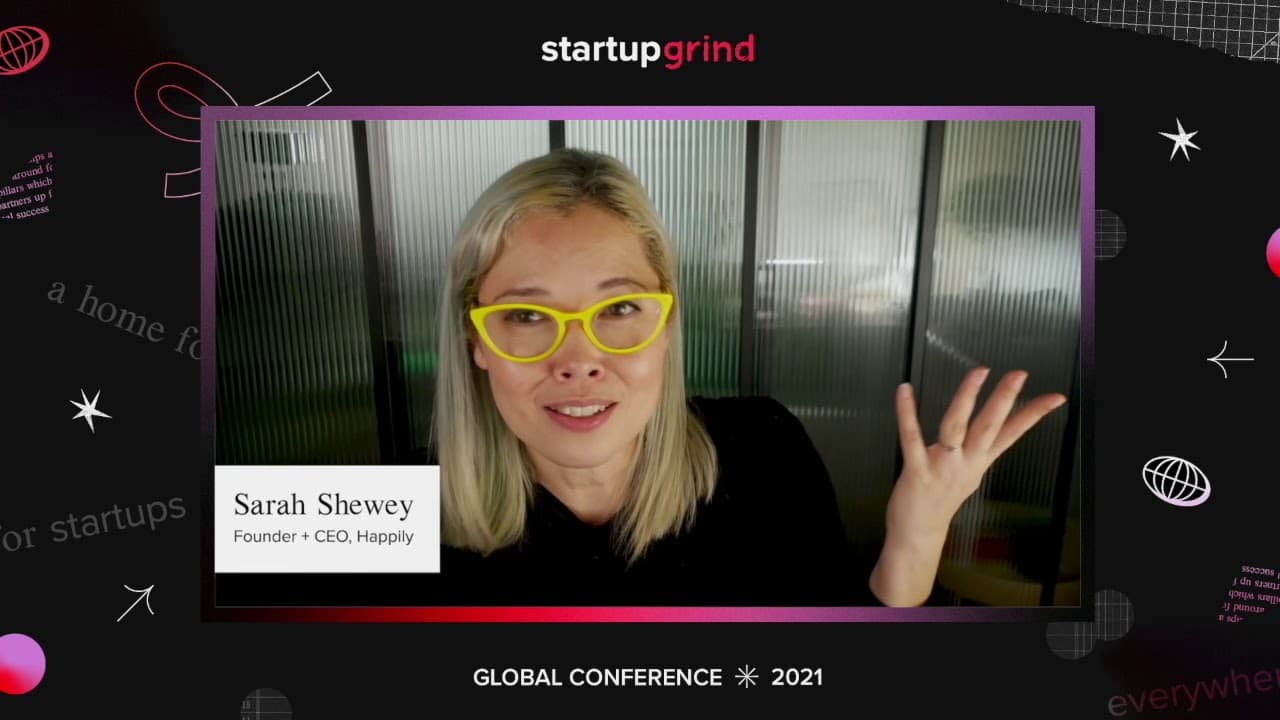
- A short mission statement is a practical starting point for sustainable branding. Sarah Shewey began with a commitment to make her events as waste-free as possible, published that promise in a blog post, and continued developing the mission rather than treating it as finished.
- A public purpose can attract attention even when a company is small. After Shewey published her sustainability commitment, Oprah, Vogue, and Condé Nast contacted her to ask what she knew about sustainable event production, although she had only recently started her company.
- Authentic sustainable branding requires operational proof. A company cannot credibly promise waste-free events without changing how those events are produced, because unsupported sustainability claims are greenwashing and can send the brand back to the beginning with its audience.
- Sustainable improvements can begin with simple, concrete actions. Happily reduced event waste step by step, including putting out fewer chairs, showing that a company can start integrating its environmental commitment into ordinary workflow decisions before attempting more extensive changes.
- A compelling brand creates an emotion that people can recognize and share. Greta Thunberg’s school strike message communicated a clear tone of anger before extensive explanation, demonstrating how a distinct emotional position can connect a cause with a large community.
- A brand archetype helps determine how the organization should communicate. Happily identifies with creator and explorer qualities because event production requires continual innovation, while its network of independent business owners and freelancers reflects a strong preference for freedom.
- A defined brand voice allows communication to extend beyond the founder. Writing principles give team and community members a consistent way to express shared values, while leaving room for diverse perspectives that can make the brand more complex and interesting.
Install to Summarize YouTube Videos and Get Transcripts
Explore YouTube Video Summarizer or Get YouTube Transcript Extractor
Questions & Answers
Q: How do you create a sustainability mission statement?
Start by identifying the personal reason sustainability matters to you, then examine the seventeen United Nations sustainable development goals for causes that naturally fit your product or service. A finance company might connect with ending poverty, while a food company might connect with ending hunger. Write the commitment as one clear sentence or a few words, publish it, and keep raising the standard as the company develops.
Q: Why should a sustainability mission align with a product?
Alignment between the mission and product gives the company a credible foundation for becoming a sustainable brand. The connection does not have to be perfect, but it should make sense within the company’s existing work. When the cause grows naturally from what the organization produces, the mission is easier to integrate into operations, explain to customers, and develop into a lasting purpose.
Q: How can a small startup build a sustainable brand?
A small startup can begin by making one specific environmental commitment, communicating it publicly, and taking practical steps that support it. Sarah Shewey started from a hotel basement and published a promise to make her events as waste-free as possible. That clear purpose helped Oprah, Vogue, and Condé Nast discover her work and ask her to share what she knew.
Q: What is greenwashing in sustainable branding?
Greenwashing is presenting a company as sustainable without making the promised practices real. A brand cannot claim that its events will be waste-free and then continue producing them without operational changes. Credibility comes from integrating the commitment into the product or service workflow, allowing employees, customers, and community members to see the work, support it, and hold the company accountable.
Q: How can sustainability be integrated into company operations?
Translate the mission into repeatable decisions within the product or service workflow, then improve one step at a time. Happily began reducing event waste through straightforward choices, including putting out fewer chairs. The goal is to make sustainability part of how work is performed, so the claim is supported by visible behavior and can earn the trust of the team, customers, and community.
Q: How do you create a distinctive brand tone of voice?
Begin by defining the emotion the brand should evoke, then select an archetype that reflects its character and work. Happily combines creator and explorer qualities because events require innovation and its network values independence and freedom. Use that personification to decide how the brand speaks, then establish writing principles with clear communication guidelines that others can apply consistently.
Q: Why should a brand voice differ from the founder’s voice?
A separate brand voice prevents every message from depending entirely on the founder’s personal style. Sarah Shewey found it liberating to distinguish her own voice from Happily’s voice. With shared writing principles, other people in the company or community can communicate the same emotions and values consistently while contributing perspectives that make the brand more diverse, complex, and interesting.
Q: How do you launch a sustainable brand without an audience?
Start by building a community online and sharing the mission in the places where potential customers gather. The suggested approaches include hosting online conversation rooms, posting regularly on LinkedIn, going live on YouTube, and publishing thoughts on Substack. For a business-to-business brand, customers may want to hear from the company once or twice each week, so communication should be consistent.
Summary & Key Takeaways
-
A strong sustainability mission begins with a personal reason for acting and a cause that naturally fits the company’s product. The seventeen United Nations sustainable development goals offer a framework for finding that connection. Founders should express the chosen commitment in a short mission statement, publish it, and strengthen it as their capabilities grow.
-
Authenticity requires companies to integrate sustainability into their products, services, and everyday workflows. Happily began pursuing waste-free events through simple operational decisions, such as putting out fewer chairs. Concrete action makes a commitment credible, allows employees and customers to participate, and builds trust, while unsupported environmental claims amount to greenwashing.
-
A memorable brand connects through emotion and communicates with a recognizable voice. Defining a brand archetype helps establish that voice, while writing principles make it usable by people beyond the founder. Once the mission and voice are established, founders can build an audience through channels such as LinkedIn, YouTube, Substack, and online community conversations.
Read in Other Languages (beta)
Share This Summary 📚
Summarize YouTube Videos and Get Video Transcripts with 1-Click
Try YouTube Summary with ChatGPT & Claude or YouTube Transcript Generator
Explore More Summaries from Startup Grind 📚

Summarize YouTube Videos and Get Video Transcripts with 1-Click
Try YouTube Summary with ChatGPT & Claude or YouTube Transcript Generator