The Deep Meaning Of Yin & Yang
TL;DR
Yin and Yang mean that opposing forces are also complementary, with their interaction producing constant change in the universe. Yin is generally passive, empty, cold, low, and dark, while Yang is active, full, warm, high, and light; neither has meaning or usefulness without the other. Read on to see how mugs, muscles, water, flowers, and bees illustrate this relationship.
Transcript
All information whatsoever can be translated into terms of yang and yin. Alan Watts The concept of Yin & Yang lies at the basis of Taoist philosophy. It makes a lot of appearances in popular and consumer culture, representing things like balance and inner peace. But the profundity of yin and yang goes way beyond that. When we really get this myster... Read More
Key Insights
- 😮 Yin and Yang are opposing forces that are also complementary and give rise to constant change in the universe.
- 🧔♀️ Both men and women possess Yin and Yang characteristics, as observed by Carl Jung.
- 🥹 Emptiness and passivity hold immense power and are essential for accomplishment.
- ⚖️ Yin's receptiveness and passivity attract while Yang's activity and assertiveness complement, creating a dynamic balance.
- 💱 Political movements and societal changes demonstrate the complementary nature of Yin and Yang.
- ✊ Non-doing or effortless action, known as wu-wei, harnesses the power of Yin and Yang.
- ❓ The interplay of opposites is essential for hierarchy and personal growth.
Install to Summarize YouTube Videos and Get Transcripts
Explore YouTube Video Summarizer or Get YouTube Transcript Extractor
Questions & Answers
Q: What is the deep meaning of Yin and Yang?
Yin and Yang represent opposing yet complementary forces whose mutual attraction and repulsion cause constant change. Life and death, winter and summer, and matter and emptiness are presented as physical manifestations of this relationship.
Q: What do the black and white parts of the Yin-Yang symbol represent?
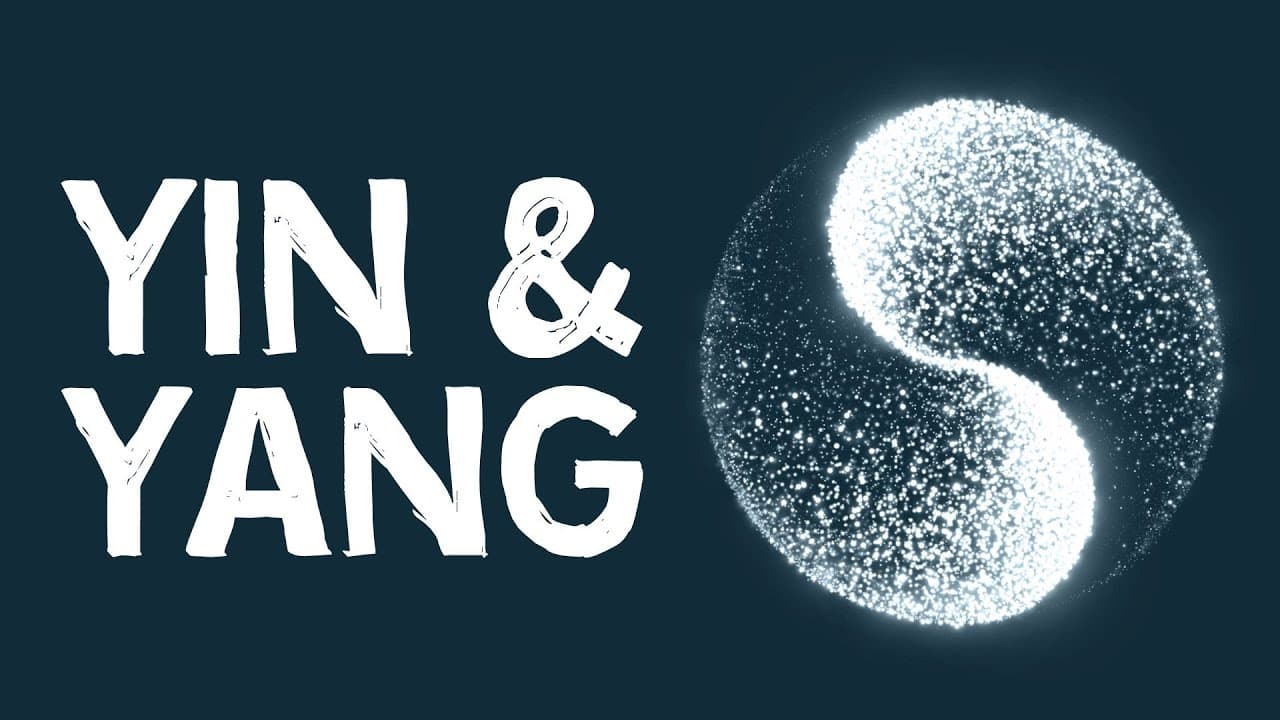
The black part represents the receptive and passive force associated with Yin, while the white part represents the active and prominent force associated with Yang. The dot within each side shows that each force carries the seed of the other.
Q: What characteristics are associated with Yin and Yang?
Yin is generally associated with passivity, emptiness, softness, cold, darkness, and what is low or short. Yang is generally associated with activity, fullness, aggression, speed, warmth, light, height, and what is long.
Q: Are Yin and Yang absolute categories?
No, whether something is Yin or Yang depends on its situation and relationship to something else. For example, long is Yang relative to short, while being is Yang relative to non-being.
Q: How does Yin and Yang relate to gender?
Masculine and feminine describe contrasting characteristics rather than fixed divisions between men and women. Both possess Yin and Yang qualities; Carl Jung described the unconscious masculine side of a woman as the animus and the unconscious feminine side of a man as the anima.
Q: Why is emptiness considered powerful in Yin and Yang philosophy?
Emptiness makes activity and usefulness possible. A mug holds liquid because it is empty inside, while open space enables movement and pauses in sound allow tones to become intelligible speech.
Q: Why is passivity necessary for accomplishment?
Passivity allows natural processes to complete what action begins. In strength training, muscles are not built during the workout but while resting, when muscle tissue is rebuilt for the next lifting session.
Q: How do nature and everyday life illustrate the balance of Yin and Yang?
A receptive flower depends on insects actively approaching it, and an empty mug is useful only because material surrounds the empty space. Water can overcome hard rock without striving, yet warmth and light are also necessary for life, showing that Yin and Yang depend on one another.
Summary & Key Takeaways
-
The concept of Yin & Yang is a fundamental aspect of Taoist philosophy, representing balance and inner peace.
-
Yin and Yang are opposing forces that are also complementary, resulting in constant change and the manifestation of phenomena like life and death, winter and summer.
-
The characteristics of Yin include passivity, emptiness, and darkness, while Yang represents activity, warmth, and light.
Read in Other Languages (beta)
Share This Summary 📚
Summarize YouTube Videos and Get Video Transcripts with 1-Click
Try YouTube Summary with ChatGPT & Claude or YouTube Transcript Generator
Explore More Summaries from Einzelgänger 📚


Summarize YouTube Videos and Get Video Transcripts with 1-Click
Try YouTube Summary with ChatGPT & Claude or YouTube Transcript Generator