Why Do Blacksmiths Tap Anvils When Hammering Metal?
TL;DR
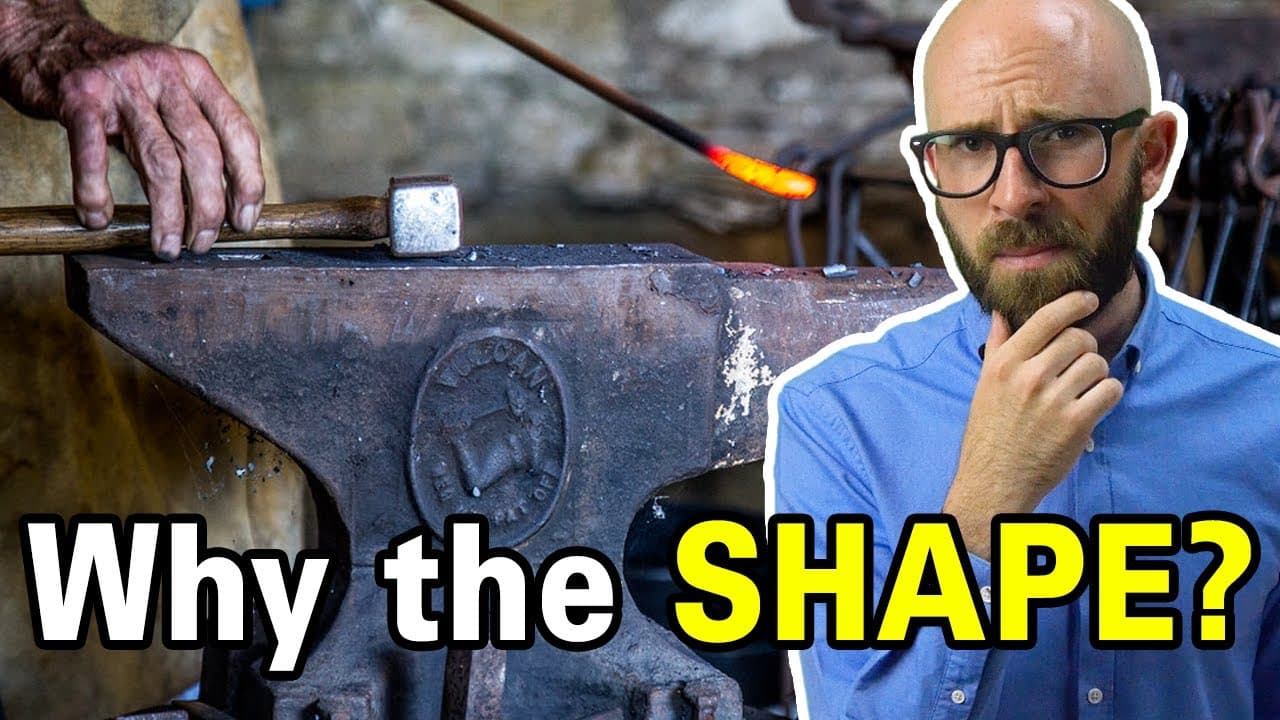
Blacksmiths tap the anvil after strikes to maintain their rhythm, adjust their grip, and examine their work rather than to cool down their hammer. The design of anvils has evolved over time, with key features like the horn and hardy hole aiding in various forging tasks essential to blacksmithing.
Transcript
this video is made possible by the free-to-play action game cross out check out the games through the link in the description below and you can start with three extra weapons or a vehicle cabin just for registering so in the video today we're answering a viewer question because cast Haley asks us why do blacksmiths tap the anvil after a few strikes... Read More
Key Insights
- ⌛ The shape of anvils has evolved significantly over time, with the London patent design becoming the standard in the 19th century.
- 😈 The various elements of an anvil, such as the horn, step, face, hardy hole, and pritchel hole, serve specific purposes in blacksmithing.
- 💦 Blacksmiths tap the anvil to maintain rhythm, adjust grip, and quickly examine the piece being worked on.
- 😘 Anvils were traditionally made of wrought iron, which has a lower carbon content than steel, but steel is now the material of choice.
Install to Summarize YouTube Videos and Get Transcripts
Explore YouTube Video Summarizer or Get YouTube Transcript Extractor
Questions & Answers
Q: Why do blacksmiths tap the anvil after a few strikes?
Blacksmiths tap the anvil to maintain their rhythm and keep their hammering motion consistent while quickly examining the piece they are working on.
Q: What is the purpose of the various elements of an anvil, such as the horn, step, and face?
The horn allows the smith to hammer different curves into the piece being worked on, while the step serves as a cutting area. The face is the main area for hammering, and it includes the hardy hole and pritchel hole for securing various tools and punching holes.
Q: Can blacksmiths cool down the hammer by tapping the anvil?
No, blacksmiths actually prefer warm hammers and anvils as it keeps the hot metal from cooling down too quickly while shaping. The brief contact between the hammer and anvil does not transfer much heat.
Q: What materials are anvils made of and why?
Anvils are primarily made of steel today, though cast iron is also used in lower-end anvils. Steel is preferred for its durability and ability to withstand repeated hammering. Cast iron is used for its unique characteristics, but it is more brittle and less ductile than steel.
Summary & Key Takeaways
-
Anvils have evolved from stone to bronze, wrought iron, and finally steel, with the London patent design becoming popular in the 19th century.
-
The standard design of an anvil includes elements such as a horn, step, face, hardy hole, and pritchel hole, each serving a specific purpose in blacksmithing.
-
Blacksmiths tap the anvil after strikes to maintain rhythm, adjust their grip, and quickly examine the piece they are working on.
Read in Other Languages (beta)
Share This Summary 📚
Summarize YouTube Videos and Get Video Transcripts with 1-Click
Try YouTube Summary with ChatGPT & Claude or YouTube Transcript Generator
Explore More Summaries from Today I Found Out 📚






Summarize YouTube Videos and Get Video Transcripts with 1-Click
Try YouTube Summary with ChatGPT & Claude or YouTube Transcript Generator