What Is Centralized Logging and Why Is It Important?
TL;DR
Centralized logging is essential for monitoring and troubleshooting complex production systems by aggregating logs from multiple services. The ELK stack (Elasticsearch, Logstash, Kibana) is a highly effective solution that enables easy analysis and visualization of log data, improving operational efficiency and decision-making based on user interactions.
Transcript
I think a lot of people who watch my channel might not even understand what centralized logging is or really understand the concept of logging but logging is one of the the main ways that you can get information on a production system when stuff starts going wrong right um typically when you have a logger for example I'm using Winston in my code ov... Read More
Key Insights
- ⌛ Logging is essential for real-time monitoring and debugging of production systems, facilitating swift issue resolution.
- 🧑💻 Centralized logging tools aggregate logs from multiple services, offering a streamlined approach to log management.
- 🧑💻 Understanding log levels can enhance the effectiveness of troubleshooting by allowing developers to focus on specific types of log messages.
- 👨🔬 The ELK stack is a robust and widely used solution for centralized logging, incorporating best-in-class data search, storage, and visualization.
- 🧑💻 Proper log retention strategies are crucial for compliance with legal and regulatory requirements, necessitating the choice of logging solutions that support this.
- 💁 Efficient log analysis can reveal user interaction patterns, informing feature lifecycle management and product development.
- 🧑💻 Centralized logging reduces the need for time-consuming manual log inspections, improving operational efficiency.
Install to Summarize YouTube Videos and Get Transcripts
Explore YouTube Video Summarizer or Get YouTube Transcript Extractor
Questions & Answers
Q: What is centralized logging and why is it important?
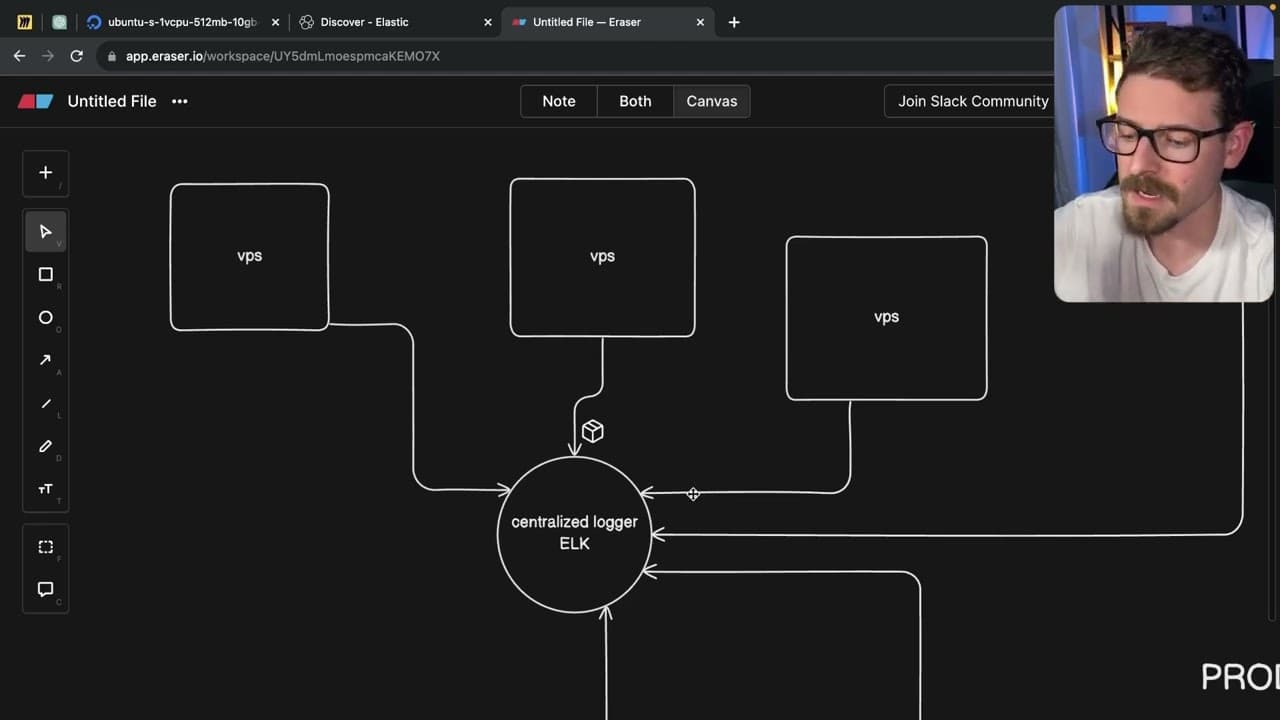
Centralized logging aggregates logs from multiple systems, allowing for easier monitoring and troubleshooting in production environments. As systems grow in complexity with various services and environments, centralized logging provides a unified view of all logs, significantly simplifying the process of identifying issues and analyzing performance.
Q: What is the ELK stack, and how does it function in centralized logging?
The ELK stack consists of Elasticsearch, Logstash, and Kibana. Elasticsearch is a search engine for data storage, Logstash collects and processes log data from various sources, and Kibana offers a user-friendly interface for visualizing and exploring logs. Together, they enable effective log management and insightful data analysis.
Q: How do log levels work in logging frameworks like Winston?
Logging frameworks, such as Winston, utilize log levels (e.g., info, error, debug) to categorize log messages. This classification helps filter logs for specific issues and ensures that developers focus on relevant data when troubleshooting, rather than being overwhelmed by all logging information.
Q: What challenges arise with logging in complex systems?
In complex systems, especially with multiple servers and environments, accessing logs requires direct server access, which is impractical. Centralized logging solves this issue by aggregating logs from various machines into a single interface, enabling easier search, filtering, and analysis across all services without cumbersome server access.
Q: How can centralized logging assist with compliance and legal requirements?
Centralized logging can assist in meeting compliance and legal requirements by allowing businesses to retain log data for specified periods. This is critical for audits or investigations, as logs can be maintained for months or even years based on regulatory needs, ensuring that organizations can provide necessary documentation when required.
Q: Why might one prefer the ELK stack over other logging solutions like AWS CloudWatch?
The ELK stack is preferred by some due to its superior user interface and capabilities for visualizing log data, making it easier to analyze and debug issues. Conversely, while AWS CloudWatch provides robust logging features, users may find the ELK stack offers more customization and flexibility without additional costs associated with some cloud services.
Q: In what scenarios might a developer opt for a free backend service's logging feature instead of an ELK stack?
Developers may consider free backend services with built-in logging when working on smaller projects or prototypes where budget constraints and simplicity are key factors. These services can provide adequate logging capabilities without the overhead of setting up and maintaining an ELK stack until the project grows in complexity.
Summary & Key Takeaways
-
Centralized logging is crucial for efficiently monitoring and troubleshooting production systems, especially as complexity increases with multiple services and environments.
-
The ELK stack (Elasticsearch, Logstash, and Kibana) is a popular solution that aggregates, filters, and visually presents log data for easier analysis and debugging.
-
Utilizing centralized logging not only enhances system observability but also helps in making informed decisions based on user interaction analytics, driving better feature management.
Read in Other Languages (beta)
Share This Summary 📚
Summarize YouTube Videos and Get Video Transcripts with 1-Click
Try YouTube Summary with ChatGPT & Claude or YouTube Transcript Generator
Explore More Summaries from Web Dev Cody 📚


Summarize YouTube Videos and Get Video Transcripts with 1-Click
Try YouTube Summary with ChatGPT & Claude or YouTube Transcript Generator