How to manage time like billionaires and CEOs daily
TL;DR
Successful time use hinges on energy, not hours. Break tasks into short, focused bursts, start with the most important task each morning, and insert breaks to sustain momentum. Treat time as 1440 minutes and guard against interruptions to raise output while keeping energy steady.
Transcript
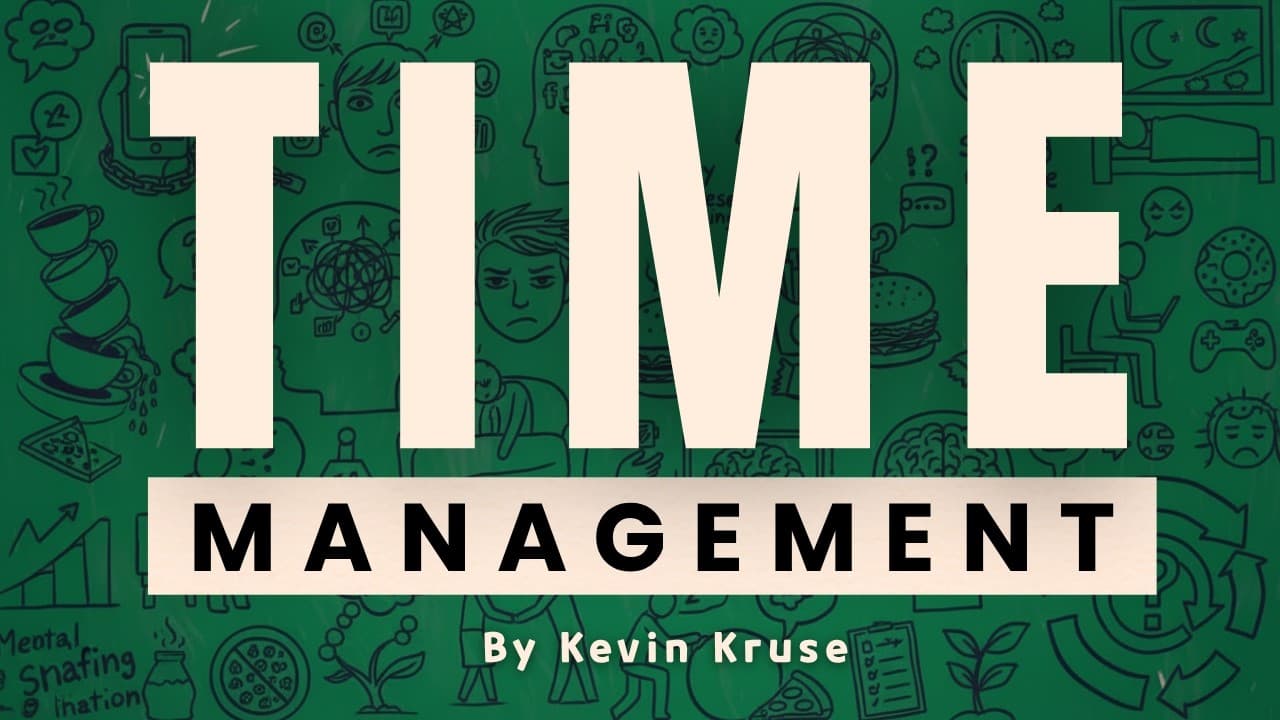
if you could talk to billionaires Olympic athletes a students and world famous CEOs and collect their best tips on time management then you would get this book 15 Secrets successful people know about time management written by New York Times best-selling author Kevin Cruz I've picked 12 of the best lessons from the book so let's get started lesson ... Read More
Key Insights
- Time is a scarce resource measured as 1440 minutes per day.
- Energy, not time, is the limiting factor for productivity.
- Regular breaks extend focus and prevent fatigue.
- Big tasks should be broken into smaller, measurable steps.
- Begin the day with your most important task while energy is high.
- Protect time by minimizing interruptions and distractions.
- Use a simple timer to structure work and rest periods.
- A structured approach mirrors the Pomodoro Technique for consistency.
- More videos from this channel:
- More from this channel: LITTLE BIT BETTER
Install to Summarize YouTube Videos and Get Transcripts
Explore YouTube Video Summarizer or Get YouTube Transcript Extractor
Questions & Answers
Q: How can I apply the 1440 minutes concept to my day to reduce interruptions?
The 1440 minutes concept treats every day as a fixed budget of time. Start by identifying the most important task you must complete that day, and guard the rest of your day by scheduling focused work periods around this priority. Treat every interruption as a potential loss of a minute, and use a simple explanation to others about your 1440 minutes rule so they understand you are prioritizing high impact work. This mindset helps you say no to low impact requests and keeps you focused on meaningful outcomes.
Q: What does focusing on energy rather than time look like in practice?
Focusing on energy means monitoring your alertness and fatigue levels rather than counting hours. Plan to work during peak energy times, take short breaks to recover, drink water, and choose healthy snacks. By spreading energy across the day with breaks and lighter tasks during dips, you maintain higher productivity for longer rather than burning out after a few hours.
Q: How can I implement breaks effectively without losing momentum?
Breaks should be purposeful, not random. Use short, structured pauses to reset, such as a 5 minute break after 25 minutes of work, as in the Pomodoro approach. During breaks, move, hydrate, or stretch. This distributes energy evenly, prevents fatigue, and keeps you ready to dive back into work with fresh focus.
Q: Why is starting with the most important task beneficial, and how should I approach it?
Starting with the most important task leverages peak cognitive energy early in the day, providing momentum and peace of mind. Break the task into smaller, actionable steps you can complete in 5 minutes or less, and begin with the first step immediately after waking. Completing even a small portion reduces anxiety and builds progress toward the larger goal.
Q: How can I evaluate opportunities with a time-based mindset?
Evaluate opportunities using a dollar per minute lens: estimate how much time you will invest and compare it to the potential impact. Prioritize options that yield the highest return per minute, and avoid engagements that drain energy or divert you from your top priorities. This helps allocate scarce energy to high-value outcomes.
Q: What is the link between the Pomodoro Technique and energy management?
The Pomodoro Technique aligns with energy management by creating short, focused work intervals separated by breaks. This structure helps sustain attention, reduces fatigue, and ensures consistent progress on tasks. By repeating cycles, you train your brain to maximize output during focused periods while preserving energy for later tasks.
Q: How can I adapt this approach to non-creative or repetitive work?
For routine or repetitive work, apply the same cycle of focused work and breaks, but adjust the task granularity to match the pace. Break the work into 25 minute blocks with 5 minute rests, and set a measurable goal for each block (e.g., process a batch of items, complete a subset of tasks). The rhythm prevents stagnation and keeps motivation high.
Q: What practical steps can I take this week to start the system
This week, map out your top 3 tasks and schedule them in your calendar for the morning when energy is highest. Implement 25 minute work blocks with 5 minute breaks, and track your progress with a simple a timer and a checklist. Avoid non essential interruptions, inform colleagues about your focus periods, and review energy patterns daily to refine timing and break choices.
Summary & Key Takeaways
-
Time management is reframed around energy rather than sheer hours, with the 1440 minute concept acting as a daily accountability tool. The approach encourages reducing interruptions and prioritizing energy quality over quantity to maximize productive windows.
-
The routine emphasizes breaking big goals into small, doable chunks, using a timer based system to sustain momentum throughout the day. It also highlights the value of starting with the hardest task when cognitive energy is highest.
-
A practical framework combines energy management, task prioritization, and structured breaks, drawing parallels to the Pomodoro Technique. It offers a repeatable method to maintain focus and efficiency across diverse tasks and days.
Read in Other Languages (beta)
Share This Summary 📚
Summarize YouTube Videos and Get Video Transcripts with 1-Click
Try YouTube Summary with ChatGPT & Claude or YouTube Transcript Generator
Explore More Summaries from LITTLE BIT BETTER 📚




Summarize YouTube Videos and Get Video Transcripts with 1-Click
Try YouTube Summary with ChatGPT & Claude or YouTube Transcript Generator