How to Run Asynchronous Jobs in Next.js Effectively
TL;DR
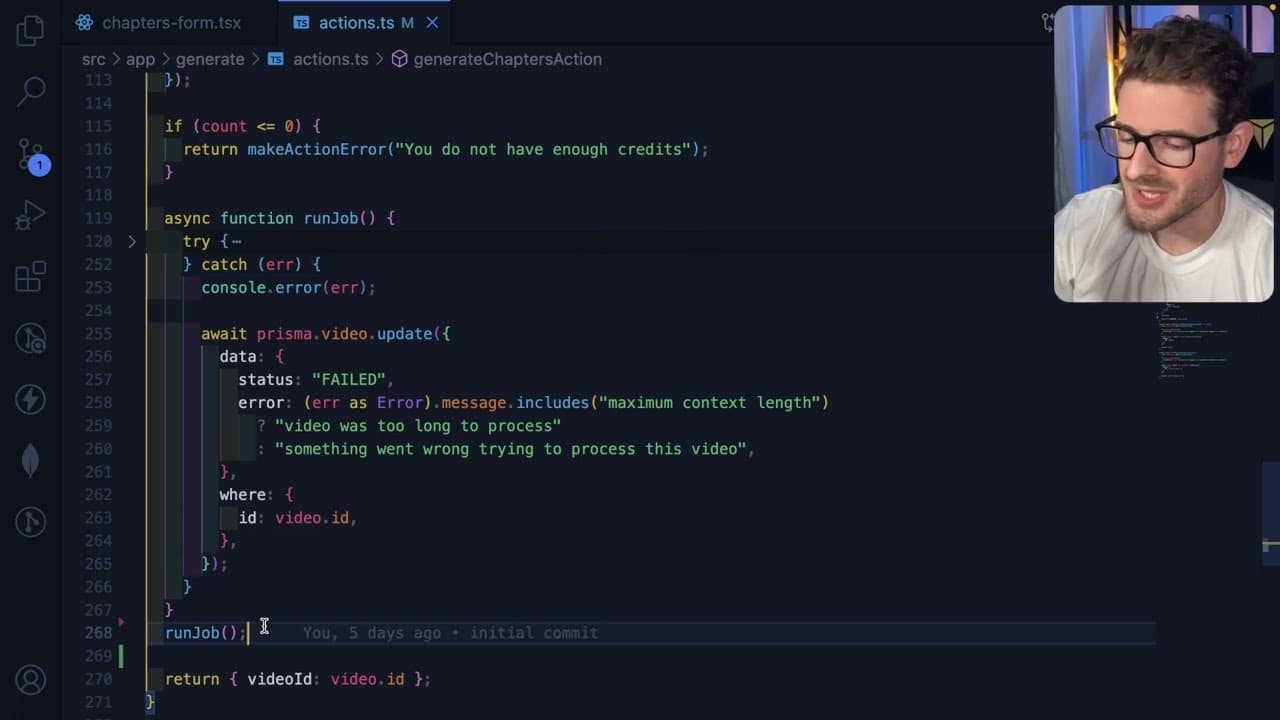
To run asynchronous jobs in Next.js without freezing the UI, wrap long-running tasks in a separate function and call it without awaiting. This allows the main thread to continue executing while the job runs in the background. Using polling every few seconds can effectively update the UI on the job's status, simplifying handling and user experience.
Transcript
I wanted to share with you all an approach that I think would be really useful to kind of learn about and understand with nextjs and that is kicking off asynchronous tasks which take a little bit longer to run um you'll encounter this if you're building any type of like AI related uh application or feature the first thing I'm going to do is I'm goi... Read More
Key Insights
- ❣️ Asynchronous tasks can slow down user interfaces if not managed correctly, especially with heavy processing.
- 🎁 Wrapping long-running tasks in separate functions allows for smooth user experience without freezing the app.
- 💨 Polling can serve as an effective way to check the status of asynchronous tasks in Next.js applications.
- 📽️ Reducing system complexity, such as avoiding WebSockets in serverless deployments, enhances project maintainability.
- 📽️ Utilizing message queues can enhance asynchronous processing but may add significant complexity to a project.
- 👤 Proper error management is crucial for informing users about processing failures without disrupting user experience.
- 👨💻 Implementing clean code practices, like clearing intervals, improves resource management in applications.
Install to Summarize YouTube Videos and Get Transcripts
Explore YouTube Video Summarizer or Get YouTube Transcript Extractor
Questions & Answers
Q: What issue does the content identify with synchronous tasks in Next.js?
The content highlights that synchronous tasks can freeze the application due to heavy processing operations, causing the user interface to become unresponsive while waiting for tasks like generating chapters from YouTube videos to complete.
Q: How does wrapping code in an asynchronous function help in Next.js?
Wrapping long-running processing tasks in an asynchronous function allows the main server action to complete its lightweight tasks first. This method improves user experience by preventing the interface from freezing as it delegates the heavier processing to run in the background.
Q: What polling method is suggested for tracking job completion?
The speaker suggests implementing a polling method that checks the job status every three seconds. This approach allows the application to continuously update the UI and determine when a job completes without overwhelming the server or creating unnecessary complexity.
Q: Why does the speaker avoid using WebSockets in this context?
The speaker prefers not to use WebSockets due to the complexity they introduce, especially in serverless environments typical of Next.js applications. They argue that simpler solutions, such as polling, fit better with their design philosophy and keep the system manageable without stateful connections.
Q: What alternative does the speaker mention for enhanced asynchronous processing?
The speaker suggests that using a message queue service like AWS SQS or RabbitMQ could lead to a more robust solution for handling asynchronous jobs. However, they opt for a simplified approach due to the additional complexity these services bring.
Q: How can errors during processing be managed in the asynchronous setup?
The content explains that implementing try-catch logic can help manage errors in the asynchronous job processing. By updating the database with error messages, the UI can inform users about failure reasons without directly returning error codes in initial responses.
Q: What coding practice does the speaker recommend regarding the management of intervals?
The speaker recommends clearing any polling intervals once the job status indicates it's done or failed. This prevents unnecessary resource use and keeps the application clean by reducing redundant checking after the job is completed.
Q: What is the speaker's broader philosophy about software projects?
The speaker believes in keeping systems as simple and cohesive as possible, comparing them to gear cogs. They argue that simplicity helps prevent various components from breaking down due to unnecessary complexity, promoting easier management and maintenance of the project over time.
Summary & Key Takeaways
-
The content discusses the challenges developers face when executing long-running asynchronous tasks in Next.js applications, such as video processing and AI-related features.
-
It introduces a technique that involves wrapping heavy operations in a separate function, allowing the main execution to proceed without freezing the app interface.
-
The speaker emphasizes the importance of updating the UI dynamically while processing tasks, using polling as a simple solution to track job status without implementing complex systems like WebSockets.
Read in Other Languages (beta)
Share This Summary 📚
Summarize YouTube Videos and Get Video Transcripts with 1-Click
Try YouTube Summary with ChatGPT & Claude or YouTube Transcript Generator
Explore More Summaries from Web Dev Cody 📚
Summarize YouTube Videos and Get Video Transcripts with 1-Click
Try YouTube Summary with ChatGPT & Claude or YouTube Transcript Generator