How Can Python Package Security Be Improved?
TL;DR
Python developers should scrutinize unfamiliar packages because installing one package can introduce malicious code, license violations, and numerous transitive dependencies. The research found that one installation brings in fourteen additional packages on average and proposed defensive typosquatting, automated checks, and a security and compliance-aware package manager as practical responses.
Transcript
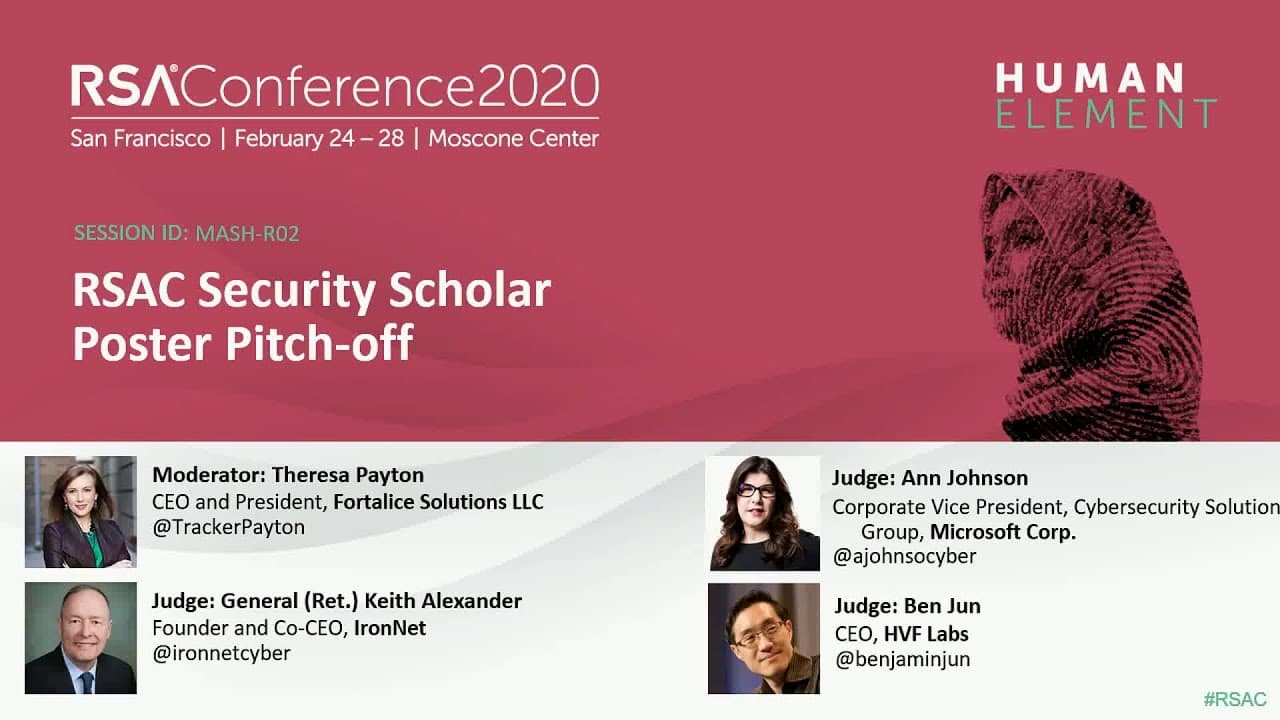
Hello everyone, and welcome to the Security Scholar Poster Pitch-Off. Um, I'm gonna introduce Theresa Payton, CEO and President of Fortalice Solutions LLC. Thanks so much. Okay. Now I feel really tall. Um, well, great. Well, thanks everybody for coming. Um, just a, a couple of, uh, housekeeping things. Uh, if you wanna, uh, tweet and, you know, sen... Read More
Key Insights
- The RSAC Security Scholar program is designed to help close cybersecurity's talent gap by selecting nominated students from leading university programs and emphasizing diversity in background, experience, and motivation.
- The Poster Pitch-Off is a competitive forum where selected scholars explain the problem they studied, their research approach, their findings, and possible next steps to peers and cybersecurity judges.
- PyPI is a package registry that does not vet uploaded code or verify the identity of the person uploading it, creating opportunities for malicious packages to reach developers.
- Python imports can execute code on a user's system, so installing or importing an unfamiliar package may enable malicious behavior, including the reverse system access demonstrated with seven lines of code.
- Dependency chains are a major attack surface because a package can directly or transitively import malicious code. The study found that installing one Python package results in fourteen additional packages being installed.
- Human error is central to package impersonation attacks because developers may select names that resemble legitimate packages. The research observed more than two hundred and fifty thousand mistakes involving one thousand packages.
- Package risks include compliance problems as well as malware because PyPI lacks automated methods for identifying license violations. The project found multiple violations associated with multiple companies.
- Defensive typosquatting is a proposed mitigation in which companies or benevolent maintainers reserve package names resembling legitimate ones. Amazon, Microsoft, and a group called The Guardians were identified as already using this approach.
Install to Summarize YouTube Videos and Get Transcripts
Explore YouTube Video Summarizer or Get YouTube Transcript Extractor
Questions & Answers
Q: How can Python developers reduce package security risks?
Python developers can reduce risk by thinking carefully before importing an unknown package, reviewing both direct and transitive dependencies, and recognizing that imported code may execute on their systems. The research also recommends reserving package names that resemble legitimate ones and developing a package manager that incorporates security and compliance checks.
Q: Why can installing one Python package create a large attack surface?
Installing one package can bring many dependencies onto a system, including packages imported directly and packages introduced transitively through other dependencies. The study found that installing one Python package results in fourteen additional packages being installed. Any malicious component within that chain can therefore expand the exposure beyond the package the developer intentionally selected.
Q: What security weaknesses does PyPI have?
PyPI functions as a package registry, but the presentation says it does not vet uploaded code or verify who uploaded it. Because Python imports can execute code, malicious content placed in a package may run on a developer's system. PyPI also lacks automated mechanisms for identifying license violations, creating both security and compliance risks.
Q: How do attackers exploit package-name mistakes in Python?
Attackers can upload packages whose names look or sound similar to legitimate packages, relying on developers to choose the wrong one. The technique resembles domain impersonation. The research found more than two hundred and fifty thousand user mistakes involving one thousand packages, demonstrating that name confusion can provide attackers with many opportunities.
Q: What malicious activity can a Python package perform?
The project demonstrated that seven lines of code could provide reverse access to another person's system. Its fictional example described a developer installing a useful-looking package and later noticing that the computer's camera light was on. The presentation also cited a recent PyPI attack in which a package was found stealing SSH keys.
Q: What compliance risks exist in the Python package ecosystem?
Developers may face copyright and licensing exposure even when the packages they install are not malicious. According to the presentation, PyPI does not provide automated ways to identify license violations. The research found multiple license violations caused by multiple companies, supporting the need for package-management tools that evaluate compliance alongside technical security.
Q: What is defensive typosquatting for Python packages?
Defensive typosquatting means reserving package names that look or sound similar to legitimate names before attackers can claim them. The proposal adapts the same general defensive method described for nearby domain names. The presentation says Amazon and Microsoft already use this package strategy, while benevolent maintainers called The Guardians reserve names for public benefit.
Q: What is the purpose of the RSAC Security Scholar Poster Pitch-Off?
The Poster Pitch-Off gives selected RSAC Security Scholars an opportunity to compete and communicate their research ideas. Each finalist receives five minutes to explain the problem, research approach, findings, and next steps. Judges then ask questions, offer advice, and choose winners, while the presented work can inform future conferences and future groups of scholars.
Summary & Key Takeaways
-
The RSAC Security Scholar program was launched in 2016 to help address cybersecurity's longstanding talent gap. It selects nominated students from leading university programs while seeking diversity in background, experience, and motivation. Scholars attend curated conference sessions, networking opportunities, expert discussions, and a competitive research pitch event.
-
Three finalists from the US Naval Academy, the University of Maryland, College Park, and Columbia University were selected to present their research. Each received five minutes to define a problem, describe the research approach, present findings, and recommend next steps before answering questions and receiving feedback from experienced cybersecurity judges.
-
Adesh Bhagmar's research identified security and compliance weaknesses in the Python package ecosystem. PyPI does not vet uploaded code or verify uploaders, imports can execute code, and dependencies expand exposure. The proposed response combines defensive typosquatting, stronger automated review, and development of a security and compliance-aware package manager.
Read in Other Languages (beta)
Share This Summary 📚
Summarize YouTube Videos and Get Video Transcripts with 1-Click
Try YouTube Summary with ChatGPT & Claude or YouTube Transcript Generator
Explore More Summaries from RSAC Cybersecurity 📚

Summarize YouTube Videos and Get Video Transcripts with 1-Click
Try YouTube Summary with ChatGPT & Claude or YouTube Transcript Generator