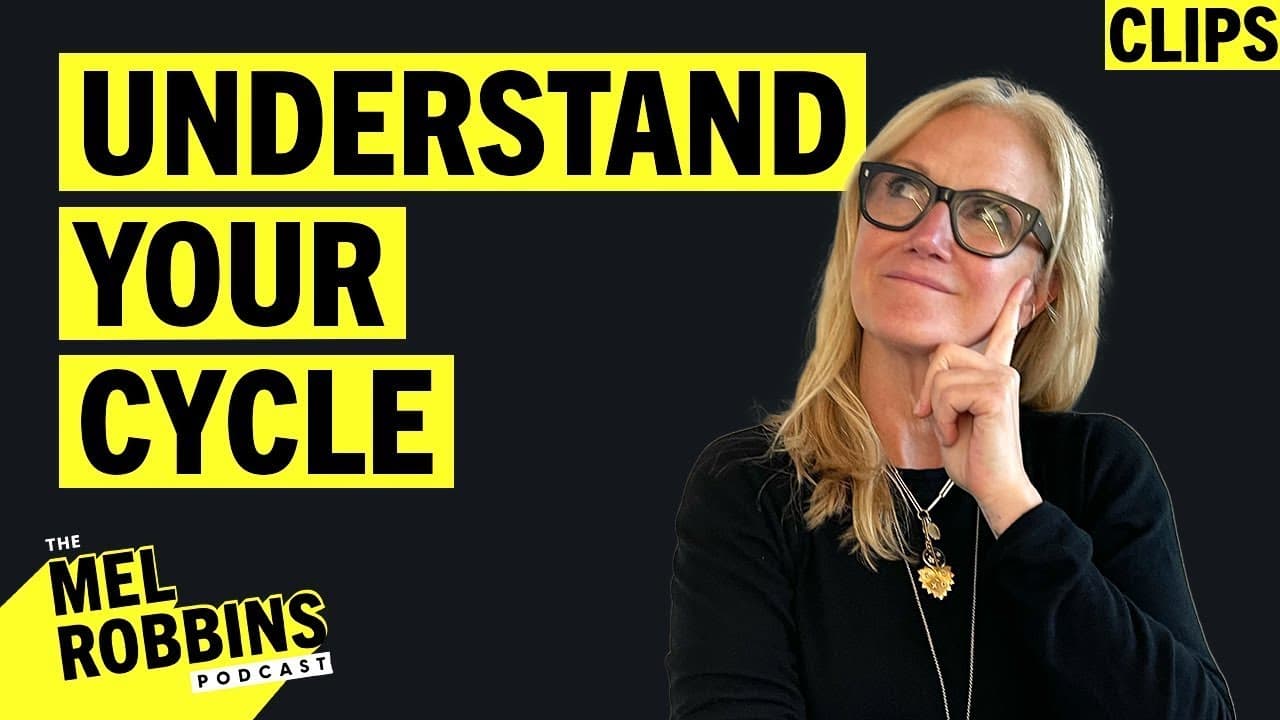
What Actually Happens During Your Monthly Cycle? Dr. Mary Claire Haver Explains on the Mel Robbins Podcast
TL;DR
Day one of bleeding starts the cycle: for roughly the first 14 days, the follicular phase, 100 to 200 follicles compete to release an egg while rising estrogen rebuilds the uterine lining. Around day 14 estrogen peaks, an LH surge pops the egg, and the empty follicle becomes a progesterone factory. The estrogen drop that follows drives PMS, PMDD, menstrual migraines, and mood dips, and it previews perimenopause.
Transcript
can you talk about in the monthly cycle the what is actually happening okay so that you can understand what's happening in the body in terms of hormon Surge and falling sure and how that may impact aspects of the way that you think and feel MH how is estrogen helping your body and your organ system run in the most optimal way so you have a period y... Read More
Key Insights
- 😮 The first half of the monthly cycle is characterized by rising estrogen levels, thickening of the uterine lining, and preparation for ovulation.
- 🥺 Estrogen decline in the second half of the cycle can lead to PMS symptoms such as mood changes, bloating, and migraines.
- 🖐️ Estrogen plays a crucial role in maintaining optimal mental health, including serotonin and norepinephrine levels.
- 🎚️ Cognitive function, including focus and executive functioning, can be affected by fluctuating estrogen levels.
- 🧠 Perimenopause symptoms often mirror PMS symptoms, with intensified experiences of brain fog, depression, and other physical symptoms.
- 🏍️ Understanding the impact of estrogen on the monthly cycle can help individuals anticipate and manage symptoms more effectively.
- 👣 Tracking one's menstrual cycle can help identify patterns and correlations between hormone fluctuations and physical/mental symptoms.
- 🎙️ More videos with Mel Robbins:
Install to Summarize YouTube Videos and Get Transcripts
Explore YouTube Video Summarizer or Get YouTube Transcript Extractor
Questions & Answers
Q: What actually happens during the monthly cycle, hormone by hormone?
The first day of bleeding is day one, and the uterus sheds its lining. Over roughly the first 14 days, the follicular phase, the hypothalamus signals the pituitary to raise LH and FSH, estrogen rises, and the uterine lining thickens again. Around day 14 estrogen peaks, the LH surge makes one or two eggs pop, and the site the egg came from starts producing progesterone. In the second half, estrogen declines while progesterone rises.
Q: What happens on the first day of your period?
The first day of bleeding is counted as day one of the menstrual cycle. Estrogen is at a low point, so the hypothalamus sends a signal to the pituitary, which increases LH and FSH. While the uterus is shedding and cleaning out, the ovaries get ready and estrogen begins to rise.
Q: What is the follicular phase and why do follicles compete?
The follicular phase covers roughly the first 14 days of the cycle. Follicles are the little sacs the eggs sit in, and about 100 to 200 of them effectively race to see which one wins. Rising estrogen during this phase thickens the endometrial lining in preparation for a potential pregnancy.
Q: Why do PMS symptoms like bloating and mood changes happen in the second half of the cycle?
After ovulation, estrogen declines while progesterone stays high. Dr. Haver attributes bloating and swelling to the very high progesterone levels, while the drop in estrogen drives the mental health changes. Some women experience this severely as premenstrual dysphoric disorder, or PMDD.
Q: How does estrogen affect mental health and depression?
There are tons of estrogen receptors in the brain. When estrogen levels are at a healthy level, serotonin and norepinephrine work efficiently, and those two are the key hormones seen at low levels in women who are depressed. When estrogen declines, mood can slump into depressive or anxious symptoms. Women sensitive to PMS and PMDD often do well on an SSRI, sometimes taken only two weeks out of the month.
Q: What causes menstrual migraines?
Declining estrogen can trigger vasospasm, where blood vessels in certain areas of the brain slightly squeeze. That constriction sets off a migraine headache. This is why some women get migraines tied specifically to the timing of their cycle.
Q: Can the estrogen drop cause brain fog and worsen ADHD?
Yes. There is a definite pickup and worsening in people with known ADHD through the menopause transition, from perimenopause into menopause. It is not clear whether these are new ADHD diagnoses or whether a woman was coping until she lost the estrogen, progesterone, and testosterone that supported her resilience. The symptoms often surface at a point in life when she most needs those faculties functioning.
Q: Do PMS symptoms preview what perimenopause will feel like?
Largely yes. The second half of the cycle creates a low estrogen state, described as low but not zero, whereas menopause is zero. The cholesterol shifts in that phase, bad cholesterol and triglycerides up slightly and good cholesterol down slightly, mimic what comes when estrogen is lost entirely, and symptoms like brain fog, depression, and migraines intensify in perimenopause.
Summary & Key Takeaways
-
The monthly cycle begins with menstruation, followed by the follicular phase where follicles compete to release an egg.
-
Estrogen levels rise during the first half of the cycle, thickening the uterine lining, while progesterone is produced after ovulation.
-
Estrogen decline in the second half of the cycle can lead to symptoms such as mood changes, bloating, and migraines.
Read in Other Languages (beta)
Share This Summary 📚
Summarize YouTube Videos and Get Video Transcripts with 1-Click
Try YouTube Summary with ChatGPT & Claude or YouTube Transcript Generator
Explore More Summaries from Mel Robbins 📚





Summarize YouTube Videos and Get Video Transcripts with 1-Click
Try YouTube Summary with ChatGPT & Claude or YouTube Transcript Generator