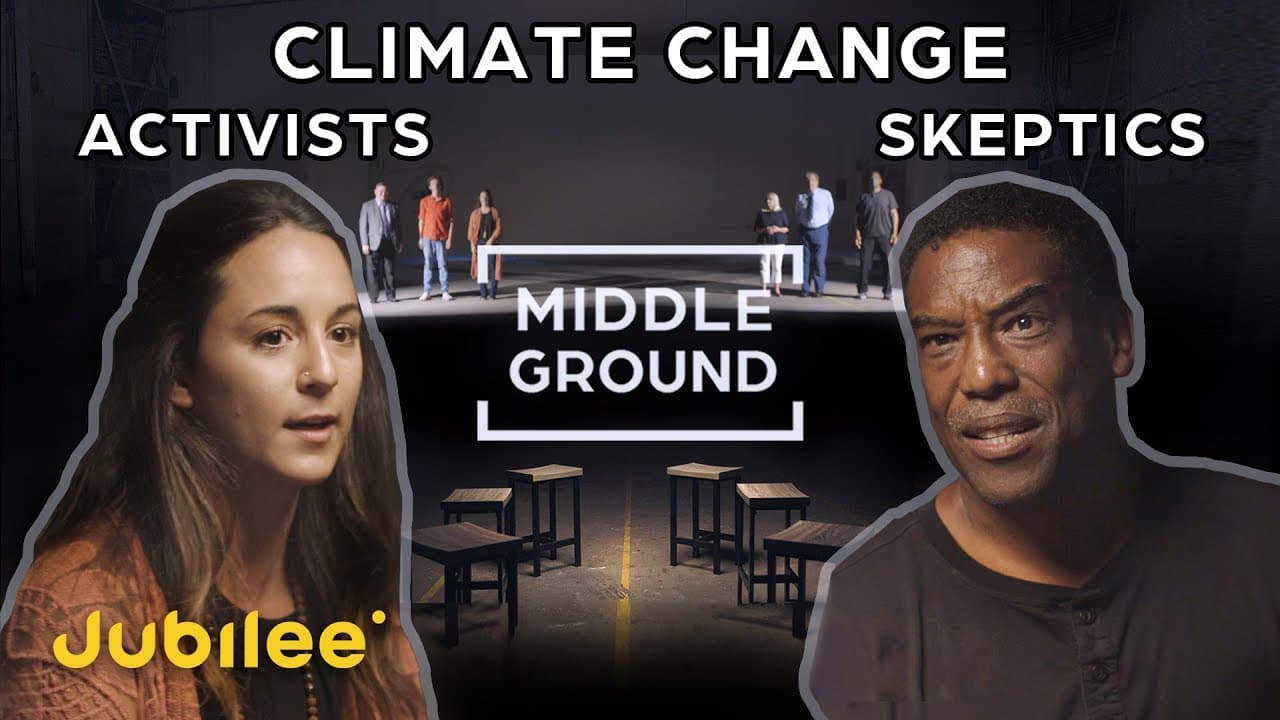
Can Climate Activists and Skeptics Find Common Ground?
TL;DR
Climate activists and skeptics who disagreed on whether global warming is human-caused still agreed on shared middle ground: recycling, energy efficiency, and reducing waste are worth doing regardless. The core dispute was not the environment itself but whether change should be voluntary personal choice or imposed through government regulation.
Transcript
in the reference of landfills okay maybe you don't to pay for it now but in 20 years and they're full you're still going to end up paying for it so why percent responsibility on to someone else but don't you think the citizens have a right to decide if they want to go along with this I don't think that citizens have the right to be wasteful more th... Read More
Key Insights
- The activists' central claim is that if Earth becomes uninhabitable for humans, every other issue like homelessness becomes irrelevant because there will be no place to live, making climate their number-one concern.
- The professional climate scientist argues the evidence is unanimous: about 99 percent of climate studies agree, and ancient records show what the planet was like before humans, confirming warming appears everywhere from ice caps to oceans.
- A skeptic counters that climate has changed since before humans existed and will continue after they are gone, citing thousands of US scientists who signed a letter saying man has little effect on climate.
- The disagreement is fundamentally about imposition, not the environment: skeptics object to being forced to have drought-resistant lawns or solar panels rather than making those choices voluntarily.
- Regulation has real human costs, skeptics argue, citing a trucker put out of work by Los Angeles' Clean Truck Program because he could not afford a new truck, and water-use restrictions on homeowners.
- Activists reframe regulation as long-term thinking, using a farm example where a Conservation Reserve Program lost money short-term but created a buffer capturing eroding soil and protecting water quality.
- The China argument holds that US action alone cannot reduce worldwide greenhouse emissions while China increases them, putting the US at an economic disadvantage and shifting manufacturing jobs abroad.
- An eco-conscious lifestyle need not be expensive because individuals control how much they buy, waste, and drive, and reducing waste produces direct cost savings, as with recycling aluminum that pays off handsomely.
Install to Summarize YouTube Videos and Get Transcripts
Explore YouTube Video Summarizer or Get YouTube Transcript Extractor
Questions & Answers
Q: What did climate activists and skeptics actually agree on?
Despite disagreeing on whether humans cause climate change, both sides agreed that many recycling and energy-efficiency policies are good and worth following. They agreed clean-air regulations like catalytic converters were worthwhile because the air is now cleaner than it was decades ago, and nobody wanted those laws reversed. The shared middle ground was that reducing waste, recycling plastic and aluminum, and conserving resources make sense regardless of one's stance on global warming's cause.
Q: Why do skeptics say US climate action won't make a difference?
The skeptics argue that no matter what the United States does, it will not impact worldwide greenhouse gas emissions as long as China and other parts of the world keep increasing their emissions. They say this puts the US at an economic disadvantage when it transforms its lifestyle while other countries ignore such efforts. One skeptic noted pollution in China can be far higher than in Southern California, yet manufacturing jobs have moved there.
Q: What evidence does the climate scientist give that global warming is real?
The professional climate scientist, who has worked in the field for about 50 years, says the climate evidence is very clear. The clearest evidence comes from ancient records showing what the planet was like before humans existed. He states that around 99 percent of climate studies agree, calling it as close to unanimous as the scientific community gets, and that the same answer appears everywhere from the ice caps to the ocean.
Q: How can environmental regulations hurt real people?
A skeptic described a friend who was a trucker for 40 years but lost his career because of Los Angeles' Clean Truck Program, which claimed his diesel exhaust was killing people. He could not afford to buy a new truck, so the regulation put him out of work. The skeptic also cited homeowners in Southern California who were not allowed to water their lawns due to environmental laws, which he framed as suppressing natural rights.
Q: Why do activists support water and land-use regulations?
Activists argue regulations require looking at the bigger, long-term picture. One grew up on a farm where the Conservation Reserve Program forced converting part of their land to prairie. Her father was angry about lost money, but that buffer captured eroding soil and prevented it from degrading water quality. Another activist explained water restrictions came because the snowpack was absent that year, a climate-change effect causing inconsistent seasons, not a random government decision to charge for water.
Q: Is living an eco-conscious lifestyle expensive?
Skeptics said an eco-friendly lifestyle is expensive, noting they pay roughly twice as much for gas as the rest of the country and high energy costs, and that wind and solar have been subsidized heavily. Activists disagreed, saying it need not be expensive because incentives are built into policy and individuals control how much they buy, waste, and drive. Reducing waste produces direct cost savings, and one activist earns money recycling valuable aluminum.
Q: What is the real disagreement between the two sides?
The core disagreement is not about the environment itself but about imposition versus personal choice. Skeptics object to being forced to have drought-resistant lawns or solar panels on their roofs, arguing people should make such choices on their own. Activists respond that no one is forcing anyone; people can keep using water or a green lawn, but they will have to pay for it. The debate is about voluntary action versus government mandate.
Q: What arguments connect the constitution and individual rights to climate policy?
A constitutional rights activist on the skeptic side argued that the constitution's importance lies in protecting the natural rights of the individual. He views the political agenda around global warming as an infringement on those rights, citing water-use restrictions as suppressing the natural right to use water. Skeptics also suggested putting environmental regulations to a vote rather than letting the EPA and administrative agencies impose them and redistribute people's money toward things they may not benefit from.
Summary & Key Takeaways
-
Activists open by framing global warming as their top priority, warning that extreme droughts, heat waves, hurricanes, and tornadoes will harm everyone regardless of economic background. Skeptics respond that US action alone cannot offset rising emissions from China and only creates an economic disadvantage for Americans.
-
The scientific dispute centers on whether humans cause climate change. A geologist and climate scientist of 50 years cites near-unanimous studies and ancient records, while a skeptic references thousands of scientists who signed a letter claiming man has little effect, and raises regulation harming a trucker.
-
The group finds middle ground on recycling, energy efficiency, and clean-air rules they all now appreciate, like catalytic converters ending childhood smog. The remaining divide is imposition versus choice: whether people should be forced into eco-friendly lifestyles or left free to choose while paying for waste.
Read in Other Languages (beta)
Share This Summary 📚
Summarize YouTube Videos and Get Video Transcripts with 1-Click
Try YouTube Summary with ChatGPT & Claude or YouTube Transcript Generator
Explore More Summaries from Jubilee 📚
Summarize YouTube Videos and Get Video Transcripts with 1-Click
Try YouTube Summary with ChatGPT & Claude or YouTube Transcript Generator