How to overcome cynicism and embrace hopeful skepticism
TL;DR
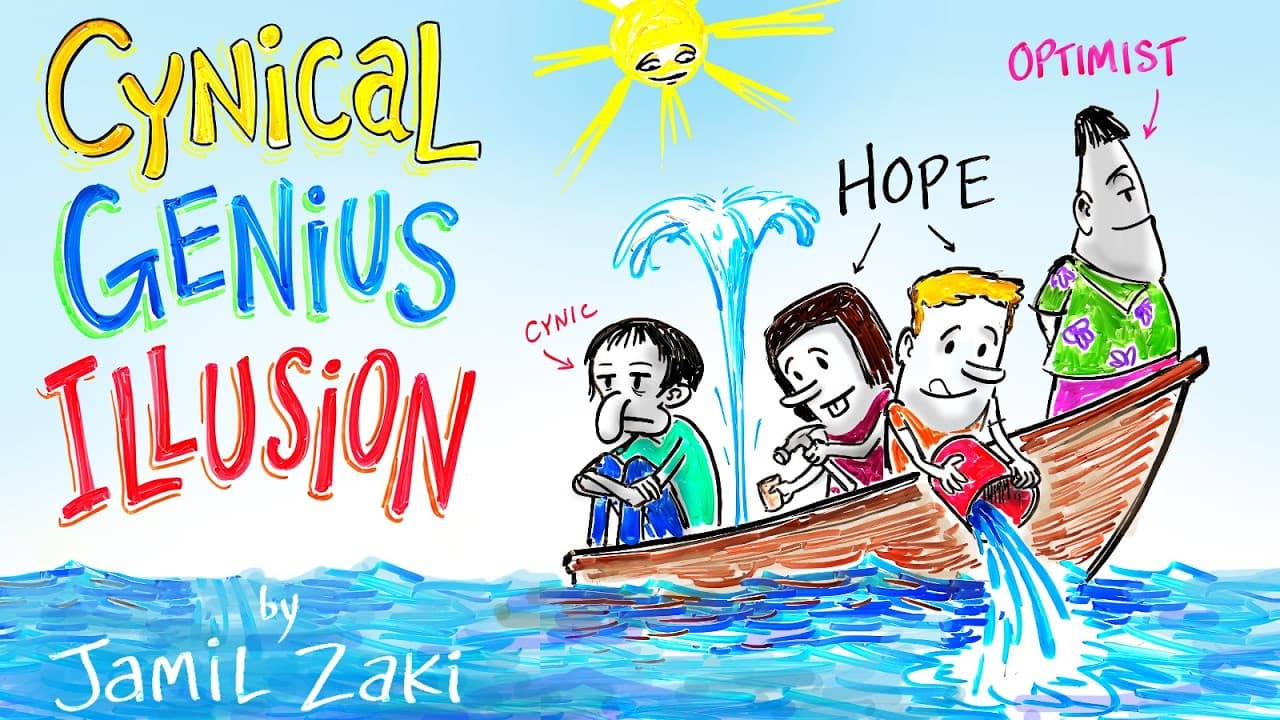
Hopeful skepticism is healthier and more productive than cynicism because it keeps trust and collaboration alive while staying evidence minded. The shift involves recognizing negative biases, seeking data about others, and engaging civilly in social and civic life to improve the world.
Transcript
welcome to this special episode of after skool my name is Jamil Zaki I'm a professor of psychology at Stanford University and author of Hope for cynics today we'll be exploring why humanity is losing faith in itself what that's doing to us and how any of us can escape the cynicism trap let's jump in Imagine two people Andy and Ben Andy believes... Read More
Key Insights
- Cynicism is linked to lower performance on cognitive tests compared to trusting individuals, showing the cognitive cost of default mistrust.
- Cynicism correlates with poorer physical health outcomes and higher depression, indicating its broad impact on well being and longevity.
- Hope is defined as the belief that a positive outcome could materialize, which motivates action and persistence in the face of problems.
- Hopeful skepticism blends doubt with openness, allowing people to examine evidence while remaining engaged in social issues.
- Skeptics are described as quick agile learners who protect themselves when needed but still form connections and collaborations.
- A lack of trust leads to social and civic disengagement, reducing participation in communities and movements.
- Two myths are challenged: cynicism is safe and cynicism is moral, showing that cynicism can actually limit safety and ethical action.
- Overcoming cynicism is not naive; it is about cultivating a more accurate and proactive view of others and possibilities.
Install to Summarize YouTube Videos and Get Transcripts
Explore YouTube Video Summarizer or Get YouTube Transcript Extractor
Questions & Answers
Q: A real search query question about the video (e.g. 'How to...', 'What is...', 'Why does...', 'When should...'). Question 1
What is the cynical genius illusion and how does it affect our judgments of others and ourselves? The cynical genius illusion is the idea that cynics are smarter and more capable than trusting people, a belief that studies show is inaccurate. The video explains that people tend to misjudge cognitive and social abilities based on cynicism, leading to biased expectations and reduced trust, which in turn can hinder collaboration and personal growth. Understanding the illusion helps people adopt a more balanced view that values both critical thinking and openness to others.
Q: Question 2
Why is cynicism considered a tool of the status quo and how does it influence political and media dynamics? The talk argues that cynicism serves elites and propagandists by creating distrust in institutions, which can justify reduced accountability and increased manipulation. When people assume others are corrupt, they are easier to control and manipulate through fear and outrage. Recognizing this dynamic encourages critical examination of information sources and fosters healthier engagement with institutions and civic life.
Q: Question 3
How do most people likely underestimate the generosity and trustworthiness of others, and what data supports this? Decades of research cited in the video indicate that people underestimate how generous, open minded, trustworthy, and friendly others are. By paying closer attention to data rather than stereotypes, individuals can rediscover shared values and cooperate more effectively, improving social harmony and outcomes.
Q: Question 4
What is hopeful skepticism and how does it differ from naive optimism or pessimism? Hopeful skepticism is a stance that acknowledges problems but remains committed to possible positive outcomes and actions. It combines critical thinking with a belief in the potential for improvement, encouraging civic engagement and collaboration rather than withdrawal or cynicism.
Q: Question 5
What are the practical tools suggested to shift from cynicism to a more hopeful worldview? The video discusses data driven tools and protocols to navigate relationships online and in person, emphasizing paying attention to evidence about others, reducing blanket judgments, and engaging in constructive dialogue to build trust and cooperation.
Q: Question 6
What are the consequences of cynicism on relationships and communities according to the talk? Cynicism undermines trust, stunts collaboration, and can erode social bonds, leading to isolation and less participation in social movements. It also increases social withdrawal and reduces the likelihood of supportive, cooperative behaviors essential for healthy communities.
Q: Question 7
How does the talk describe the relationship between hope and action in social contexts? Hope is not passive; it motivates people to engage in civic life, participate in movements, and seek positive change. By seeing a possible better future and acting toward it, hopeful people foster collaboration, innovation, and resilience within communities.
Q: Question 8
What role do negative biases play in shaping perceptions of others, and how can individuals address them? Negative biases lead to quick judgment and mistrust, often missing the true character and actions of others. The recommended approach is to observe data, challenge blanket assumptions, and cultivate a mindset that balances scrutiny with openness to new information and experiences.
Summary & Key Takeaways
-
Hope and skepticism can coexist and improve social functioning by reducing withdrawal from others and increasing collaborative problem solving. Adopting hopeful skepticism helps people stay engaged in communities and civic life while evaluating evidence rather than making blanket judgments.
-
Healthy skepticism engages data and context rather than default cynicism, enabling better understanding of others and more constructive responses to social problems. It supports connections, trust, and resilience in the face of injustice.
-
Cultivating hopeful skepticism requires practice, attention to data, and a willingness to adjust beliefs in light of new information, leading to more hopeful and active participation in society.
Read in Other Languages (beta)
Share This Summary 📚
Summarize YouTube Videos and Get Video Transcripts with 1-Click
Try YouTube Summary with ChatGPT & Claude or YouTube Transcript Generator
Explore More Summaries from After Skool 📚


Summarize YouTube Videos and Get Video Transcripts with 1-Click
Try YouTube Summary with ChatGPT & Claude or YouTube Transcript Generator