How to Grow Long, Strong, Healthy Nails: Best Nail Growth Tips From a Dermatologist
TL;DR
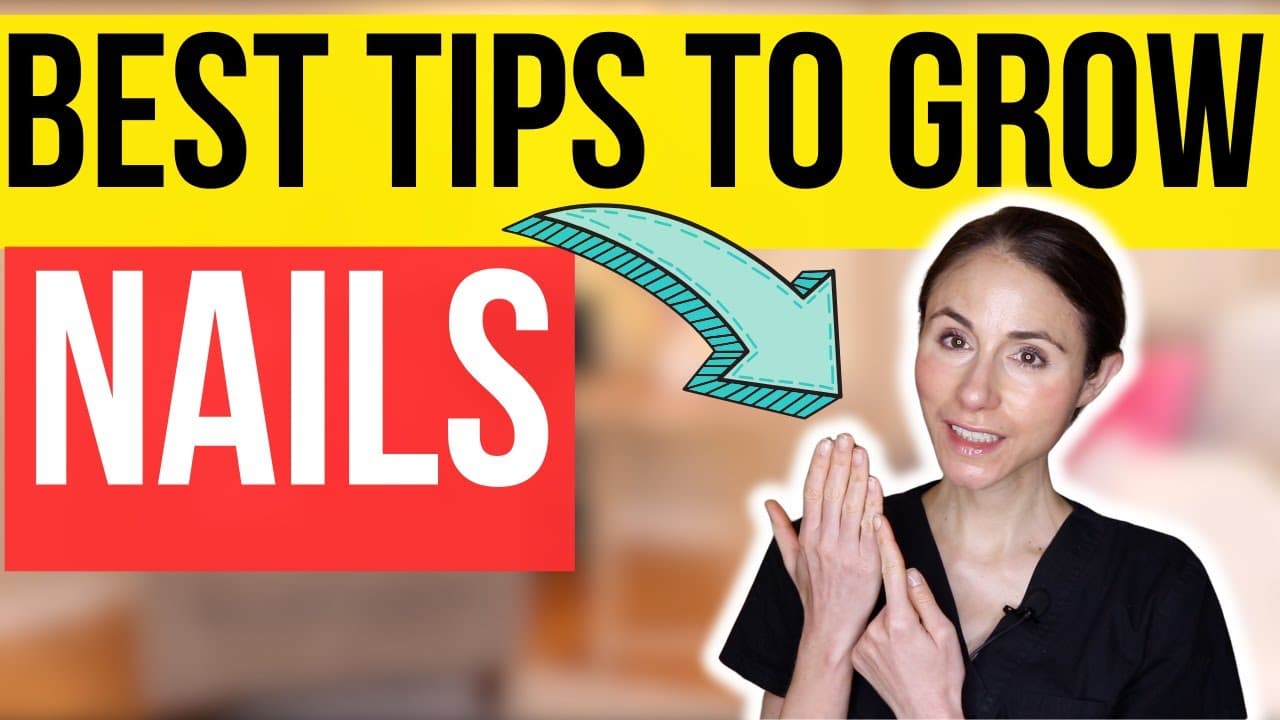
Healthy nail growth starts with realistic expectations, protecting the germinative matrix area, moisturizing the cuticles, and avoiding habits that damage the nail unit. Fingernails normally grow around 0.1 mm per day, or about 3 mm per month, and need 4 to 6 months to grow out completely. The details below explain which factors can change that rate and which practical measures may help.
Transcript
well hey guys in today's video I'm going to share with you once and for all how to finally get your nails to grow out long strong and healthy I'm going to give you my best tips as a dermatologist for getting your nails to grow out long and healthy and I'm going to point out some things that you are probably doing that are sabotaging your nail growt... Read More
Key Insights
- Growth happens beneath visible skin: The hard nail plate is the visible part people want to lengthen, but most growth originates from germinative matrix cells hidden below the skin. Because these cells rapidly divide and produce the nail, protecting the surrounding skin and cuticle area is directly relevant to both growth rate and nail quality.
- Normal growth requires patience: Fingernails add only around 0.1 mm each day, which works out to approximately 3 mm per month. Even when nails are healthy, replacing an entire fingernail takes 4 to 6 months. This baseline explains why the recommended measures should not be expected to produce an overnight transformation.
- Toenails follow a slower timeline: Toenails grow about 60% more slowly than fingernails. A person comparing the two may therefore see a large difference even without a nail problem. The contrast reinforces the dermatologist's emphasis on judging progress according to the normal behavior of each nail type instead of expecting every nail to lengthen equally.
- Each fingernail grows differently: The middle fingernail should grow fastest, while the thumbnail and pinky nail grow more slowly than the other nails. Growth can also differ between hands because nails on the dominant hand generally grow faster. Uneven progress across fingers is therefore presented as a normal pattern rather than automatic evidence that a growth method has failed.
- Daytime activity affects growth: Nails grow faster during the day than they do at night, a factor the speaker describes as outside personal control. This daily variation sits alongside differences caused by finger activity and hand dominance. It supports the broader point that nail growth is influenced by several biological patterns, not simply by products placed on the nail plate.
- Hormonal stages change the rate: Pregnancy is associated with faster nail growth, while growth becomes slower after delivery during lactation and breastfeeding. These opposing changes demonstrate that the nail matrix responds to hormonal influences. They also explain why someone's usual nail growth pattern may shift substantially during different stages without a change in their nail-care routine.
- Medicines can alter growth: Oral contraceptive pills and antifungal medicines are identified as medications that can make nails grow faster. Medication use is therefore one of the background factors to consider when comparing growth rates over time. The source does not present faster growth from these medicines as a reason to start taking them specifically for nail length.
- Thyroid status matters: Hyperthyroidism can make nails grow faster, whereas hypothyroidism can make them grow more slowly. The speaker notes that underlying medical conditions cannot necessarily be changed, although they may sometimes be controlled with medication and disease management. Nail growth can consequently reflect health factors that are not addressed by cosmetic care alone.
- Smoking slows nail production: Smoking can impair circulation and interfere with the delivery of healthy growth factors to the nail unit. The stated result is slower nail growth. This mechanism also fits the discussion of finger activity, since both points connect circulation around the nail unit with the ability of its growth structures to function.
- Useful movement stays gentle: Typing, playing violin, and small finger-tapping exercises are examples of activity that may stimulate nail growth through improved blood flow. The recommendation is not to create forceful trauma by hitting the nails against a wall. The distinction is between ordinary finger use that increases activity and damaging impact that can harm the nails.
- Petroleum jelly supports the barrier: Applying petroleum jelly around the cuticles can moisturize the area and form a protective layer resembling a second skin. This may be especially useful for brittle nail syndrome, in which nails grow more slowly and the hard plate becomes brittle, splits, peels, or develops frayed edges. Nighttime use makes the greasy application easier to tolerate.
- Cuticle care protects matrix cells: Dry, inflamed, or irritated proximal nail folds and cuticles can lose effective barrier function. That impairment exposes the germinative matrix area to moisture and microbes and may contribute to slow growth, ridges, lines, and peeling. The existing guidance also advises against trimming or pushing back cuticles because disrupting this barrier can impair protection and increase infection risk.
Install to Summarize YouTube Videos and Get Transcripts
Explore YouTube Video Summarizer or Get YouTube Transcript Extractor
Questions & Answers
Q: How can I grow long, strong, healthy nails?
Start with realistic expectations because fingernails normally grow only around 0.1 mm per day, or about 3 mm per month. Keep the fingers gently active through ordinary activities such as typing or finger tapping, which may improve blood flow and stimulate growth. Apply petroleum jelly around the cuticles, preferably at night, to moisturize and protect the barrier over the germinative matrix area. Avoid trimming or pushing back cuticles, stop nail biting, maintain a healthy diet with adequate protein, and recognize that complete fingernail growth takes 4 to 6 months.
Q: How fast do fingernails and toenails grow?
Fingernails normally grow around 0.1 mm per day, which is approximately 3 mm each month. A fingernail generally needs 4 to 6 months to grow out completely. Toenails grow about 60% more slowly than fingernails, so their progress will be less noticeable over the same period. These baseline rates are why realistic expectations are the dermatologist's first nail-growth tip.
Q: Why do some fingernails grow faster than others?
The nails on one hand do not all grow at the same rate. The middle fingernail should grow fastest, while the thumbnail and pinky nail grow more slowly than the others. Nails on the dominant hand also tend to grow faster because that hand is more active. The speaker connects this activity with minor stimulation and increased blood flow to the nail unit.
Q: What health factors can change nail growth?
Hormonal changes, medicines, thyroid conditions, and smoking can all affect the rate. Nails grow faster during pregnancy but more slowly after delivery during lactation and breastfeeding. Oral contraceptive pills, antifungal medicines, and hyperthyroidism can increase growth, while hypothyroidism can slow it. Smoking also slows growth by impairing circulation and delivery of healthy growth factors to the nail unit.
Q: Can finger exercises make nails grow faster?
Gentle finger activity may stimulate growth because minor stimulation can increase blood flow. Typing and small finger-tapping exercises are offered as practical examples, and the speaker noticed faster growth on the non-dominant hand while using it to play violin. After violin playing stopped, those nails grew more slowly again. This does not mean striking the nails against a wall is helpful, since forceful impact is specifically discouraged.
Q: How does petroleum jelly help brittle nails?
Petroleum jelly moisturizes the skin around the nails and creates a barrier that acts almost like a second skin. This can protect dry or irritated cuticles and proximal nail folds whose impaired barrier might expose matrix cells to moisture and microbes. That exposure can contribute to slow growth, ridges, peeling, splitting, and frayed edges. Applying petroleum jelly before bed, with gloves over it if desired, makes it easier to leave in place while the hands are less active.
Q: Why should I avoid cutting or pushing back my cuticles?
The cuticle and proximal nail fold help protect the germinative matrix cells located beneath the skin. Trimming or pushing back this area can impair that protective barrier. Once weakened, the area may be exposed to moisture and microbes, which can slow growth and increase the risk of infection around the nails. Preserving and moisturizing the cuticle therefore supports the environment where the nail is produced.
Q: Can minoxidil or supplements improve nail growth?
The existing guidance says minoxidil applied to the nails twice a day may promote healthy growth by increasing blood flow to the nail bed. It can be placed with a cotton-tip applicator. Supplements are presented as something to consider when a deficiency has been confirmed, rather than as a universal nail-growth solution. Consulting a healthcare professional before taking supplements is recommended, while a balanced diet with adequate protein remains important for healthy nail growth.
Summary & Key Takeaways
-
Understanding where growth begins: Nail growth comes mainly from rapidly dividing cells in the germinative matrix, which sits underneath the skin and cannot normally be seen. The nail bed, where blood vessels are housed beneath the hard nail plate, also makes a smaller contribution. Fingernails normally grow around 0.1 mm per day, or approximately 3 mm per month. A complete fingernail takes 4 to 6 months to grow out, while toenails grow about 60% more slowly.
-
Recognizing natural growth differences: Nails grow faster during the day than at night, and the different fingernails do not grow at identical rates. The thumbnail and pinky nail grow more slowly than the other nails, while the middle fingernail should grow fastest. Nails on the dominant hand also grow faster than those on the non-dominant hand. These differences show why realistic expectations are the dermatologist's first recommendation when trying to grow longer, healthier nails.
-
Accounting for health influences: Hormones, medications, medical conditions, and smoking can change nail growth. Nails grow faster during pregnancy but more slowly after delivery during lactation and breastfeeding. Oral contraceptive pills and antifungal medicines can increase growth, while hyperthyroidism accelerates it and hypothyroidism slows it. Smoking impairs circulation and the delivery of healthy growth factors to the nail unit, reducing growth. Some influences cannot be changed, although underlying conditions may sometimes be controlled through medication and disease management.
-
Using fingers to encourage growth: Minor, everyday stimulation may support nail growth because it can increase blood flow, but deliberately striking the nails against hard surfaces is discouraged. Typing and finger-tapping exercises are suggested as ways to keep the fingers active. The dermatologist's experience playing violin also illustrated the pattern: nails on the active, non-dominant hand grew faster while playing, then slowed after stopping. This aligns with the observation that the more active dominant hand usually has faster-growing nails.
-
Protecting nails from daily damage: Petroleum jelly applied around the nails can help moisturize dry cuticles and proximal nail folds while creating a barrier that acts almost like a second skin. This matters because an impaired barrier can expose germinative matrix cells to moisture and microbes, contributing to slow growth, ridges, peeling, splitting, and frayed edges. Nighttime application is suggested because the hands are used less during sleep, and gloves can be worn over the petroleum jelly to hold it in place.
Read in Other Languages (beta)
Share This Summary 📚
Summarize YouTube Videos and Get Video Transcripts with 1-Click
Try YouTube Summary with ChatGPT & Claude or YouTube Transcript Generator
Explore More Summaries from Dr Dray 📚




Summarize YouTube Videos and Get Video Transcripts with 1-Click
Try YouTube Summary with ChatGPT & Claude or YouTube Transcript Generator