What 3 Things Does My Husband Do to Calm My Anxiety?
TL;DR
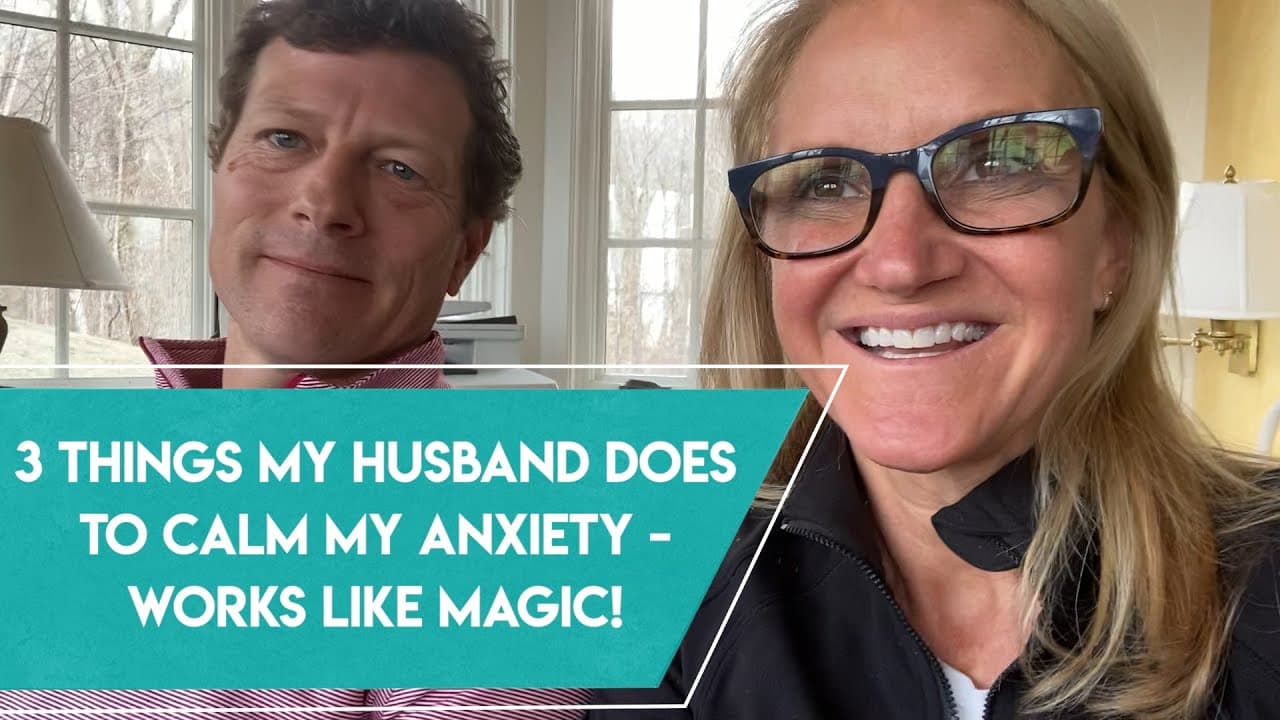
The three things Mel’s husband Chris does to calm her anxiety are grounding her through close physical contact, asking detailed questions until she has expressed everything, and listening without offering solutions or invalidating her fears. After seeing this process work repeatedly during their 24-year marriage, Chris has developed confidence that her anxiety will dissipate. Read on for their detailed explanation of how each step works.
Transcript
hey everyone its Mel and I'm here with my husband Christopher Robin's yes that is his name did he kind of look like the grown-up version of Winnie the Pooh's Christopher Robin's curly blond hair anyway I digress as I normally do I got an incredible question from JT photo film about a video that I posted yesterday that was me documenting a moment of... Read More
Key Insights
- Familiarity builds Chris’s confidence: Chris does not claim that he is immune to every person’s anxiety, since he sometimes catches the anxiety of their children. His steadiness with Mel comes partly from their time together and repeated experience with the same process. Having watched her anxiety calm after she expresses it gives him confidence that the feeling will eventually subside.
- Validation does not require matching feelings: Mel values that Chris can accept the reality of her anxiety even though he is not experiencing the same emotional state. His calmness does not lead him to dismiss what she feels. Instead, he stays close and treats her experience as real, allowing validation and emotional separation to exist at the same time.
- Touch is the opening step: Chris first uses physical closeness, such as holding Mel’s hand, giving her a large hug, or sitting directly in front of her. Mel interprets this contact as grounding because it locates her attention in the immediate interaction. The method begins with connection before Chris asks her to describe the anxiety.
- Eye contact strengthens presence: Chris adds that the supporter should sit close and maintain as much eye contact as physically possible. This is part of being upfront and personal with the anxious person’s experience. The goal described in the conversation is not to observe from a distance, but to create a focused, present interaction while the anxiety is being expressed.
- Questions cover body and emotion: Chris’s opening questions ask what Mel feels physically and what is happening emotionally. He calls these the two main pillars of the inquiry. This gives her more than one route for describing the experience and keeps the conversation focused on what is happening right now rather than immediately analyzing or correcting it.
- Repetition empties the tank: Chris does not stop after Mel’s first explanation. He repeatedly asks what else is happening and what else she is feeling, following each answer like a thread. Mel says this continues until the tank feels completely empty. The repetition matters because the first response may not contain everything driving the anxious state.
- Expression reduces mental spinning: Mel says the questioning process gets the anxious material out until she has nothing left to say. At that point, she is no longer spinning through the same concerns and returns to the present moment. Chris compares the release to vomiting because, once everything comes out, the intensity starts to dissipate.
- Immediate solutions can misfire: Chris deliberately avoids giving direction, guidance, or an answer while Mel is acutely anxious. He says that nothing will resolve the situation immediately, even if the listener believes they have the best idea. The method prioritizes staying with the experience because problem solving can shift the exchange away from expression and into argument.
- Reassurance may restart the fear: Mel explains that saying she does not need to worry can prompt her to argue back. Defending the worry directs her attention toward the feared future again. In their approach, Chris avoids discounting what she says, not because he agrees with every fear, but because debate interferes with emptying the anxious thoughts.
- Uncertainty drives Mel’s anxiety: Mel describes anxiety as being about uncertainty, usually involving something feared in the future that cannot be controlled. Her explanation connects both parts of Chris’s technique. Touch counters distance from the present, while questions exhaust the future-focused thoughts without inviting a discussion about whether those thoughts are justified.
- Remote closeness still matters: Mel notes that physical proximity may be adapted when support happens over a video call. She suggests leaning in as the remote counterpart to Chris sitting very close, hugging her, or holding her hand. The transcript does not equate a call with physical touch, but it presents visible closeness as another way to communicate focused presence.
- Mel combines several coping actions: During the anxious moment she documented, Mel journaled, spoke with Chris, texted her three closest friends, Mindy, Lisa, and Gretchen, and took a very long walk. She says walking stimulates the parasympathetic nervous system and calms her down. Her account shows that Chris’s method was one part of a broader sequence she used that day.
Install to Summarize YouTube Videos and Get Transcripts
Explore YouTube Video Summarizer or Get YouTube Transcript Extractor
Questions & Answers
Q: What three things does Mel’s husband do to calm her anxiety?
Chris first creates close contact by hugging Mel, holding her hand, or sitting near her with eye contact. He then asks her to describe the anxiety in detail, including what she feels physically and emotionally. He keeps asking what else is there until she feels she has emptied the tank. Throughout the process, he avoids solutions, direction, reassurance, and invalidation because those responses can turn expression into an argument about future fears.
Q: How does Chris avoid catching Mel’s anxiety?
Chris says he sometimes catches their children’s anxiety, so he does not present himself as unaffected by anxiety in general. With Mel, he points to the amount of time they have spent together and the many occasions when he has helped draw out her anxious thoughts. He has repeatedly observed that expressing everything helps the anxiety dissipate. That experience gives him a high degree of confidence that the anxious state will calm, even when it does not vanish immediately.
Q: What questions does Chris ask when Mel feels anxious?
Chris starts with a direct invitation: tell me about your anxiety right now. He asks what she is feeling and what is happening both physically in her body and emotionally. After each response, he continues with questions about what else is going on or what else she feels. He repeats that process so the conversation reaches concerns that may not appear in her first answer and continues until she has nothing more to add.
Q: Why does physical touch help Mel during anxiety?
Mel says anxiety pulls her toward uncertainty and future events that she fears but cannot control. When Chris hugs her, holds her hand, or sits very close, the contact grounds her in the current moment. Eye contact and direct physical presence also show that he is staying with what she is experiencing. In their process, this grounding happens before and during the questions that help her express the anxiety.
Q: Why does Chris avoid offering solutions?
Chris says there is no immediate solve during the acute anxious moment, even when the listener has a very good idea. Offering guidance can change the interaction from attentive listening into a discussion that the anxious person does not want to have. Mel says that if Chris tells her not to worry, she starts arguing for the worry. That argument pulls her back toward the uncertain future instead of helping her return to the present.
Q: How does repeated questioning calm Mel’s anxiety?
Repeated questioning gives Mel room to describe every part of what she is feeling instead of stopping with the first explanation. Chris follows each answer by asking what else is happening, which he compares to pulling a thread. Mel says the process eventually leaves the tank empty and stops her from spinning. Chris continues because repeated experience has shown him that once everything comes out, the anxiety begins to dissipate.
Q: How does Chris validate anxiety without feeling anxious himself?
Chris stays physically and emotionally present without claiming that Mel’s fears are unimportant. He listens to what comes out of her mouth and does not discount, solve, or invalidate it. Mel experiences this as validation because he accepts her anxious reality even though he is not in the same emotional reality. His calm attention gives her enough space to express everything without also needing to defend why she feels anxious.
Q: What did Mel do to calm herself during the anxiety she documented?
Mel says she journaled and talked with Chris about what she was experiencing. She then texted her three closest friends, Mindy, Lisa, and Gretchen. Afterward, she went for a very long walk, which she says stimulates the parasympathetic nervous system and calms her. These actions gave her several ways to express the anxiety, connect with other people, and settle herself.
Summary & Key Takeaways
-
Introducing Chris’s calming approach: Mel asks her husband, Christopher Robin, how he avoids absorbing her anxiety when she becomes anxious. She says she readily catches the anxiety of their children, Kendall and Sawyer, and their son, while Chris appears able to insulate himself from hers. Chris acknowledges that he sometimes catches their children’s anxiety. He attributes his different response to Mel partly to their long history together and the many times he has helped her express what she is experiencing.
-
Starting with reassuring contact: Chris describes touch as a major part of his response. He holds Mel’s hand, hugs her, or sits close, directly facing what she is experiencing. Mel turns this into the first practical technique: use physical contact to center the anxious person. Chris also recommends sitting nearby and maintaining as much eye contact as possible. Mel concludes that closeness brings her attention away from an uncertain future and grounds her in the present moment.
-
Drawing out every anxious thought: Chris invites Mel to describe what is happening in detail and continues pulling the thread with questions such as what else is happening and what else she is feeling. He begins by asking about her anxiety right now, including both physical sensations and emotional experiences. He repeats the questions until she says the tank is completely empty. Chris has seen this work often enough to expect that fully expressing the anxiety will help it dissipate, even if it does not disappear instantly.
-
Listening without trying to solve: Mel identifies another important feature of Chris’s method: he does not respond to each fear with answers, direction, or guidance. Chris says there is no immediate solution during an acute anxious moment, even if the listener has an excellent idea. Trying to solve, discount, or invalidate the concern can make the anxious person argue for why the fear matters. That creates a conversation about the feared future, which is precisely where the anxious person does not want to remain.
-
Returning attention to now: Mel explains that anxiety, in her experience, concerns uncertainty and future events she fears but cannot control. Physical closeness brings her back to the present, while repeated questions allow her to empty the thoughts that keep her spinning. Chris’s refusal to debate or fix those thoughts gives her room to express everything. Mel also describes her own response to a recent anxious episode: she journaled, talked with Chris, texted Mindy, Lisa, and Gretchen, and took a long walk.
Read in Other Languages (beta)
Share This Summary 📚
Summarize YouTube Videos and Get Video Transcripts with 1-Click
Try YouTube Summary with ChatGPT & Claude or YouTube Transcript Generator
Explore More Summaries from Mel Robbins 📚

Summarize YouTube Videos and Get Video Transcripts with 1-Click
Try YouTube Summary with ChatGPT & Claude or YouTube Transcript Generator