How to Use AI for Productivity and Efficiency
TL;DR
AI can significantly enhance productivity and efficiency by automating tasks, offering new ways to solve problems, and providing personalized assistance. By integrating AI into daily life, individuals can save time, improve their work output, and explore new opportunities. Embracing AI is crucial for staying competitive and relevant in the modern workforce.
Transcript
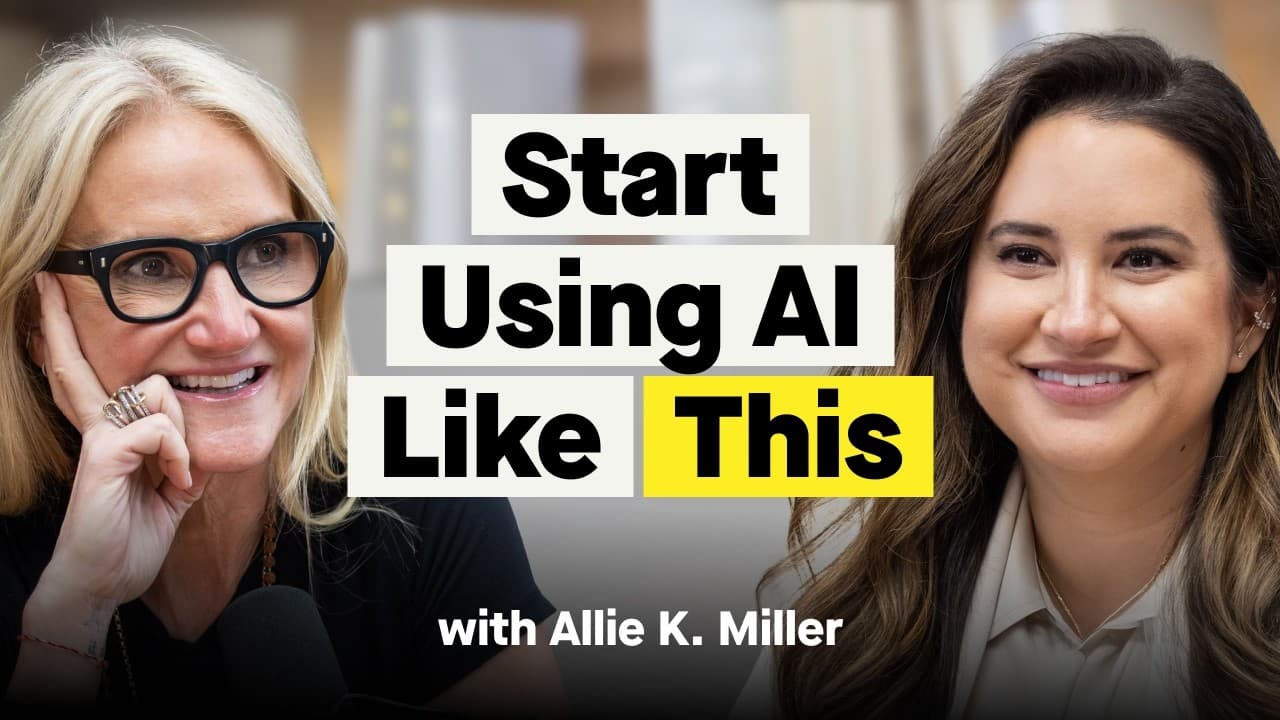
Women are adopting AI 25% less than men. It has exploded. It has accelerated. And I don't want to get left behind. I don't want women in particular to lean back and get left behind. My hope is that these groups see AI as a source of agency and not of anxiety. Let's start at the beginning. What is AI? AI at its core is just a system attempting to do... Read More
Key Insights
- AI is a system designed to perform tasks that typically require human intelligence, such as self-driving cars or spam filters.
- Generative AI creates new content by recognizing patterns in vast amounts of data, enabling it to generate text, images, and more.
- AI can assist in personal tasks, such as planning vacations or creating workout plans, by acting as a co-pilot that considers personal preferences and constraints.
- The adoption of AI is slower among women, which could lead to missed societal and economic opportunities.
- AI can enhance productivity by automating routine tasks and improving the quality of work through better planning and risk assessment.
- AI is already integrated into many aspects of daily life, and its accessibility allows non-coders to leverage its capabilities effectively.
- Using AI responsibly involves providing sufficient context to get accurate and helpful responses, avoiding over-reliance, and maintaining critical thinking skills.
- Concerns about AI include data privacy, environmental impact, and potential job displacement, but it also offers opportunities for new job creation and skill enhancement.
Install to Summarize YouTube Videos and Get Transcripts
Explore YouTube Video Summarizer or Get YouTube Transcript Extractor
Questions & Answers
Q: How can AI improve productivity in daily life?
AI can improve productivity by automating routine tasks, providing quick access to information, and offering personalized assistance. For example, AI can help draft emails, plan schedules, or analyze large data sets, allowing individuals to focus on more strategic tasks. By integrating AI into daily routines, people can save time and enhance their efficiency.
Q: What are the benefits of using AI in the workplace?
AI benefits the workplace by streamlining processes, enhancing decision-making, and improving output quality. It can automate repetitive tasks, provide insights through data analysis, and assist in developing creative solutions. This allows employees to focus on high-value activities, fostering innovation and increasing overall productivity.
Q: Why is AI adoption slower among women?
AI adoption is slower among women due to a lack of representation in the tech industry, which can lead to a perception that AI is not relevant to their needs. Additionally, women may face more barriers in accessing technology and education. Addressing these gaps is crucial to ensure diverse perspectives in AI development and application.
Q: How can AI be used for personal growth?
AI can be used for personal growth by providing tailored learning experiences, offering support in skill development, and helping set and achieve personal goals. It can recommend resources, simulate scenarios for practice, and provide feedback, enabling individuals to learn more effectively and efficiently.
Q: What are the environmental concerns related to AI?
Environmental concerns related to AI include the energy consumption of large data centers required to train and operate AI models. These centers can have significant carbon footprints. However, advancements in AI technology aim to improve efficiency and reduce energy usage, mitigating some environmental impacts.
Q: Is AI going to replace jobs?
AI is expected to change the job landscape by automating certain tasks, potentially leading to job displacement in some sectors. However, it also creates new opportunities by enabling new industries and roles that require AI expertise. Workers can benefit by upskilling and adapting to the evolving job market.
Q: How can AI assist caregivers?
AI can assist caregivers by organizing and summarizing information, automating routine tasks, and providing reminders for medication or appointments. It can also offer emotional support through virtual companionship and help manage stress by suggesting coping strategies and resources.
Q: What steps should I take to start using AI effectively?
To start using AI effectively, identify areas in your personal or professional life where AI can add value. Experiment with AI tools to automate tasks, enhance decision-making, and improve efficiency. Ensure you provide sufficient context for accurate results and maintain critical thinking to evaluate AI-generated information.
Summary & Key Takeaways
-
AI can automate and enhance routine tasks, allowing individuals to focus on more strategic activities. By using AI effectively, people can improve productivity and achieve better work-life balance.
-
AI's ability to analyze vast data sets enables it to provide personalized solutions, making it a valuable tool for personal and professional growth. Its adoption can lead to new job opportunities and skill development.
-
While AI presents challenges such as data privacy and job displacement, its potential to transform industries and improve daily life is significant. Embracing AI is essential for staying competitive in the modern world.
Read in Other Languages (beta)
Share This Summary 📚
Summarize YouTube Videos and Get Video Transcripts with 1-Click
Try YouTube Summary with ChatGPT & Claude or YouTube Transcript Generator
Explore More Summaries from Mel Robbins 📚





Summarize YouTube Videos and Get Video Transcripts with 1-Click
Try YouTube Summary with ChatGPT & Claude or YouTube Transcript Generator