Why Did the Fed Accelerate Its 2021 Taper?

TL;DR
The Federal Reserve accelerated its taper because inflation was well above its 2 percent goal and the labor market was strengthening rapidly. It kept the federal funds target range at 0 to ¼ percent, doubled monthly reductions in asset purchases, and indicated that purchases could end by mid-March if the economy developed broadly as expected.
Transcript
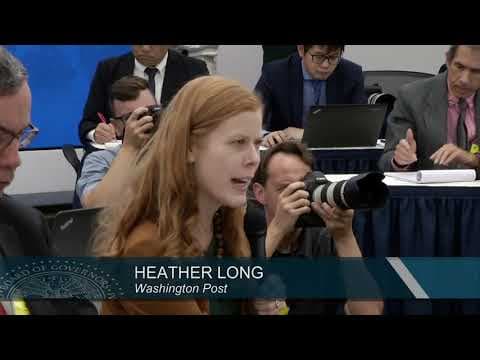
Transcript of Chair Powell's Press Conference December 15, 2021 CHAIR POWELL. Good afternoon. At the Federal Reserve, we are strongly committed to achieving the monetary policy goals that Congress has given us: maximum employment and price stability. Today, in support of these goals, the Federal Open Market Committee kept interest rates near zero a... Read More
Key Insights
- The Federal Reserve kept its federal funds target range at 0 to ¼ percent while updating its assessment of progress toward maximum employment. Officials expected the remaining labor-market condition for raising rates to be met during the following year.
- The asset-purchase taper was doubled because elevated inflation and a rapidly strengthening labor market reduced the economy's need for additional policy support. Beginning in mid-January, monthly purchases would decline by $20 billion for Treasury securities and $10 billion for agency mortgage-backed securities.
- Net asset purchases were expected to end by mid-March if economic conditions evolved broadly as anticipated. The faster schedule would stop growth in the Fed's securities holdings several months earlier than officials had expected in early November.
- Maximum employment is judged through a broad collection of indicators rather than a single numerical threshold. The Committee considers unemployment, labor force participation, job openings, wages, worker flows, and employment conditions across different demographic groups.
- The labor market was improving quickly, with employment gains averaging 378,000 per month over the previous three months and unemployment falling to 4.2 percent in November. Employers nevertheless faced difficulty filling openings, while participation remained subdued for demographic and pandemic-related reasons.
- Inflation was running well above the Fed's 2 percent longer-run goal because strong demand encountered production bottlenecks and supply constraints. Price increases had also spread beyond the areas most directly affected by pandemic disruptions into a broader range of goods and services.
- Wage growth was brisk but had not yet been a major source of elevated inflation. The Fed was monitoring whether persistent real wage growth above productivity growth could create additional upward pressure on prices.
- Policy projections were conditional forecasts rather than a Committee decision or fixed plan. The median projected federal funds rate was 0.9 percent at the end of 2022, while officials expected gradual firming toward estimates of the longer-run level by the end of 2024.
Install to Summarize YouTube Videos and Get Transcripts
Explore YouTube Video Summarizer or Get YouTube Transcript Extractor
Questions & Answers
Q: Why did the Federal Reserve accelerate its asset-purchase taper?
The Federal Reserve accelerated the taper because inflation pressures were elevated and the labor market was strengthening rapidly. Officials concluded that the economy no longer needed increasing amounts of policy support. A quicker end to purchases would also position monetary policy to respond to a wider range of possible economic outcomes, while existing securities holdings would continue supporting accommodative financial conditions.
Q: When did the Federal Reserve expect asset purchases to end?
The Federal Reserve expected increases in its securities holdings to cease by mid-March, provided the economy evolved broadly as anticipated. Beginning in mid-January, the monthly pace of net purchases would fall by $20 billion for Treasury securities and $10 billion for agency mortgage-backed securities, with similar reductions likely in subsequent months. The schedule remained adjustable if the economic outlook changed.
Q: How does the Federal Reserve determine maximum employment?
Maximum employment is determined through a judgment based on a broad range of labor-market evidence rather than one dominant number. The Federal Reserve examines unemployment, labor force participation, job openings, wages, movements into and out of the labor force, and conditions among different demographic groups. The Committee decides when those combined indicators are consistent with its assessment of maximum employment.
Q: What was the Federal Reserve's interest-rate outlook for 2022?
The Federal Open Market Committee maintained the federal funds target range at 0 to ¼ percent at the December meeting. All participants forecast that the remaining labor-market test for raising rates would be met in the following year. Their median projection placed the appropriate federal funds rate at 0.9 percent at the end of 2022, although Powell stressed that projections were not decisions or plans.
Q: Why was inflation elevated in December 2021?
Inflation was elevated because pandemic-related supply and demand imbalances, combined with the reopening of the economy, limited production's ability to respond quickly to strong demand. Bottlenecks and supply constraints had proved larger and longer lasting than expected, partly because of recurring virus waves. Price increases had also expanded across a broader range of goods and services.
Q: What inflation path did FOMC participants project?
FOMC participants expected inflation to decline closer to the 2 percent longer-run goal by the end of the following year. Their median projection fell from 5.3 percent for 2021 to 2.6 percent for 2022, a path that was notably higher than the September projection. The Fed also emphasized that it would monitor developments and act to prevent higher inflation from becoming entrenched.
Q: What did the Federal Reserve report about the labor market?
The Federal Reserve described rapid progress toward maximum employment. Job gains had averaged 378,000 per month over the preceding three months, while unemployment fell to 4.2 percent in November. Participation increased in November but remained subdued because of aging, retirements, caregiving demands, and virus concerns. Employers also faced difficulty filling openings, and wages were rising at their fastest pace in many years.
Q: Why did the Federal Reserve taper gradually instead of stopping purchases immediately?
Powell said balance-sheet adjustments are best handled through a careful, methodical approach because markets can be sensitive to them. The Federal Reserve therefore doubled the tapering speed rather than ending purchases immediately, leaving roughly two meetings before completion. He also noted that policy communication can move markets immediately and that changing financial conditions can affect the economy more quickly than traditional lag estimates suggest.
Summary & Key Takeaways
-
The Federal Open Market Committee kept the federal funds target range at 0 to ¼ percent while concluding that the economy no longer required increasing amounts of policy support. Strong demand, robust growth, improving employment, and elevated inflation led officials to accelerate the reduction of Treasury and agency mortgage-backed securities purchases.
-
The labor market was progressing rapidly toward maximum employment, with job gains averaging 378,000 per month over the preceding three months and unemployment reaching 4.2 percent in November. However, participation remained subdued, employers struggled to fill openings, and pandemic-related caregiving needs, health concerns, aging, and retirements continued affecting labor supply.
-
Inflation had become broader and more persistent than anticipated as supply constraints prevented production from responding quickly to strong demand. The Fed expected inflation to moderate toward 2 percent, but raised its projected path and emphasized its readiness to prevent inflation from becoming entrenched while supporting the employment recovery.
Read in Other Languages (beta)
Share This Summary 📚
Summarize YouTube Videos and Get Video Transcripts with 1-Click
Try YouTube Summary with ChatGPT & Claude or YouTube Transcript Generator
Explore More Summaries from Federal Reserve 📚


Summarize YouTube Videos and Get Video Transcripts with 1-Click
Try YouTube Summary with ChatGPT & Claude or YouTube Transcript Generator